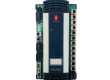
The ABB Bailey Infi 90 distributed control system (DCS) remains a cornerstone in many legacy industrial facilities—particularly in power generation, oil & gas, and chemical processing plants. First introduced in the late 1980s and refined through the 1990s, the Infi 90 platform was engineered for high reliability, modular expansion, and real-time process control. Even decades after its initial deployment, thousands of installations continue to operate globally, often with minimal upgrades due to the system’s robust architecture.
This article examines key characteristics of Infi 90 control modules, their functional roles within the system architecture, and practical considerations for maintenance, repair, and replacement in today’s operational landscape.
Core Architecture and Module Types
The Infi 90 system is built around a redundant, multi-loop control structure centered on the Multibus backplane and the INFI-NET communication network. At its heart are several critical module families:
- IMMFP (Multi-Function Processor): The primary controller module, responsible for executing control logic, sequencing, and regulatory functions. It supports redundancy and hot-swappable operation.
- INNIS (Network Interface Slave): Acts as a communication gateway between I/O modules and the INFI-NET ring. Often paired with the INNPM (Network Processing Module) to form a complete node interface.
- I/O Modules: Include analog input/output (e.g., INVAX, INAAI), digital I/O (INDI, INDO), and specialized modules like pulse counters or thermocouple interfaces. These plug directly into local or remote I/O carriers.
- Power Supplies (e.g., IPSYS01, IPFAN01): Provide conditioned 24V DC and cooling for module racks, with options for redundancy and diagnostics.
Modules are housed in standardized enclosures (typically BRC100 or BRC300 cabinets), allowing mixed configurations tailored to process complexity.
Key Strengths of the Infi 90 Platform
- Deterministic Performance: Unlike early PC-based systems, Infi 90 uses dedicated real-time processors with fixed scan cycles, ensuring predictable response times—critical for boiler control or turbine protection.
- Hardware Redundancy: Dual IMMFPs, dual INFI-NET rings, and redundant power supplies enable failover without process interruption—a major reason many plants retain the system despite its age.
- Modular Scalability: Additional I/O or control capacity can be added via satellite nodes connected over coaxial or fiber-optic INFI-NET links, supporting networks with over 60,000 I/O points.
- Long-Term Stability: Many users report decades of continuous operation with minimal software changes, reducing validation burdens in regulated industries.
Challenges in Sustaining Infi 90 Systems
Despite its resilience, the Infi 90 faces growing support hurdles:
- End-of-Life Status: ABB officially discontinued new production of most Infi 90 modules years ago. While limited refurbished inventory exists, lead times and pricing have become volatile.
- Component Obsolescence: Capacitors, ASICs, and custom connectors used in original modules are no longer manufactured, increasing failure rates.
- Skill Gap: Engineers familiar with Multibus diagnostics or Composer programming tools are increasingly scarce.
- Cybersecurity Limitations: The system predates modern IT security standards, making integration with enterprise networks risky without air-gapped gateways or protocol converters.
Practical Replacement and Migration Paths
Plant operators generally pursue one of three strategies:
1. Direct Module Replacement (Like-for-Like)
For facilities not ready for full migration, sourcing tested, refurbished modules from specialized suppliers remains viable. Reputable vendors offer:
- Functional testing per OEM specifications
- Firmware matching to existing system versions
- Extended warranties (typically 12–24 months)
Critical modules like IMMFP12, INNIS01, and INAAI11 are still available in limited quantities, though prices have risen significantly.
2. Hybrid Integration with Modern DCS
Some sites implement “island migration,” where new skids or units use modern platforms (e.g., ABB Ability™ System 800xA, Emerson DeltaV), while legacy Infi 90 sections remain online. Communication is bridged via:
- OPC servers with INFI-NET protocol drivers
- Third-party gateways (e.g., Softing, HMS Networks)
- Custom Modbus TCP wrappers for key data points
This approach defers capital expenditure but adds integration complexity.
3. Full System Migration
For long-term sustainability, full replacement is often inevitable. ABB offers migration services to System 800xA, including:
- Logic conversion tools (though manual review is essential)
- I/O marshaling solutions to reuse field wiring
- Training and commissioning support
Competing platforms like Rockwell PlantPAx or Siemens PCS 7 also provide migration paths, sometimes at lower total cost depending on existing infrastructure.
Best Practices for Current Users
- Inventory Critical Spares: Identify single-point-of-failure modules and secure tested backups.
- Document Firmware Revisions: Mismatched firmware between IMMFP and I/O modules can cause communication faults.
- Monitor Power Quality: Aging power supplies are a common failure source; consider upgrading to modern redundant PSUs with compatible output profiles.
- Engage Specialized Support: General automation vendors may lack Infi 90 expertise. Seek firms with certified ex-Bailey engineers or ABB legacy support partnerships.
Conclusion
The ABB Bailey Infi 90 was a pioneering DCS that set benchmarks for reliability in its era. While no longer in production, its continued presence in critical infrastructure underscores the value of well-engineered industrial systems. For operators maintaining these installations, a strategic blend of prudent sparing, selective hybridization, and phased migration offers the most pragmatic path forward—balancing operational continuity with future readiness.