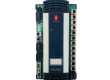
If you are managing a facility running on Siemens Simatic S7-300 or S7-400 hardware, the clock is ticking louder than you might think. For years, these PLCs have been the “set it and forget it” standard of the industry. But as Siemens pushes the market toward the S7-1500 and S7-1200, availability for legacy components is shifting rapidly from “in stock” to “lead time unknown.”
I’ve spent decades sourcing DCS and PLC components when lines are down. The panic in a plant manager’s voice when they realize a critical CPU is 16 weeks out—or officially discontinued—is something you want to avoid.
Here is a practical, no-fluff guide to managing your inventory for the aging Simatic S7 family.
The Critical Timeline: October 1, 2025
The most important date on your calendar right now is October 1, 2025.
According to Siemens’ official lifecycle roadmap, this is the date the S7-300 series (and the associated ET 200M I/O) hits PM410 status. In plain English: Type Discontinuation.
- Before Oct 2025: You can still order these as “new parts.”
- After Oct 2025: They become “spare parts only.” Prices typically jump, discounts vanish, and availability becomes strictly first-come, first-served until the global stock dries up.
If you have S7-300s in critical loops, your budget for next year needs to include shelf stock, not just hopes for 24-hour delivery.
S7-200: The “Ghost” System
If you still have machines running S7-200 (micros), you are already living on borrowed time. Siemens discontinued this series (PM410) back in 2017.
- Status: Obsolete.
- The Risk: The S7-200 used a non-standard RS-485 network (PPI) and distinct software (Micro/WIN). You cannot easily swap in a generic module.
- Action: If migration to an S7-1200 isn’t planned for this downtime, you must scour the surplus market.
- What to Stock: The CPUs themselves (e.g., CPU 224, CPU 226) are the weak link. Unlike modular racks where you just swap a card, if an S7-200 CPU fails, you lose your I/O and comms in one go.
S7-300: The “Danger Zone” Inventory List
This is the most common system I see in the field. It’s robust, but it’s aging. Based on failure rates and market scarcity, here is what you need on your shelf now:
1. Communication Processors (The Achilles Heel)
Power surges often hit the comms lines first.
- CP 343-1 (Ethernet): These are gold dust. As factories move to MES/SCADA integration, demand for these legacy Ethernet cards remains high, but supply is dwindling.
- CP 342-5 (Profibus): Still vital for older drive networks.
2. Analog Input Modules
Digital cards (SM 321) are generally tough and easy to find used. Analog cards are sensitive.
- SM 331 (AI 8x12bit or 16bit): Specifically the 6ES7331-7KF02 and 7NF00. These precision modules fail more often than digital cards due to field side voltage spikes.
3. “Compact” CPUs
If you use the CPU 313C or 314C (Compact series with built-in I/O), be careful.
- Why? If the on-board I/O burns out, you have to replace the entire processor. You can’t just swap a card. This requires a program reload, meaning you need the original source code backup handy.
S7-400: The Long-Haul Workhorse
The S7-400 is a different beast. Because it drives the PCS 7 DCS platform, Siemens has committed to supporting it longer (potentially into the 2030s). However, don’t get complacent.
- The Power Supply Risk: The PS 407 and PS 405 rack power supplies are heavy, hot, and age-degrade. Their capacitors dry out. If you have a redundant pair, check the error LEDs. I see many plants running on a single leg of a redundant pair without realizing it until the second one dies.
- CP 443-1: Similar to the 300 series, the Ethernet cards are the primary failure point due to network storms or physical port damage.
The “PM” Status Decoder
To manage this effectively, you need to understand Siemens’ lifecycle language so you aren’t caught off guard by a sales rep:
- PM300: Active product. Buy freely.
- PM400 (Phase-out Announcement): The warning shot. Price usually increases. Start stocking now.
- PM410 (Type Discontinuation): No more “new” production. Only spares. High price.
- PM490 (Definitive Discontinuation): Manufacturer support ends. You are now relying 100% on the secondary surplus market/repair shops.
Sourcing Strategy: Surplus vs. Refurbished
When you can’t buy new, the market gets murky. Here is my rule of thumb for buying obsolete S7 parts:
- Avoid “Open Box” Unknowns: On platforms like eBay, “Open Box” often means “We bought this at a liquidation auction 10 years ago and have no idea if the internal battery leaked.”
- Demand Load Testing: A simple “power on” test isn’t enough. A refurbished module must be tested under load. For a relay output card (SM 322), the relays might click but have high contact resistance. Ensure your vendor tests I/O channels, not just the bus interface.
- Check Firmware Versions: For S7-300 CPUs, a V2.0 CPU is not a direct swap for a V3.0 in some complex motion or comms applications. Always match the part number and the firmware revision if possible, or be prepared to update your hardware config in the project file.
Summary
The era of the S7-300 is ending, but your machines don’t have to stop.
- Audit your cabinets.
- Identify your PM410 risks.
- Stock the comms cards and power supplies first.
The cost of a spare CPU on the shelf is high, but it is nothing compared to the cost of 48 hours of downtime while you hunt for a working processor in 2026.