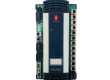
More than two decades after its introduction, the Yokogawa CENTUM CS3000 remains a workhorse in process control environments—particularly in refineries, chemical plants, and power facilities across Asia, the Middle East, and parts of Europe. At the core of this distributed control system (DCS) are its CPU units, which drive real-time control logic, data handling, and system redundancy. As these units age, understanding their performance capabilities and current availability is essential for maintaining operational continuity.
CENTUM CS3000 CPU Unit Overview
Unlike conventional PLCs, the CS3000 uses dedicated controller modules housed in Field Control Stations (FCS). The primary processing units include:
1. FCU (Field Control Unit) – Core Controller
- Model Examples:
- FCU50 (Standard performance)
- FCU70 (High-performance variant, introduced later in the product lifecycle)
- Processor Architecture: Proprietary RISC-based CPU with real-time OS (not Windows-based; Windows is only used on HIS operator stations).
- Scan Cycle: Typically 100 ms to 1 second, configurable per control function block.
- Redundancy: Hot-standby dual-CPU configuration supported—automatic failover with <100 ms switchover time.
- Memory: Onboard RAM and flash for control logic, I/O mapping, and alarm/event buffering.
- Communication: Dual Vnet/IP ports for high-speed peer-to-peer communication between FCS and HIS (Human Interface Stations).
The FCU does not run general-purpose software—it executes only compiled control strategies created in CS3000 Engineering Studio (formerly known as CS ToolKit). This deterministic design ensures consistent performance even under heavy I/O load.
2. AAI145 / AAI845 – Analog Input Modules (Context Note)
While not CPUs, these I/O modules interface directly with the FCU. Their scan synchronization with the FCU’s execution cycle affects overall loop performance—especially in fast-response applications like boiler drum level or compressor surge control.
Performance Assessment in Modern Context
表格
| Metric | FCU50 | FCU70 |
|---|---|---|
| Max I/O Points per FCS | ~10,000 | ~15,000 |
| Control Function Blocks | Up to 2,000 | Up to 3,500 |
| Communication Speed (Vnet/IP) | 100 Mbps | 100 Mbps (but lower latency) |
| Redundancy Support | Yes | Yes (enhanced diagnostics) |
| Typical Applications | Batch processes, utilities | Continuous refining, ethylene crackers |
While modest by today’s standards (e.g., compared to CENTUM VP or DeltaV PK controllers), the FCU series delivers predictable, jitter-free execution—a key reason many plants have deferred migration. However, limitations exist:
- No native support for OPC UA or modern cybersecurity protocols.
- Limited memory for advanced analytics or historian integration.
- Dependency on legacy Windows OS versions (e.g., Windows Server 2003/2008) for engineering tools.
Current Stock and Availability (Q1 2026)
Yokogawa officially discontinued new production of CS3000 hardware years ago, but demand persists due to installed base longevity. As of January 2026, the following units are confirmed in stock with select industrial automation suppliers specializing in legacy DCS spares:
表格
| Part Number | Description | Status | Notes |
|---|---|---|---|
| FCU50-S1 | Standard Field Control Unit | Limited quantity | Tested, firmware-matched sets available |
| FCU70-S2 | High-performance FCU | Very limited | Often sold as redundant pair |
| CP345 | Vnet/IP Communication Processor | Available | Used in FCS backplane for network I/F |
| PS345 | Redundant Power Supply Module | In stock | Critical for FCS rack stability |
| ANB345 | Node Bus Interface Board | Available | Required for I/O carrier communication |
All listed units are refurbished and functionally tested to OEM specifications. Suppliers typically provide:
- Boot-up verification logs
- Compatibility check against existing system version (e.g., R3.02.50)
- 12–24 month warranty
- ESD-safe packaging and shipping
Note: New-old-stock (NOS) units are extremely rare and command premium pricing—often 3–5× the cost of refurbished equivalents.
Strategic Recommendations for Users
- Audit Your FCS Inventory: Identify single-point-of-failure FCUs without spares. Prioritize securing at least one cold spare per critical process unit.
- Verify Firmware Consistency: Mixing FCU firmware revisions can cause Vnet/IP sync issues. Match revision numbers exactly when replacing.
- Consider Hybrid Migration: For new expansions, integrate CENTUM VP or Yokogawa’s Exaopc gateway to bridge CS3000 data into modern IIoT platforms—without full rip-and-replace.
- Engage Specialized Vendors: General distributors rarely stock CS3000 CPUs. Work with firms that maintain calibrated test racks and have ex-Yokogawa engineers on staff.
Final Word
The CENTUM CS3000 CPU units were engineered for reliability over raw speed—and that philosophy continues to pay dividends in stable, long-cycle processes. While they won’t support AI-driven optimization or cloud historians natively, their deterministic control remains fit-for-purpose in many applications. With verified FCU50 and FCU70 units still available in the secondary market, operators have a viable window to extend system life while planning a measured transition to next-generation platforms like CENTUM VP or Yokogawa’s OpreX Control suite.
Act now—inventory is finite, and lead times are growing.