Product Core Brief
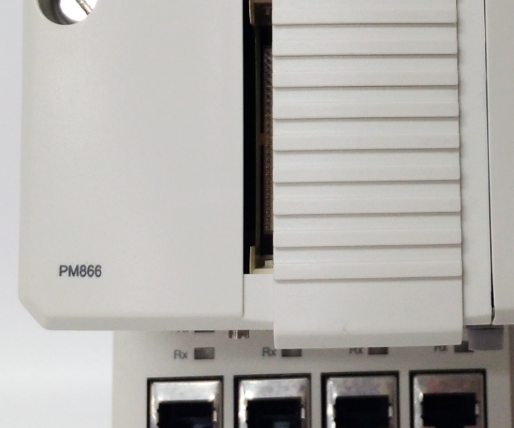
- Model: ABB 3BSE050198R1 PM866K01
- Brand: ABB (Sweden/Switzerland)
- Series: AC 800M Distributed Control System (DCS) CPU
- Core Function: Redundant central process controller for industrial automation
- Type: Process Controller / CPU Module
- Key Specs: Redundant controller 24 V DC supply Multi-protocol communication support
3BSE050198R1 PM866K01
Key Technical Specifications
- Product Name: ABB PM866K01 3BSE050198R1 CPU
- Controller Type: Redundant process controller for AC 800M DCS
- Processor: Dual-core industrial CPU for real-time control tasks
- Memory: On-board RAM & persistent storage (varies by revision)
- Communication Interfaces: Redundant Ethernet, fieldbus support (e.g., PROFIBUS, Modbus, OPC UA)
- Redundancy: Hot-standby CPU redundancy for uninterrupted operation
- I/O Capacity: Scalable via S800 analogue, digital, and specialty modules
- Power Supply: 24 V DC ±10% (supports redundant feed)
- Operating Temperature: –25 °C to +60 °C industrial range
- Mounting: AC 800M controller rack / DIN rail compatible
- Certifications: IEC 61131 real-time control compliance
- Diagnostics: Built-in health and network status monitoring
Note: Specific memory and interface counts vary by revision and installed firmware. Always confirm against engineering documentation before integration.
Part 4: Installation & Configuration Guide
This section assumes a technician familiar with ABB AC 800M controller racks and Control Builder M engineering software. Replacement typically requires ~30–45 minutes if preparation is complete.
Phase 1: Preparation (10 minutes)
⚠️ Safety First
- Notify operations to schedule downtime or transition to a safe process state.
- Bring the controlled process to a defined stop.
- Power down the control rack and any redundant supplies.
- Wait ~5 minutes for internal voltages to discharge.
Tools Required
- Anti-static wrist strap and mat
- Small PH screwdrivers
- Multimeter for voltage verification
- Labels + marker pens
- Laptop with engineering software (Control Builder M)
Documentation Tasks
- Save a backup of the current controller program and configuration.
- Photograph module identifiers, wiring, and rack layout.
In my experience, clear wiring photos save more time than you think.
Phase 2: Removal of Old CPU (5–8 minutes)
- Remove protective rack cover.
- Label and disconnect fieldbus and Ethernet cabling from the CPU module.
- Loosen mounting screws or rack latches.
- Slide the CPU module straight out to avoid damaging backplane connectors.
Inspect the backplane connector pins; any bent or corroded contacts can cause intermittent issues later.
Phase 3: Installation of New CPU (10–12 minutes)
- ESD protection worn at all times.
- Confirm the replacement unit is 3BSE050198R1 PM866K01.
- Insert the controller module firmly into the rack slot until latched.
- Reconnect all cables according to labeled photos.
- Tighten screws and ensure snug connections.
Checklist:
- Correct slot assignment
- Network/Ethernet connectors seated
- Fieldbus and redundancy links restored
Phase 4: Power-On & Functional Test (10–15 minutes)
Prior to power-up:
- Verify 24 V DC supply voltage is within 19.2–30 V range.
- Ensure no shorts exist between supply rails (multimeter reading >10 kΩ).
Power sequence:
- Apply control power only.
- Observe status LEDs on the CPU for normal state (green RUN, no FAULT).
- Connect engineering workstation and confirm CPU recognition.
- Validate redundancy health if in hot-standby configuration.
- Perform basic I/O and control loop tests to verify logic execution.
Functional verification:
- Ensure communications with all I/O modules are intact.
- Monitor CPU load and network traffic for stability.
If network communication fails, re-verify Ethernet connections and redundant link configurations.
Part 5: Customer Cases & Industry Applications
Case 1: Power Plant Redundant Controller Replacement
Situation:
An AC 800M CPU began exhibiting intermittent communication faults on a combined-cycle power plant’s controller rack.
Task:
Primary controller instability threatened turbine and boiler critical regulation loops.
Action:
We provided a Brand New Surplus ABB PM866K01 (3BSE050198R1) after verifying rack and I/O expansion compatibility.
Result:
The CPU was replaced during a planned outage; redundancy was restored using hot-standby configuration. Communication errors were resolved, and normal automatic control resumed.
Case 2: Petrochemical Continuous Operation Strategy
Situation:
A large petrochemical complex required high-availability control over multiple distillation trains.
Task:
Controller redundancy and lead time variability were key risks.
Action:
We advised stocking 1 primary + 1 redundant PM866K01, with reorder point set at 1 unit considering typical OEM lead times.
Result:
When the first CPU reached retirement age, replacement was immediate — no process slowdowns. Strategic inventory planning prevented costly downtime.
Case 3: Manufacturing Line Integration Upgrade
Situation:
A discrete manufacturing plant upgrading to AC 800M for unified SCADA integration faced long OEM delivery times.
Task:
Integrators needed original CPUs to complete the control system build.
Action:
We supplied PM866K01 CPUs with verified firmware compatibility and provided program backup guidance.
Result:
System commissioning was completed on schedule; control loops executed reliably, and future spare planning was embedded into maintenance SOPs.
Part 6: Frequently Asked Questions (FAQ)
Q1: Is the ABB PM866K01 (3BSE050198R1) still in production?
A: This module belongs to ABB’s legacy AC 800M product line. It is generally considered discontinued or limited availability through direct channels. Brand New Surplus units offer a practical spare option for existing systems.
Q2: Is this unit new or refurbished?
A: We supply Brand New Surplus — original factory modules never used in the field. Not refurbished or repaired. Serial traceability and visual inspection are provided.
Q3: Is hot-swap supported?
A: In most AC 800M redundant configurations, hot-standby CPU modules can be swapped without interrupting control. However, follow shutdown procedures if uncertainty exists.
Q4: What software do I need to interact with this controller?
A: Use ABB Control Builder M with correct version matching your AC 800M firmware. Always backup before making logic changes.
Q5: How should I plan spare inventory?
A: For critical CPU modules in 24/7 plants:
- Min stock: 1 primary spare
- Max stock: 2 units (primary + redundant)
- Set reorder point based on lead time variability and redundancy needs. Strategic buffer stock minimizes emergency procurement costs.
Q6: What communication protocols does it support?
A: It supports Ethernet (TCP/IP), PROFIBUS, Modbus, OPC UA, and other industrial protocols depending on installed firmware and network modules.