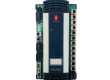
Product Overview
The ABB PM858 (3BSE093350R1) is an industrial-grade processor unit designed for use in ABB’s automation and control system platforms. It serves as the central computing and logic-processing component within distributed control systems (DCS), programmable logic controller (PLC) frameworks, and advanced industrial control architectures. This processor unit is engineered to execute real-time control algorithms, manage I/O communication, process measurement signals, and coordinate system diagnostics, enabling reliable and deterministic control of industrial processes.
Built to withstand the demanding conditions of heavy industry, power generation, oil & gas processing, and manufacturing systems, the PM858 combines robust hardware design with efficient processing capability. It integrates multiple communication interfaces, supports extensive system diagnostics, and maintains high operational stability in environments with electrical noise, temperature variation, and mechanical stress. The unit is a core element of control cabinets and automation racks, forming the brain of complex control stations where performance, reliability, and uptime are mission-critical.
Product Parameters
The following table summarizes key technical and functional parameters of the PM858 processor unit:
| Parameter | Specification |
|---|---|
| Model Name | PM858 |
| ABB Part Number | 3BSE093350R1 |
| Product Type | Industrial Processor Unit |
| Control Platform | ABB Distributed Control / Logic System |
| Processor Architecture | High-performance industrial controller core |
| Memory | Onboard program and data memory for control logic and runtime execution |
| I/O Interfaces | Multiple fieldbus and backplane communication channels |
| Communication Support | Field networks, system bus, diagnostic interfaces |
| Environmental Rating | Industrial temperature, vibration, and noise resilience |
| Mounting Type | Rack / system chassis installation |
| Power Supply Requirement | Integrated system power interface |
| Functional Role | Real-time logic execution, data processing, communication management |
| Operating Mode | Continuous industrial duty |
| Diagnostics | Embedded health and status monitoring |
Product Datasheet (Technical Summary)
The following points represent the core technical features and capabilities typically included in a datasheet for the PM858 processor unit. These reflect design characteristics, performance features, and integration aspects.
Processor and Control Core
At the heart of the PM858 is a dedicated industrial processing core optimized for deterministic execution of control logic. The unit executes system programs, processes I/O updates, and performs real-time calculations necessary for managing industrial sequences, feedback loops, and safety interlocks. The processor is selected to balance high throughput with thermal stability and long-term reliability.
Memory and Storage
The processor unit incorporates onboard memory for program code storage, data retention, and high-speed execution. Memory capacity is configured to support large control applications, including extensive logic networks, distributed data structures, and system configuration tables. Non-volatile memory ensures retention of critical parameters across power cycles.
Communication and I/O Integration
The PM858 supports multiple communication paths, including system backplane interfaces to I/O modules, fieldbus connections, and diagnostic links. This enables seamless integration with remote I/O racks, measurement boards, actuator interfaces, and supervisory control systems. Communication protocols supported are designed for industrial determinism and isolation to prevent data corruption in noisy electrical environments.
Diagnostics and Monitoring
Real-time health monitoring is a key feature of the PM858. The unit continuously checks internal operation, memory integrity, communication status, and system timing. Fault flags and diagnostic codes are available through system interfaces, supporting preventive maintenance and rapid troubleshooting.
Environmental and Mechanical Design
Designed for installation within industrial control cabinets, the processor unit withstands temperature variations, vibration, and electromagnetic interference typical in heavy industrial settings. The mechanical housing provides secure mounting and ensures electrical isolation from surrounding components.
Power and Thermal Management
The unit integrates with the control system’s power distribution infrastructure, accepting regulated supply voltages consistent with system requirements. Thermal design is optimized to operate reliably under continuous duty, assisted by system airflow and cabinet cooling strategies.
Country of Origin
The ABB PM858 processor unit (3BSE093350R1) is manufactured under ABB’s global quality and production standards, with principal engineering and assembly rooted in Europe. ABB’s industrial manufacturing processes emphasize traceability, consistent performance, and rigorous quality checks to meet international industrial compliance criteria.
The origin reflects ABB’s commitment to maintaining robust production controls, ensuring that each processor unit meets deterministic performance benchmarks and long-term reliability requirements characteristic of industrial automation hardware.
Application Areas
The PM858 processor unit is widely deployed in industrial systems where precision control, performance consistency, and reliability are essential. Typical application domains include:
Power Generation and Distribution
In power plants—whether thermal, hydroelectric, or combined cycle—the PM858 executes control routines for turbine governors, generator excitation systems, auxiliary systems, and protective logic. Its reliability supports grid stability and compliance with dynamic load demands.
Oil & Gas Processing
The processor unit manages process control loops, safety interlocks, and remote I/O conditioning in upstream, midstream, and downstream facilities. It supports drilling automation, pipeline control, compressor station sequencing, and refinery unit process stabilization.
Heavy Industry and Manufacturing
Steel mills, cement plants, mining operations, and large-scale manufacturing lines utilize the PM858 processor to coordinate drives, maintain process synchronization, and implement advanced automation strategies that optimize throughput and minimize downtime.
Distributed Control and Process Automation
In chemical, pharmaceutical, food & beverage, and utilities sectors, the PM858 enables distributed control architectures where reliability and process repeatability are essential. It integrates with sensors, actuators, and supervisory systems to enforce robust batch control, continuous feedback loops, and safety responses.
Infrastructure and Building Management
Large infrastructure projects, such as transportation systems, water treatment facilities, and district energy networks, use processor units like the PM858 to coordinate subsystems, manage alarms, and ensure uninterrupted operational continuity.
Research and Testing Environments
Industrial research labs and test platforms leverage the PM858 for emulating real-world control scenarios, validating process logic, and supporting development of new automation strategies.
Product Usage Instructions
The following guidance outlines the general procedures for installing, commissioning, operating, and maintaining the PM858 processor unit in an industrial control system.
Storage and Preparation
- Store in a dry, dust-free environment within recommended temperature and humidity ranges.
- Handle the unit with appropriate electrostatic discharge (ESD) precautions.
- Inspect for shipping damage before installation.
Mechanical Installation
- Mounting:
Install the PM858 into the designated system rack or chassis according to rack configuration guidelines. Ensure that mounting rails and connectors align properly. - Securing:
Use the provided fastening points to secure the unit to prevent vibration or displacement. - Grounding:
Connect proper ground references to protect against electrical noise and enhance operational stability.
Electrical Connection
- Power Supply:
Connect to the approved control system power distribution unit, confirming correct voltage and polarity. - Communication Links:
Attach backplane connectors and fieldbus interfaces as specified in the system architecture documentation. - Shielding:
Ensure that communication cables and I/O harnesses are properly shielded to minimize noise interference.
System Commissioning
- Power-Up Routine:
Power on the control system and observe self-test diagnostics from the processor. - System Integration:
Verify communication with I/O modules, remote devices, and higher-level control software. - Function Verification:
Initiate test sequences to confirm that programmed logic, timing loops, and safety interlocks behave as expected. - Calibration:
Where applicable, calibrate sensors and feedback loops through system configuration tools.
Normal Operation
- Monitor diagnostic indicators and trend key performance parameters.
- Review alarm logs and communication status regularly.
- Maintain environmental conditions within designed cabinet airflow specifications.
Maintenance and Troubleshooting
- Periodically inspect connectors, backplane interfaces, and cooling pathways.
- Use built-in diagnostics to locate and resolve communication or processing anomalies.
- Replace or swap processor units only under maintenance procedures to avoid unintended system interruption.
Product-Related News
In the context of ongoing advances in industrial automation, processor units such as the PM858 continue to play a central role in modernization efforts across industries. As production systems evolve to incorporate more sophisticated data handling, predictive maintenance strategies, and integrated asset management, the performance and resilience of central processing hardware remain key determinants of system efficiency.
Upgrades to automation platforms often involve consolidating control logic into higher-performance processors, enhancing communication bandwidth with field devices, and improving diagnostics to reduce downtime. The PM858, with its robust communication interfaces and diagnostic capabilities, aligns with these trends by enabling more comprehensive oversight of process dynamics and faster response to system events.
Moreover, the increasing adoption of distributed automation models underscores the importance of flexible, modular processing units. Processor units like the PM858 are being integrated into hybrid architectures that combine local processing with centralized supervisory systems, enabling more granular control and better scalability as operational demands grow.
As industrial environments adopt digital transformation initiatives, hardware reliability and long-term support become pivotal in sustaining operational continuity. The PM858 continues to be specified as a core component in control strategies that prioritize uptime, expandability, and integration into next-generation industrial ecosystems.