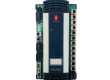
The ABB PM891K01 is a high-performance, flagship processor unit designed for the Advant Controller 800M (AC 800M) system. It is characterized by its significant memory capacity, high processing speed, and native support for full hardware redundancy, making it the preferred choice for mission-critical industrial automation tasks.
Product Parameters & Technical Datasheet
The PM891 is the most powerful processor in the AC 800M range, designed to handle large-scale applications with high I/O counts.
| Specification | Technical Detail |
| Product ID | 3BSE053241R1 |
| Model | PM891K01 (Kit includes PM891 and TP830) |
| Clock Speed | 450 MHz |
| Memory (RAM) | 256 MB |
| Redundancy Support | Built-in (Requires two PM891 units) |
| Communication Ports | 2x Ethernet (Built-in), 1x RS-232, Dual RCU-link |
| Max. I/O Capacity | Up to 100,000 internal variables |
| Power Supply | 24V DC (19.2 – 30V range) |
| Power Dissipation | 10 W (typical) |
Hardware Highlights
- High-Speed Execution: Optimized for complex control loops and high-speed logic.
- Redundancy Link: Features a dedicated RCU (Redundant Control Unit) link port for high-speed data synchronization between the primary and backup processors.
- Expansion: Supports the full range of S800 I/O and communication modules (PROFINET, PROFIBUS, Modbus TCP, etc.).
Country of Origin
The PM891K01 is primarily manufactured in Estonia or Sweden, following ABB’s global manufacturing standards for the System 800xA hardware line.
Application Areas
Due to its high reliability and redundancy features, the PM891K01 is deployed in sectors where downtime is not an option:
- Oil & Gas: Control for offshore platforms, refineries, and LNG terminals.
- Power Generation: Distributed Control Systems (DCS) for large-scale thermal and hydroelectric plants.
- Chemical & Pharma: Batch processing and continuous control where safety and precision are paramount.
- Marine: Integrated Automation Systems (IAS) for large vessels and DP (Dynamic Positioning) systems.
Product Usage Instructions
1. Installation and Redundancy Setup
- Mounting: Mount the PM891 on the TP830 Baseplate. Ensure the DIN rail is properly grounded.
- Redundant Configuration: To enable redundancy, place two PM891 units side-by-side on their respective baseplates and connect them using the specialized Redundancy Cable (RCU-link).
- Address Setting: Set the unique node address using the rotary switches on the front of the processor.
2. Wiring
- Network: Connect the two built-in Ethernet ports (CN1 and CN2) to separate switches if using RNRP (Redundant Network Routing Protocol) for network fault tolerance.
- Power: Use a redundant 24V DC power source to maximize the availability of the processor unit.
3. Software Configuration
- Use ABB Compact Control Builder or 800xA Engineering software.
- Ensure the firmware version of the PM891 matches the version of the engineering tool to avoid synchronization issues.
Product Related News
- Extended Life Cycle: ABB has reaffirmed its commitment to the PM8xx series, ensuring that the PM891 remains a core part of the System 800xA roadmap through at least 2035, providing long-term security for investments.
- Cybersecurity Updates: Recent firmware releases for the PM891K01 have introduced advanced digital signatures and encrypted communication protocols to comply with the latest IEC 62443 security standards.
- Sustainability Initiative: The PM891 is now part of ABB’s “Circular Economy” program, where older units can be returned for certified refurbishment or eco-friendly recycling.
Common Hardware Questions (Q&A)
Q: Can I mix a PM891 with a PM866 in a redundant pair? A: No. Redundant pairs must consist of identical processor models and identical firmware versions to ensure seamless data synchronization.
Q: What is the maximum distance for the redundancy link? A: The standard RCU cable is typically short (0.5m to 1m) as processors should be in the same or adjacent cabinets. For longer distances, specialized fiber optic extenders are required.
Q: How is the memory battery handled? A: The PM891 uses a battery-backed RAM. The battery should be replaced every 3 years (under normal temperatures) to prevent program loss during total power failure.