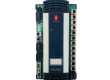
The Alfa Laval EPC-400 (Part Number: 3183050104, Version 3) is a sophisticated, microprocessor-based control unit designed specifically for the automated operation of Alfa Laval centrifugal separation systems. Primarily utilized in maritime and power generation industries, the EPC-400 serves as the “brain” for oil treatment systems, managing the purification and clarification of fuel and lubricating oils.
Product Introduction
The EPC-400 is an integral component of the Alcap and MAPX/FOPX separation systems. Its primary function is to monitor and control the separator’s timing sequences, motor starts, valve actuations, and liquid levels. Version 3 of this module represents an evolution in firmware stability and hardware durability, offering enhanced diagnostic capabilities over its predecessors.
The module acts as a specialized PLC (Programmable Logic Controller) tailored for the unique dynamics of centrifugal separation. It interprets signals from pressure transducers, temperature sensors, and moisture transmitters to determine the optimal timing for “sludge discharge” (de-sludging). By automating these processes, the EPC-400 ensures that oil quality remains consistent while protecting the separator from mechanical damage due to improper operation or fluid overflow.

Product Parameters (Datasheet)
The following specifications define the technical and electrical profile of the 3183050104 Version 3 module:
| Parameter | Specification |
| Model Number | EPC-400 |
| Part Number | 3183050104 |
| Software Version | Version 3 (V3) |
| Input Voltage | 24V AC/DC (+10% / -15%) |
| Power Consumption | Max 50 VA |
| Frequency | 50/60 Hz |
| Analog Inputs | 4-20 mA (for temperature and pressure) |
| Digital Inputs | Optocoupled (for vibration, speed, and level switches) |
| Relay Outputs | 250V AC, 5A (for solenoid valves and motor starters) |
| Display Type | LED Numeric Display / Status Indicator LEDs |
| Enclosure Rating | IP44 (Front panel) / IP20 (Rear housing) |
| Operating Temp | 0°C to +55°C |
| Communication | Specialized serial link for multi-unit synchronization |
Country of Origin
- Origin: Sweden
Alfa Laval’s separation and control technologies are developed and manufactured in Sweden. The EPC-400 modules undergo rigorous testing at their maritime testing facilities to ensure compliance with international shipping and safety standards (such as DNV, ABS, and Lloyd’s Register).
Technical Description & Key Features
The EPC-400 Version 3 is distinguished by its specialized control logic:
- Alcap Control Logic: The module manages the discharge of water and sludge without the need for manual adjustment of gravity discs. It uses the input from a moisture sensor to detect when the water level in the bowl has reached a threshold, triggering an automatic drain.
- Sequential Timing: The module controls the critical sequence of opening and closing water valves for “sealing” and “opening” the bowl. Precise timing—measured in milliseconds—is required to prevent oil loss during discharge.
- Alarm Management: The EPC-400 monitors for “Low Flow,” “High Temperature,” and “Vibration.” If parameters exceed safety limits, the module initiates an emergency stop or bypasses the separator to protect the engine’s fuel supply.
- Interface Simplicity: Despite its complex internal logic, the front panel is designed for ease of use by ship engineers. It features dedicated buttons for Manual Discharge, Start/Stop, and Alarm Reset.
Product Usage Instructions
1. Installation and Mounting
The EPC-400 is typically mounted in a control cabinet door or a dedicated starter box.
- Ensure the cutout dimensions match the module’s frame.
- Use the provided rubber gasket to maintain a moisture-proof seal against the cabinet door.
- Grounding: The module’s metal chassis must be connected to the common earthing bar of the ship’s control panel to prevent signal interference.
2. Wiring and Connection
- Power: Ensure a stable 24V supply. Fluctuations in marine power grids can lead to “Processor Reset” errors if not properly filtered.
- Sensor Calibration: Before startup, verify that the 4-20 mA signals from the pressure and temperature transmitters match the values displayed on the EPC-400.
- Solenoid Valves: Wire the relay outputs to the solenoid valve block. Ensure the voltage of the solenoids matches the relay ratings.
3. Programming and Version Check
Upon power-up, the display will briefly show the version number (e.g., “3.0”). Engineers can access the parameter list by holding specific button combinations to adjust the “Discharge Interval” (Time between de-sludging) based on the quality of the fuel being processed.
Product Related News
- Legacy Lifecycle Support (2025): Alfa Laval has recently emphasized the continued availability of the EPC-400 (3183050104) as a spare part for the thousands of ships still operating with the Alcap and FOPX/MFPX systems. While newer systems use the EPC-60, the EPC-400 remains the standard for older vessels due to its reliability.
- Enhanced Firmware Security: Version 3 modules produced recently feature updated internal components to resist “component aging” issues that affected earlier versions, specifically focusing on the longevity of the relay contacts and the LED display brightness.
- Retrofit Trends: Many shipowners are opting to replace original Version 1 units with Version 3 to gain better precision in sludge discharge, which reduces oil waste—a key factor in meeting new environmental “Green Ship” standards for waste reduction.
Common Problems Q&A
Q: The display shows “A-1” (Alarm 1). What does this mean? A: Alarm 1 is typically a “Discharge Fault.” This occurs when the EPC-400 initiates a sludge discharge but the sensors do not detect the expected pressure drop or mechanical movement. Check the operating water pressure and the solenoid valves.
Q: Can I swap a Version 2 module with a Version 3? A: Yes. Version 3 is fully backwards compatible with the hardware and wiring of Version 2. However, it is recommended to review the parameter settings, as V3 may have additional diagnostic options.
Q: The module is stuck in a “Self-Test” loop. How do I fix it? A: This usually indicates a voltage drop or a faulty internal capacitor. Check the 24V power supply for stability. If the power is clean, the module’s internal logic board may require repair.
Q: Why is the discharge happening too frequently? A: Check the “Water-in-Oil” sensor input. If the sensor is dirty or faulty, it may send a high moisture signal to the EPC-400, causing it to trigger discharges more often than necessary to clear the perceived water.
Recommended Related Alfa Laval Models
- Alfa Laval EPC-50: The successor to the EPC-400, offering a more modern graphical interface.
- Alfa Laval Heatpac EHS-62: A heating control module often found in the same control cabinet as the EPC-400.
- Alfa Laval WT-200 (Moisture Transmitter): The primary sensor used to provide water-content data to the EPC-400.
- Alfa Laval MT-50: Temperature transmitter used for monitoring oil inlet temperature.
- Alfa Laval EPC-60: The current generation control system used for modern S and P-type separators.