Product Overview
The GE DS200TBQCG1AAA is an analog input/output transition module designed specifically for the MARK V control system, widely used in power generation, turbine control, and industrial process automation. This module serves as a critical interface between analog field signals and the digital logic of the MARK V system, allowing precise monitoring, control, and signal conditioning for both analog inputs and outputs.
The DS200TBQCG1AAA module facilitates seamless communication between the control system and field instrumentation, including sensors, transducers, actuators, and control valves. It is engineered to provide accurate, reliable signal conversion while minimizing noise and maintaining signal integrity under harsh industrial conditions. Its high reliability, durability, and compatibility with legacy GE MARK V installations make it ideal for maintenance, upgrades, and system expansions.
This transition module is particularly essential for turbine generator control, boiler automation, and other high-stakes process applications where precise analog signal processing is required. The module supports continuous operation and is designed for integration into GE’s modular MARK V racks, enabling easy installation, replacement, and troubleshooting.
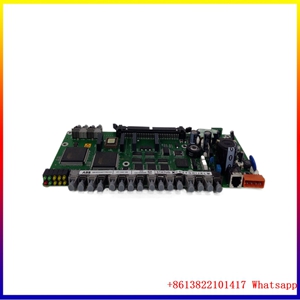
Product Parameters (Technical Specifications)
| Parameter | Description |
|---|---|
| Product Name | GE DS200TBQCG1AAA Analog I/O Transition Module |
| System Compatibility | GE MARK V Control System |
| Module Type | Analog Input/Output Transition Module |
| Analog Input Channels | Multiple isolated analog input channels for voltage and current signals |
| Analog Output Channels | Multiple isolated analog output channels for control devices |
| Input Signal Range | 0–20 mA, 4–20 mA, 0–5 V, or 0–10 V depending on configuration |
| Output Signal Range | 0–20 mA, 4–20 mA, 0–5 V, or 0–10 V |
| Resolution | High-resolution analog-to-digital and digital-to-analog conversion for precise control |
| Accuracy | ±0.1% full scale typical (system-dependent) |
| Isolation | Channel-to-channel and channel-to-backplane isolation to ensure electrical safety and signal integrity |
| Mounting | MARK V rack-mounted |
| Operating Temperature | Industrial range: 0°C to 60°C (typical) |
| Power Supply | Supplied via MARK V backplane |
| Protection | Overvoltage and transient suppression |
| Diagnostics | Module status indicators and system-based diagnostics for health monitoring |
| Reliability | Industrial-grade design for continuous 24/7 operation |
| Country of Origin | USA / GE-certified manufacturing facility |
The DS200TBQCG1AAA ensures that analog signals from field devices are accurately processed and transmitted to the control logic, while analog outputs maintain precise command signals to control loops and actuators.
Product Datasheet Description
The GE DS200TBQCG1AAA module functions as a bridge between field analog signals and the digital MARK V control system, performing precise analog-to-digital and digital-to-analog conversions. It is engineered to provide high signal fidelity, low noise interference, and reliable operation under demanding industrial conditions.
Key Features
- Multi-Channel Analog Interface
Supports multiple input and output channels, allowing simultaneous monitoring and control of several field devices. - Precision Signal Conversion
High-resolution ADC and DAC converters ensure minimal error and accurate signal representation, critical for process stability. - Electrical Isolation
Channel-to-channel isolation reduces the risk of ground loops and interference, ensuring reliable and safe operation in electrically noisy environments. - Seamless MARK V Integration
Designed specifically for GE MARK V racks and backplanes, the module is plug-and-play compatible, simplifying installation and replacement. - Robust Industrial Design
Components are rated for vibration, electrical transients, and temperature extremes, ensuring reliable operation in turbine, boiler, and industrial control applications. - Diagnostics and Monitoring
Supports status indication for module health and channel operation, assisting maintenance personnel in identifying issues quickly. - Maintenance-Friendly Design
Modular design enables rapid replacement and reduces system downtime during maintenance or upgrades.
The DS200TBQCG1AAA is widely deployed in power generation plants, particularly in gas and steam turbine control systems, where precise analog input/output management is essential for system efficiency, safety, and regulatory compliance. It ensures that signals from sensors, such as pressure, temperature, flow, and vibration transducers, are accurately captured and transmitted to the MARK V logic for process control decisions. Similarly, its analog outputs deliver precise commands to actuators and valves for process regulation.
Country of Origin
The GE DS200TBQCG1AAA module is manufactured in GE-certified facilities in the United States, adhering to strict quality assurance and traceability standards. Each module undergoes rigorous functional testing for analog accuracy, electrical isolation, and environmental tolerance, ensuring it meets GE’s specifications for industrial-grade reliability.
Product News and Industry Context
Analog input/output modules like the DS200TBQCG1AAA remain critical components in industrial automation, particularly for legacy GE MARK V installations. Even as digital communication protocols and modern PLCs gain prominence, accurate analog signal management remains essential in high-stakes applications such as turbine control, generator regulation, and process automation.
The DS200TBQCG1AAA continues to be in demand for system maintenance, retrofits, and upgrades, supporting extended lifecycle management of installed MARK V systems. Its precision, reliability, and seamless integration ensure that power generation plants and industrial facilities maintain optimal performance and regulatory compliance.
Recommended Related GE Products
For users operating GE MARK V control systems, the following modules are commonly used alongside or as alternatives to the DS200TBQCG1AAA:
| Model | Description |
|---|---|
| DS200TCGAG1AAA | Discrete input/output transition module for MARK V |
| DS200TCQDG1AAA | Analog output module for turbine and process control |
| DS200TBPG1AAA | Temperature input module for precise thermal monitoring |
| DS200TBVCG1AAA | Voltage/current input module for critical signal acquisition |
| DS200TBADG1AAA | Digital-to-analog output module for actuator control |
| DS200TBCG1AAA | High-density analog transition module for multi-channel applications |
These modules complement the DS200TBQCG1AAA by expanding system I/O capabilities, supporting both analog and digital field devices, and enabling comprehensive control of industrial processes.
Frequently Asked Questions (FAQ)
Q1: What is the main function of the DS200TBQCG1AAA?
A1: It provides analog input/output signal interfacing for the GE MARK V control system, converting field signals to digital logic and vice versa.
Q2: Can this module operate continuously in industrial conditions?
A2: Yes, it is designed for continuous 24/7 operation in turbine, boiler, and process control environments.
Q3: Is it compatible with other GE MARK V modules?
A3: Yes, it is fully compatible with standard MARK V racks, backplanes, and associated control modules.
Q4: What types of signals does it support?
A4: Analog voltage and current signals, including 0–20 mA, 4–20 mA, 0–5 V, and 0–10 V ranges.
Q5: In which industries is this module most commonly used?
A5: Power generation, industrial turbines, process control, energy management, and heavy industrial automation.
Conclusion
The GE DS200TBQCG1AAA Analog Input/Output Transition Module – MARK V is a high-precision, industrial-grade module engineered for reliable signal interfacing in critical control systems. Its multi-channel design, electrical isolation, and seamless MARK V integration ensure accurate, dependable operation in turbine, boiler, and industrial automation applications. By providing robust analog signal management, this module supports process efficiency, operational safety, and long-term system reliability.