- Model: Ulstein PCC1030C
- Brand: Ulstein (Legacy Rolls Royce / Kongsberg Maritime)
- Series: PCC Series Panel Control System
- Core Function: Specialized controller for operator panels, handling joystick inputs and command displays on ship bridges.
- Product Type: Panel Controller Card / Interface Board
- Key Specs: Marine-certified | Multi-channel I/O | Dedicated comms for Ulstein bus
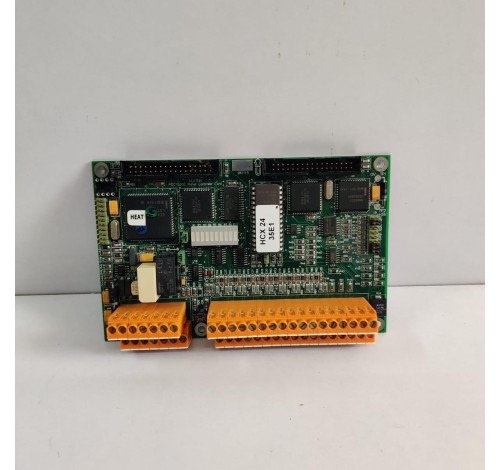
Ulstein PCC1030C
Key Technical Specifications
- Voltage Input: 24 V DC (Standard marine supply)
- Interface: Integrated I/O for pushbuttons, lamps, and analog joysticks
- Communication: Proprietary Ulstein serial bus / CAN-based link
- Mounting: Eurocard format / Rack mountable within panel housing
- Operating Temperature: -15°C to +70°C (Extended marine range)
- Indicator LEDs: On-board diagnostics for Power, Run, and Bus Error
- Protection: Conformal coating for protection against humid, salt-mist environments
- Firmware: Requires system-specific application firmware for full functionality
Application Scenarios & Pain Points
The PCC1030C is the bridge between the human navigator and the ship’s propulsion. It lives inside the bridge consoles, translating physical movements—like pushing a pitch lever or turning a steering nozzle—into digital signals. If this card fails, the bridge loses control over that specific station, often forcing the crew to switch to the “Aft Bridge” or emergency manual control, which is a high-risk situation during docking or narrow-channel transit.
Typical Application Scenarios:
- Thruster Control Panels Processing the analog signals from the main engine or thruster levers on the bridge console.
- Dynamic Positioning Consoles Interfacing the operator buttons and LED indicators with the main DP computer system.
- Winch & Deck Machinery Control Monitoring and controlling heavy-duty winch systems from the bridge or remote control stations.
Case Study: The “Intermittent Command” Ghost
Background: A seismic survey vessel was experiencing “flickering” command indicators on its port-side thruster panel. Occasionally, the joystick would fail to respond for a few seconds—a nightmare during close-quarters station keeping.
The Problem: The PCC1030C card had developed an intermittent fault in its communication chip due to vibration-induced stress on the solder joints (a common issue in older marine electronics). Because Ulstein is now under the Kongsberg umbrella, getting an “immediate” replacement through official channels was complicated by legacy database migrations.
The Solution: We provided a New Surplus PCC1030C from our inventory. I specifically advised the chief engineer to check the DIP switch settings on the old card before swapping.
The Result: The card was swapped during a brief port call in Norway. By duplicating the DIP switch configuration exactly, the new card was recognized by the system instantly. The “ghost” commands vanished, and the vessel returned to its survey schedule without further incidents.
Compatible Replacement Models
The PCC series has evolved over decades. You must be precise about the “C” suffix.
| Original Model | Replacement | Compatibility | Key Difference |
| PCC1030C | PCC1030C | ✅ Direct Match | Exact hardware rev. |
| PCC1030C | PCC1030B | ⚠️ Limited | Different I/O voltage tolerances; check manual. |
| PCC1030C | PCC2000 Series | ❌ Incompatible | Completely different architecture and connectors. |
Engineer’s Note: The PCC1030 series cards often look identical. However, the “C” version usually features updated capacitors and a more robust serial interface. If you are replacing a “B” with a “C”, it usually works, but check the system software version first.
Troubleshooting Quick Reference
| Symptom | Likely Cause | Spare Related? | Action |
| “Bus Fail” LED On | Communication Timeout | ✅ High | Check DIP switch address settings; inspect cable shielding. |
| Joystick Zero-drift | Analog Input Failure | ✅ High | Re-calibrate joystick. If drift persists, the card’s A/D converter is failing. |
| All Panel LEDs Off | 24V Power Loss | ❌ Low | Check the panel fuse and the power input terminals on the card. |
| Frozen Display/Controls | Watchdog Trip | ✅ High | Hard reboot the panel. If it recurs, the CPU on the card is unstable. |
❗ Technical Trap: The DIP Switch Address
I’ve seen many engineers install a perfect PCC1030C only for it to “not exist” in the system. Why? Because they forgot to copy the DIP switch positions from the old board. These switches define the card’s ID on the control bus. Take a photo of the old board’s switches before you pull it out!