
- Manufacturer: ABB
- Model Identification: DSMB-02C
- Part Number: 64666606
- Board Category: Digital Signal Management / Star Coupler Board
- System Compatibility: Primarily used within ACS600 and ACS800 series drive systems
- Communication Interface: Fiber optic channels for high-speed, noise-immune data transmission
- Function: Distributes control signals from the main processor to multiple power modules or follower drives
- Input Voltage: +24V DC internal system power
- Signal Channels: Multiple optical branching ports for synchronized drive control
- Operating Temperature: 0°C to +55°C industrial standard
- Mounting: Snap-in or screw-mount PCB within the drive control unit (DCU)
- Diagnostic LEDs: Integrated indicators for Power, Data Transmission (Tx), and Reception (Rx) status
The ABB DSMB-02C operates as a critical communication hub or “Star Coupler” within large-scale power converter architectures, ensuring that timing-sensitive control pulses reach individual power stages simultaneously. This 64666606 hardware revision is specifically designed to handle the high-speed optical linking required for parallel-connected drives, preventing phase shifts that could lead to uneven load distribution or hardware failure. By utilizing a fiber-optic backbone, the DSMB-02C provides total galvanic isolation between the low-voltage control electronics and the high-power inverter sections, effectively eliminating the risk of electromagnetic interference (EMI) disrupting the drive’s master-follower synchronization.
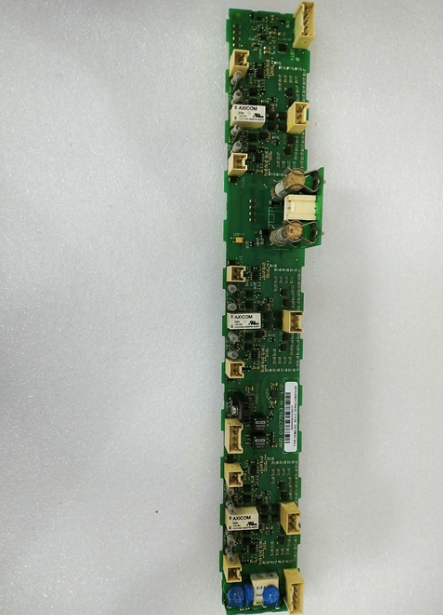
ABB DSMB-02C
Differences from Similar Models
The DSMB-02C 64666606 is distinguished from the standard DSMB-01 or basic NPBU branching units by its increased channel density and improved optical signal-to-noise ratio. While the DSMB-01 version was limited to fewer branching paths, the “02C” variant provides more robust data handling for complex multi-module configurations. Furthermore, the “C” revision includes updated laser diode components that offer a longer service life and higher thermal stability compared to the earlier “A” or “B” iterations, making it more reliable for use in high-duty cycle industrial environments where heat buildup in control cabinets is a common factor.
Operating Tips
When installing a new DSMB-02C, it is vital to inspect the fiber optic cable ends for any scratches or contamination, as even microscopic debris can cause intermittent “Link Fail” alarms in the ACS800 system. Always ensure that the fiber cables are routed with a minimum bend radius of 30mm to prevent signal attenuation or physical breakage of the internal glass cores. Additionally, if the board is being used in a master-follower setup, verify that the node address jumpers (if applicable) or software parameters are correctly assigned, as an incorrect routing configuration will prevent the drive from enabling its power semiconductors.


