
The NABTESCO TBU-III-C1S is a high-performance bridge control system component designed for the precision management of marine propulsion machinery. As part of the TBU (Telegraph Bridge Unit) series, the C1S variant serves as a centralized digital processor that translates bridge lever commands into electronic signals for engine governors, pitch controllers, and thruster systems. Built to withstand the rigorous vibrations and humidity of maritime environments, this unit ensures fail-safe communication between the bridge and the engine room through redundant CAN bus architecture and integrated self-diagnostic routines.
Product Specifications
| Parameter | Specification |
| Model Number | TBU-III-C1S |
| Manufacturer | Nabtesco (formerly Teijin Seiki) |
| System Type | Microprocessor-based Main Engine Control |
| Input Power | 24V DC (Dual Redundant Inputs) |
| CPU Architecture | 16/32-bit Embedded Controller |
| Interface Ports | RS-422, RS-485, and Dual CAN-Bus |
| Analog I/O | 4–20 mA / 0–10V Configurable |
| Discrete I/O | Optically Isolated Digital Inputs/Outputs |
| Operating Temp | -5°C to +70°C |
| Certification | NK, ABS, LR, GL Marine Class Approved |
The Nabtesco TBU-III-C1S is engineered for seamless integration into the M-800-II or specialized bridge maneuvering systems, providing ultra-low latency response times for critical docking and emergency maneuvers. Its “C1S” designation identifies it as a specific hardware revision optimized for synchronized control of multiple propulsion lines, offering an enhanced internal memory buffer to log system events and fault codes, which facilitates rapid troubleshooting during sea trials or scheduled maintenance.
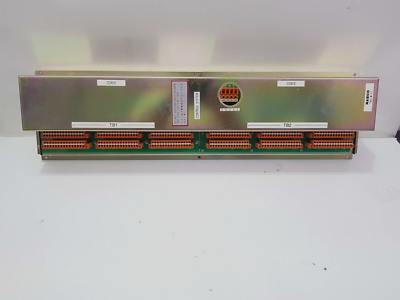
NABCO TBU-III-C1
Model Comparison: TBU-III-C1S vs. TBU-II Series
The TBU-III-C1S represents a significant technological leap over the legacy TBU-II series in terms of processing speed and network integration. While the older TBU-II relied heavily on point-to-point analog wiring, the TBU-III utilizes a fully digital backbone, significantly reducing the amount of cabling required throughout the vessel. Additionally, the C1S version features a more robust “Cold Start” recovery protocol; unlike the TBU-II, which might require manual calibration after a total power loss, the C1S automatically restores all stored maneuvering parameters from its non-volatile memory the moment power is returned.
Operation Tips
- Redundant Power Check: Always verify that both 24V DC power feeds are active on the terminal block; the C1S is designed to switch seamlessly between sources, but running on a single feed removes the system’s fail-safe protection.
- CAN Bus Termination: Ensure that the S-Bus or CAN network is terminated with the correct 120Ω resistors at the furthest node to prevent “ghost” alarms or intermittent communication dropouts between the bridge and the local controller.
- Firmware Matching: When replacing a TBU-III-C1S module, confirm that the firmware version matches the existing system; version mismatches can lead to improper scaling of the handle lever position relative to the engine RPM.
- Grounding for EMI: Given the high density of radio and navigation equipment on the bridge, ensure the TBU-III-C1S chassis is connected to a dedicated instrument ground to prevent electromagnetic interference from causing signal jitter on the analog output lines.


