
| Feature | Specification |
| Model | RSE-P II (Series) |
| Function | Burner Management |
| Supply | 230 VAC / 115 VAC |
| Interface | Bus Connection Ready |
| Enclosure | Panel-Mount Design |
The Saacke RSE-P II is an advanced electronic control system designed for the precise management of industrial burner sequences and fuel-air ratio control. This “P” (Proportional) series II controller integrates safety-critical monitoring with high-accuracy modulation, ensuring optimal combustion efficiency and reduced emissions for steam boilers and thermal fluid heaters. Its microprocessor-based architecture allows for complex firing patterns and seamless integration into plant-wide SCADA or PLC networks via dedicated communication modules.
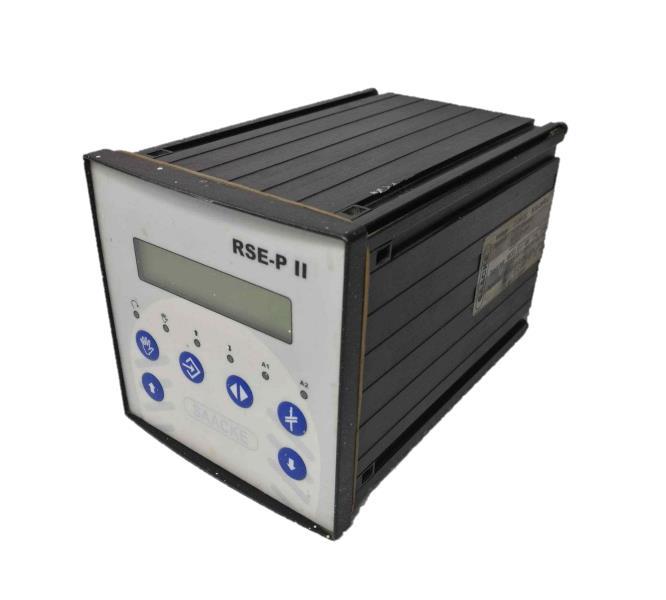
Saacke RSE-P II
Differences from Similar Models
The RSE-P II represents a significant digital upgrade over the original RSE-P analog series, featuring a more robust internal memory for fault logging and programmable logic parameters. Unlike the basic RSE-M (Manual/Semi-Automatic) models, the RSE-P II supports fully automated modulating control with “Parallel” or “Series” cross-limiting functionality. It also offers superior flame signal processing compared to standard ultraviolet (UV) or ionization controllers, providing a more stable signal in high-temperature combustion chambers that are prone to background flicker.
Operational Tips
- Fault Reset: If the unit enters a lockout state, wait for the internal cooling timer to expire before pressing the reset button to avoid thermal stress on the ignition transformer.
- Ratio Tuning: When commissioning the fuel-air curve, always use a calibrated flue gas analyzer to verify that the RSE-P II feedback loops are maintaining the correct O2 levels across the entire firing range.
- Cable Separation: Keep the high-voltage ignition cables physically separated from the RSE-P II sensor inputs (such as 4–20 mA or PT100) to prevent electromagnetic interference from triggering false flame failures.


