
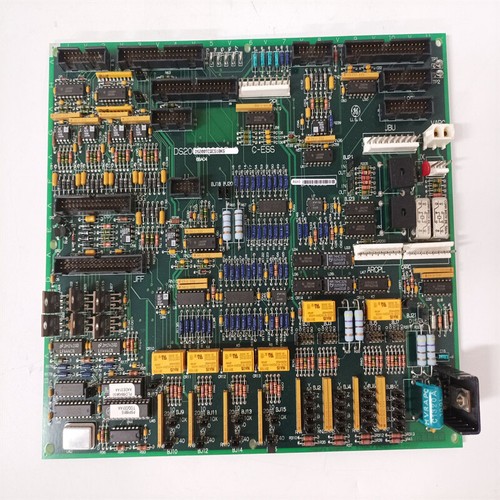
The DS200TCQCG1BKG is a critical VME-based Configuration and Communication board designed for the General Electric Speedtronic Mark V turbine control system. This module serves as a primary intelligence and communication hub within the control rack, facilitating the exchange of data between the various I/O processors and the operator interface. The “TCQC” designation identifies it as a multi-functional processor board that handles high-level control algorithms and system diagnostics. The “BKG” suffix denotes a specific version including functional revisions for enhanced bus stability and compatibility with certain firmware revisions. It is a vital component for maintaining the synchronized operation of gas and steam turbine control loops.
Technical Specifications
The following parameters outline the technical characteristics of the DS200TCQCG1BKG module:
- Model Number: DS200TCQCG1BKG
- Manufacturer: GE (General Electric)
- Series: Speedtronic Mark V
- Bus Architecture: VMEbus
- Dimensions: 233mm x 160mm x 20mm (Standard VME board size)
- Weight: 0.62 kg
- Country of Origin: USA
- Processor Type: Intel-based microprocessor (version dependent)
- Microchips: EPROMs, EEPROMs, and Static RAM components
- Connectors: 2R and 3R connectors for VME backplane interfacing; front-panel serial ports
Application Fields
The DS200TCQCG1BKG is a specialized component used in heavy-duty turbine control environments:
- Power Generation: Managing gas and steam turbine sequencing, protection, and governing logic.
- Oil & Gas: Control of mechanical drive turbines for large-scale compressor stations.
- Industrial Plants: Integration into combined-cycle plant controllers for synchronized power management.
- Utility Substations: Serving as a data concentrator and communication node for plant-wide monitoring.
Product Instructions and Handling
The DS200TCQCG1BKG is a high-density circuit board that must be installed in a specific slot within the Mark V VME rack (typically the or cores). Before installation, ensure the control system is powered down and that you are following strict Electrostatic Discharge (ESD) protocols. The board contains EPROM chips that store specific control firmware; when replacing an existing board, ensure that the EPROMs from the old board are transferred to the new one or that the new board is flashed with the correct software version for your specific turbine. Handle the board only by the edges or the front-panel ejector handles to avoid touching the sensitive microcircuits. After insertion, ensure the board is fully seated and the retaining screws are tightened to provide a secure ground path.
Questions and Answers
Q: What is the significance of the “BKG” suffix in the part number? A: This suffix identifies the hardware’s specific revision level. It often indicates that the board has been updated with specific component changes or jumper configurations to improve reliability or to address known issues found in earlier “A” or “B” revisions.
Q: Does this board contain the site-specific turbine software? A: No, the board hardware is generic. The site-specific logic and parameters are stored in the removable EPROM/EEPROM chips located in the sockets. These must be correctly configured or moved from your previous board to ensure proper operation.
Q: What do the front-panel alphanumeric displays represent? A: The Mark V system uses these displays to provide real-time diagnostic codes. A “running” or “synchronizing” status will show a specific alphanumeric sequence, while fault codes will blink to alert the operator to specific hardware or communication errors.
Product Related News: Extending the Lifecycle of Mark V Systems
The GE Mark V Speedtronic system has been a global standard for turbine control since the 1990s. As many of these systems reach their mature lifecycle phase, the availability of original hardware like the DS200TCQCG1BKG is essential for avoiding expensive “rip-and-replace” upgrades. Industry data shows that by maintaining a healthy inventory of spare VME boards, plant operators can extend the reliable service life of their control systems by 15 years or more. Recent trends in industrial maintenance focus on “targeted hardware refreshes,” where core processor boards are replaced with new-in-stock units to prevent failures related to component aging and thermal stress, ensuring that these classic control systems continue to meet modern grid stability requirements.


