
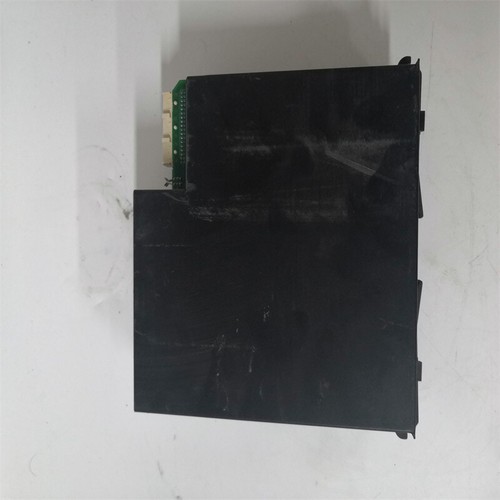
The GE UR9AH is a high-performance digital input/output module specifically designed for the General Electric Multilin Universal Relay (UR) platform. This module is a critical component for power system protection and substation automation, providing the high-speed contact inputs and outputs necessary for protection logic, control sequences, and monitoring within the UR chassis (such as the C60, G60, or D60 relays).
For availability or technical documentation for this specific hardware revision, please visit our UR9AH contact page.
Technical Description and Parameters
The UR9AH is engineered to meet the stringent requirements of utility-grade environments, offering enhanced isolation and high-speed signal processing.
- Module Type: High-Speed Digital I/O Module
- Series: GE Multilin Universal Relay (UR)
- Input Channels: High-voltage DC digital inputs (typically 125V or 250V DC)
- Output Channels: Fast-acting Form-A or Form-C mechanical relay outputs
- Sampling Rate: High-speed scanning for sub-millisecond event capture
- Communication: Internal Tri-Bus communication with the CPU module
- Environmental: Fully compliant with IEEE C37.90 and IEC 60255 protection standards
Product Datasheet Specifications
- Dimensions: Standard UR series vertical module width
- Weight: 0.88 kg (1.94 lbs)
- Country of Origin: Canada / USA
- Mounting: Rear-access slot-in for 19-inch UR Chassis
- Operating Temperature: -40°C to +85°C
- Isolation: 2 kV AC dielectric withstand for 1 minute
Application Fields
The UR9AH is primarily deployed in high-voltage power system protection and industrial control:
- Transmission Line Protection: Providing the high-speed outputs required for pilot tripping and carrier-aided schemes.
- Busbar Protection: Fast-acting I/O for clearing faults in complex substation bus configurations.
- Generator Control: Interfacing with breaker auxiliary contacts and managing lockout relay signals.
- Industrial Load Shedding: Executing rapid disconnection sequences to maintain grid stability during frequency drops.
Product Instructions for Use
- Installation: Power off the UR chassis before module insertion. Slide the UR9AH into the designated slot and secure it with the top and bottom thumb screws to ensure proper grounding.
- Field Wiring: Use high-quality ring terminals for connections to the rear terminal block. Ensure that the polarity of the DC wetting voltage matches the input circuit requirements.
- Configuration: Use GE EnerVista UR Setup software to assign the digital inputs and outputs to specific FlexLogic variables.
- Testing: Perform a “Contact Test” using the relay’s front panel HMI or the software to verify that each output relay is functioning correctly before commissioning the system.
Q&A: Frequently Asked Questions
Q: What is the main difference between the UR9AH and standard UR digital I/O modules? A: The UR9AH is optimized for higher speed and often features enhanced “High-Break” or “High-Speed” contact ratings, making it suitable for direct tripping of circuit breakers without intermediate auxiliary relays.
Q: Can I use the UR9AH for AC voltage inputs? A: Most UR9AH variants are designed for DC wetting voltages. Check the specific suffix on your module label to verify if it supports AC inputs, as using the wrong voltage type can result in failure to trigger or hardware damage.
Q: Is the UR9AH hot-swappable? A: While the UR platform is modular, it is industry best practice to power down the relay before swapping I/O modules to prevent data bus corruption or accidental trips of the protection logic.
Related Product News
GE Vernova has reinforced the lifecycle of the Multilin UR series, including the UR9AH, as part of their 2026 Grid Resiliency initiative. Recent technical updates for the UR series focus on “Virtual Test” capabilities, allowing engineers to simulate I/O transitions on the UR9AH logic without physically operating the field contacts. This significantly reduces commissioning times for new substation builds. Additionally, new manufacturing standards have been applied to the UR9AH to improve resistance to harsh atmospheric conditions, such as high humidity and sulfur-rich environments commonly found in industrial processing plants.


