Description
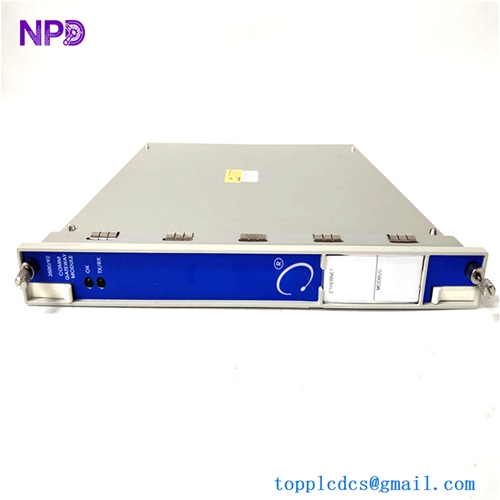
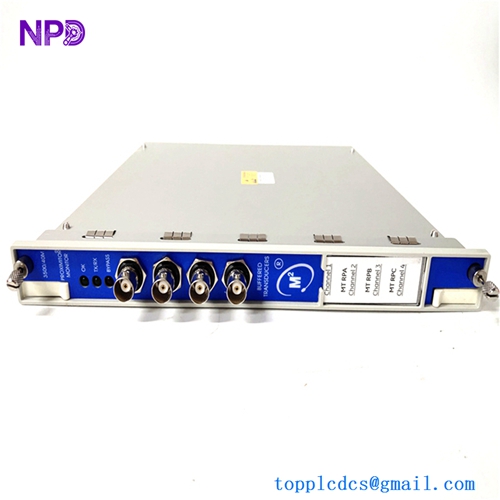
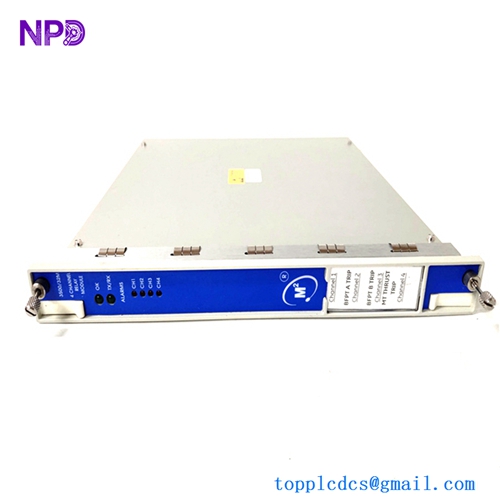
- Model: Bently Nevada 3500/53 (Electronic Overspeed Detection)
- Brand: Bently Nevada (Baker Hughes / USA)
- Series: 3500 Series Machinery Protection System
- Core Function: High-speed redundant monitoring for steam/gas turbine overspeed protection
- Condition: Original New Surplus (New in Box), Factory Sealed
- Type: Protection Monitor Module
- Key Specs: 3-Channel Architecture | 2-out-of-3 Voting | < 15ms Response Time
- Channels: 3 independent channels per module
- Input Signal: Magnetic Pickups (MPU) or Proximity Transducers (3300 XL 8mm)
- Response Time: Less than 15 milliseconds (Critical for mechanical safety)
- Input Range: 1.0 Hz to 100 kHz (Handles high-speed turbomachinery)
- Voting Logic: Integrated 2-out-of-3 (2oo3) logic within the rack
- Accuracy: Within 0.01% of full-scale frequency
- Relay Interface: Requires 3500/32 or 3500/33 relay modules for final trip execution
- Isolation: 500 Vrms between field wiring and rack logic
- Operating Temp: -30°C to +65°C (-22°F to +150°F)
- Configuration: Via 3500 Rack Configuration Software
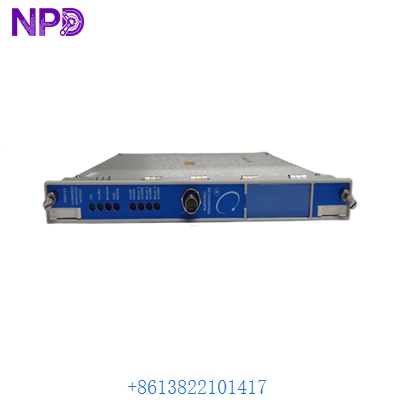
BENTLY 3500/53
Installation & Configuration Guide
In my experience, the 3500/53 is the most critical module in a 3500 rack. If a vibration module fails, the machine might run unsafely; if the overspeed module fails or trips incorrectly, the machine shuts down instantly, or worse, fails to trip during a runaway. Precision is everything here.
Phase 1: Preparation (15 minutes)
⚠️ Safety First:
- Never attempt to swap this module while the turbine is online unless your rack is specifically configured for hot-swap redundancy.
- Confirm the gap settings on your Magnetic Pickups (MPUs). If the gap is too wide, the signal won’t be strong enough at low RPMs.
- Have your 3500 Configuration Software ready with the latest rack “project” file.
Phase 2: Hardware Installation
- Slot Assignment: This module must be placed in a slot that has access to the 3500/32 or 3500/33 relay modules through the backplane.
- Module Insertion: Align the 3500/53 with the guide rails. Push firmly until it seats. Tighten the thumb screws by hand—don’t over-torque them.
- I/O Module: Ensure the matching I/O module (on the back of the rack) is the correct version for your transducers (Internal vs. External Terminations).
Phase 3: Configuration & Voting
- Frequency Setup: Set the number of teeth on your gear (e.g., 60 teeth). If you get this wrong, your RPM reading will be mathematically impossible.
- 2-out-of-3 Logic: Most overspeed systems use 2oo3 logic. Ensure all three channels on the 3500/53 are receiving clear pulses.
- Alarm Setpoints: The “Overspeed Trip” setpoint is usually 10-15% above the rated RPM. Verify this against the turbine manufacturer’s OEM manual.
Phase 4: Verification
- Use a function generator to simulate a high-frequency pulse to each channel.
- Watch the 3500 software to ensure the RPM climbs and trips at the exact setpoint.
- Check the relay outputs to confirm the “Trip” signal is sent to the solenoid valves.
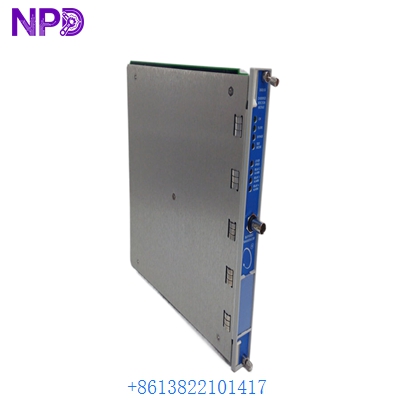
BENTLY 3500/53
Customer Cases & Industry Applications
Case 1: Power Plant Emergency – Failed Overspeed Card A combined-cycle power plant in the Middle East experienced a “Channel Not OK” fault on their GE gas turbine’s overspeed system. Without a healthy 2oo3 logic, the turbine refused to start. The OEM lead time was 12 weeks. We air-freighted a New Surplus 3500/53 module. Result: The plant was back on the grid in 4 days, avoiding millions in fines for non-delivery of power.
Case 2: Paper Mill – Safety Upgrade A paper mill’s steam turbine was still using old mechanical overspeed bolts. During an audit, they were advised to move to electronic protection for better reliability. They installed a 3500 rack with our 3500/53 module. Result: During a load-rejection test, the electronic system tripped 200ms faster than the old mechanical bolt, preventing a potential bearing failure from overspeed stress.
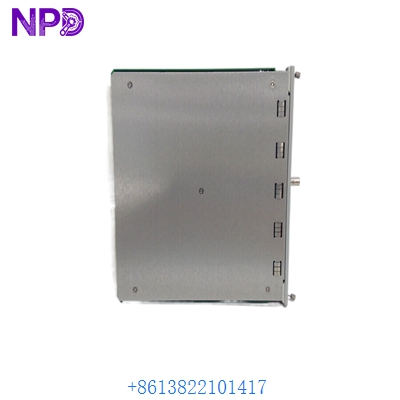
BENTLY 3500/53
Frequently Asked Questions (FAQ)
Q: Can I use this with standard 3300 XL Proximitors? A: Yes. While Magnetic Pickups (MPUs) are common for overspeed, the 3500/53 can be configured to use Proximitors. However, you must ensure the target material is a gear or keyway that provides a sharp pulse.
Q: What is the difference between 3500/53 and 3500/50? A: The 3500/50 is a general Tachometer module used for speed measurements. The 3500/53 is specifically designed for Overspeed Protection with much faster response times and integrated voting logic. Never use a 3500/50 for safety-critical overspeed trips.
Q: Does it come with the I/O module? A: Usually, the front monitor and the rear I/O module are sold separately as they depend on your wiring setup (Internal vs. External). Please confirm your rear I/O part number (e.g., 133396-01) so we can ensure a perfect match.
Q: Why does my “Not OK” LED stay on? A: This usually means the module doesn’t detect a transducer. Check for a broken wire or a gap that is too wide. In some cases, it’s a “Configuration Mismatch”—the module expects a certain sensor type that isn’t connected.
Q: Is “New Surplus” as reliable as “Factory New”? A: For a 3500/53, reliability is non-negotiable. Our units are “New in Box,” meaning they have never been installed. We perform a full backplane diagnostic test before shipping. You get the same performance as a factory-order unit but without the months-long wait.