
Description
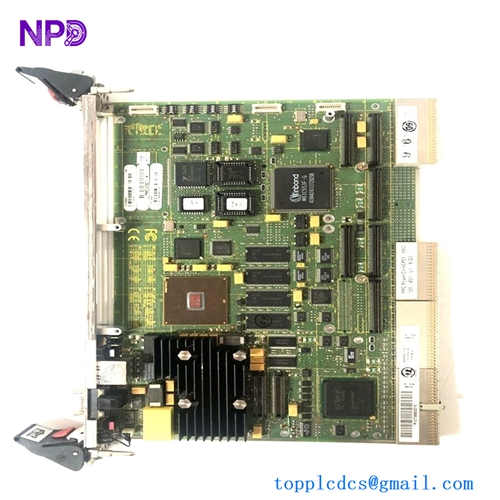
The FORCE CPCI-680 is a high-performance 6U CompactPCI single board computer (SBC) engineered for demanding embedded applications. Originally developed by Force Computers (now part of the Emerson/Artesyn heritage), it utilizes the PowerPC architecture to provide a robust computing platform for telecommunications, industrial automation, and real-time data processing.
Product Introduction
The FORCE CPCI-680 is distinguished by its “SENTINEL” universal PCI-to-PCI bridge technology. This unique feature allows the module to function seamlessly as either a system controller or an intelligent peripheral card without requiring hardware or software reconfiguration. It is designed to operate in high-reliability environments where real-time performance and low power consumption are critical requirements.
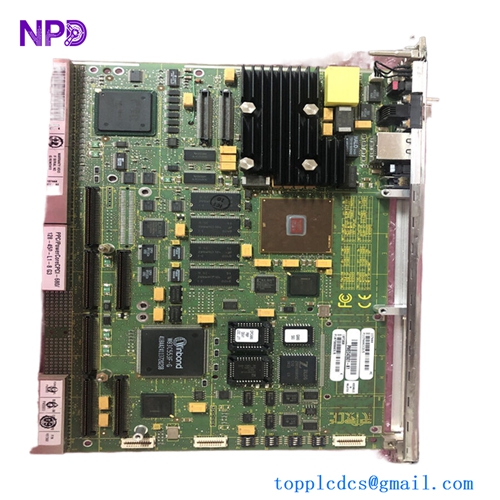
- FORCE CPCI-680
Product Parameters (Datasheet)
| Parameter | Specification |
| Processor | PowerPC G4 (7400) or 750, starting at 400 MHz |
| L2 Cache | 1 MB or 2 MB (running at half processor speed) |
| Main Memory | Up to 1 GB SDRAM with ECC (via memory modules) |
| User Flash | Up to 16 MB onboard programmable |
| Boot Flash | 1 MB (Dual sockets) |
| Ethernet | Dual independent 10/100BaseTX interfaces |
| Expansion | 2 PMC slots (IEEE P1386.1 compliant) |
| Serial Ports | Two 16C550 RS-232 ports on front panel |
| Bus Interface | 32-bit, 33 MHz CompactPCI (Universal mode) |
| Form Factor | 6U CompactPCI (Single-slot width) |
Country of Origin
- Origin: United States / Germany
Application Areas
The FORCE CPCI-680 is widely used in high-stakes industrial and communication sectors:
- Telecommunications: Serving as signaling gateways and media controllers.
- Industrial Automation: Complex motion control and high-precision monitoring.
- Military & Aerospace: Ruggedized data acquisition and signal processing.
- Power Plants: Reliable control systems for energy generation and distribution.
- Marine Systems: Integrated bridge and propulsion control systems.
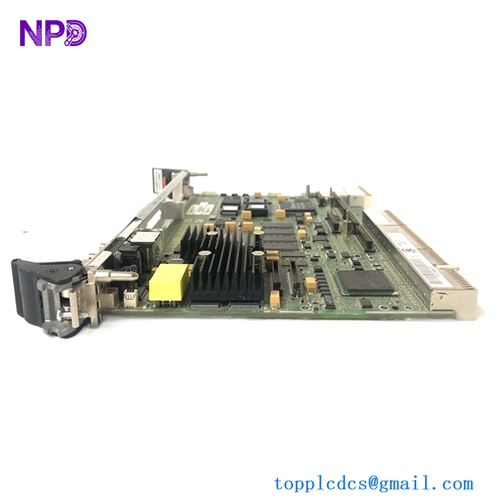
- FORCE CPCI-680
Product Technical Description
- Universal Mode Support: The SENTINEL bridge enables the card to automatically detect its role (system slot vs. peripheral slot) upon insertion into the backplane.
- Real-Time Efficiency: Fully optimized for Real-Time Operating Systems (RTOS) such as VxWorks, QNX, and Linux platforms.
- Hot-Swap Support: Complies with PICMG 2.1 Hot-Swap specifications, allowing for module replacement without powering down the entire chassis.
- Modularity: Dual PMC slots allow for easy expansion of SCSI, IDE, or additional network interfaces without occupying extra rack slots.
Instructions for Use
- Installation: Align the module with the 6U rack guides and seat it firmly into the backplane connectors using the handles.
- Mode Detection: The card will automatically configure itself based on its slot position. Ensure the system slot is used if the card must act as the bus master.
- Expansion: If additional I/O is required, install the necessary PMC mezzanine cards on the board before rack installation.
- Cooling: Ensure the chassis provides sufficient forced air-cooling to maintain an operating temperature within the 0^{\circ}C to 55^{\circ}C range.
- Monitoring: Use the front-panel “Run” and “Status” LEDs to verify the boot sequence and operational health.
Recommended Similar Models
- FORCE CPCI-690: A higher-performance successor with enhanced processing power.
- FORCE CPCI-6750: A compatible 6U Intel-based CompactPCI CPU module.
- FORCE CPCI-720: A specialized PowerPC module for high-speed switching tasks.
- FORCE CPCI-522G: A compact peripheral-mode processing card.
- Motorola CPCI-730: A rugged 6U SBC for high-performance computing.
Product Manual & Datasheet
For complete technical documentation and configuration guides, please visit:
Download FORCE CPCI-680 MANUAL datasheet