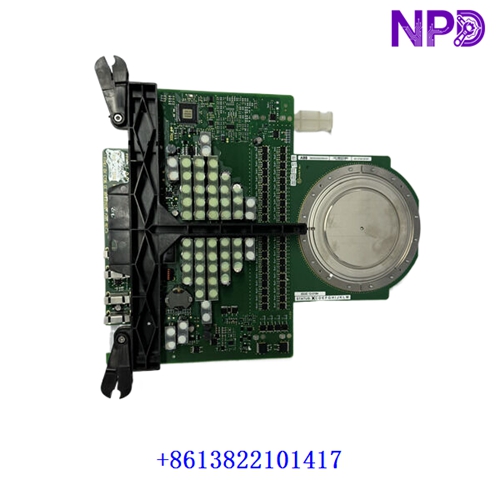

Description
The ABB 5SHY3545L0020 (3BHE014105R0001 / 5SXE08-0166) is a high-power Integrated Gate-Commutated Thyristor (IGCT) semiconductor module designed for demanding industrial medium-voltage frequency converters, high-power drives, and heavy-duty power transmission applications. It delivers extremely rapid switching capabilities, superior thermal performance, and robust surge current handling for critical high-voltage power conversion systems.
- Brand: ABB
- Model: 5SHY3545L0020 (3BHE014105R0001 / 5SXE08-0166)
- Series: High-Power Semiconductor / IGCT Line
- Product Name: IGCT Module / Power Semiconductor Device
- Place of Production: Switzerland / Germany
- Lifecycle Status: Active / Industrial Power Line
- Dimensions: Standard High-Power Press-Pack Semiconductor Housing
- Weight: Approx. 2.4 kg
- Original Origin: European Union
- Power Consumption: High-Voltage Power Device / Low-Power Gate Control Interface
📋 Initial Startup Inspection Checklist
- 🔍 Visual Inspection: Examine the ceramic envelope, pole pieces, and gate connection terminals for any physical cracks, transit damage, or surface contamination.
- 🔍 Electrical Clearance: Verify that creepage distances and insulation clearances meet specifications before high-voltage energization.
- 🔍 Clamp Force Verification: Ensure that the mechanical mounting clamp applies the precise manufacturer-specified clamping force to guarantee optimal thermal and electrical contact.
- 🔍 Cooling System Check: Confirm that liquid cooling channels or heat sinks are securely attached, free of leaks, and operating at correct flow rates.
- 🔍 Gate Unit Connection: Check that the optical or electrical gate trigger cables are firmly and correctly connected to the IGCT driver board.
🛠️ Routine Maintenance and Servicing
Regular maintenance of high-power semiconductor assemblies prevents catastrophic thermal or electrical failures.
- 🔧 Coolant Quality Monitoring: Periodically test cooling water conductivity, pH levels, and anti-freeze concentrations to prevent corrosion or scaling.
- 🔧 Clamp Pressure Check: Annually inspect mechanical mounting hardware and torque indicators to maintain constant clamping pressure across thermal cycles.
- 🔧 Thermal Interface Inspection: Check for any signs of thermal paste degradation or coolant weeping around the semiconductor stack assembly.
- 🔧 Electrical Terminal Cleanliness: Inspect busbars and power terminals for oxidation, discoloration, or dust accumulation, cleaning with approved solvents if necessary.
🔍 Troubleshooting and Common Faults
Rapid identification of power semiconductor faults protects adjacent drive and converter infrastructure.
- ⚠️ Fault Symptom 1 (Device Failure / Short Circuit): Test blocking voltage and gate-cathode impedance using specialized semiconductor test equipment. Replace the device if internal shorting is confirmed.
- ⚠️ Fault Symptom 2 (High Thermal Trip): Inspect cooling system flow rates, pump status, and heat sink cleanliness to clear blockages causing overheating.
- ⚠️ Fault Symptom 3 (Gate Trigger Failure): Check optical fiber integrity, trigger pulse amplitude, and gate power supply voltages on the associated driver board.
⚡ Safety Precautions
- 🛡️ Qualified Personnel Only: Handling, testing, and replacement must be performed exclusively by certified high-voltage power electronics specialists.
- 🛡️ Lethal Voltages (Lockout/Tagout): Ensure complete system de-energization, capacitor discharge, and LOTO procedures are strictly executed before touching the assembly.
- 🛡️ Mechanical Hazard: High-power press-pack devices involve extreme clamping forces; use proper tooling and avoid mechanical shock to ceramic housings.
❓ Frequently Asked Questions (Q&A)
- 💡 Q1: Can an IGCT module be repaired or reconditioned after failure?
- A1: No. Due to the precision hermetic sealing and high-stress silicon structure of press-pack IGCTs, failed units must be replaced entirely with an identical factory-rated component.
- 💡 Q2: Why is precise mechanical clamping force critical for this module?
- A2: Proper clamping pressure ensures uniform electrical contact across the silicon wafer and provides the necessary low thermal resistance path for effective heat dissipation into the heat sinks.