Description
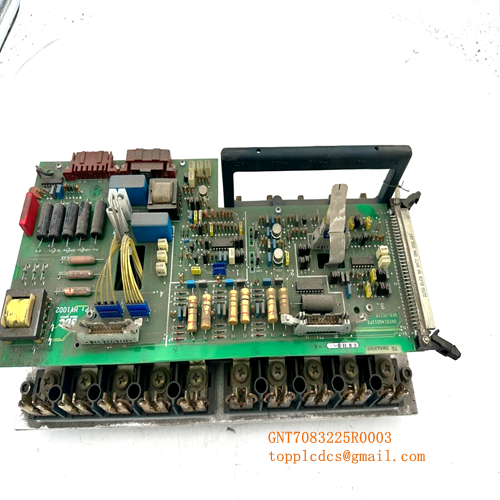
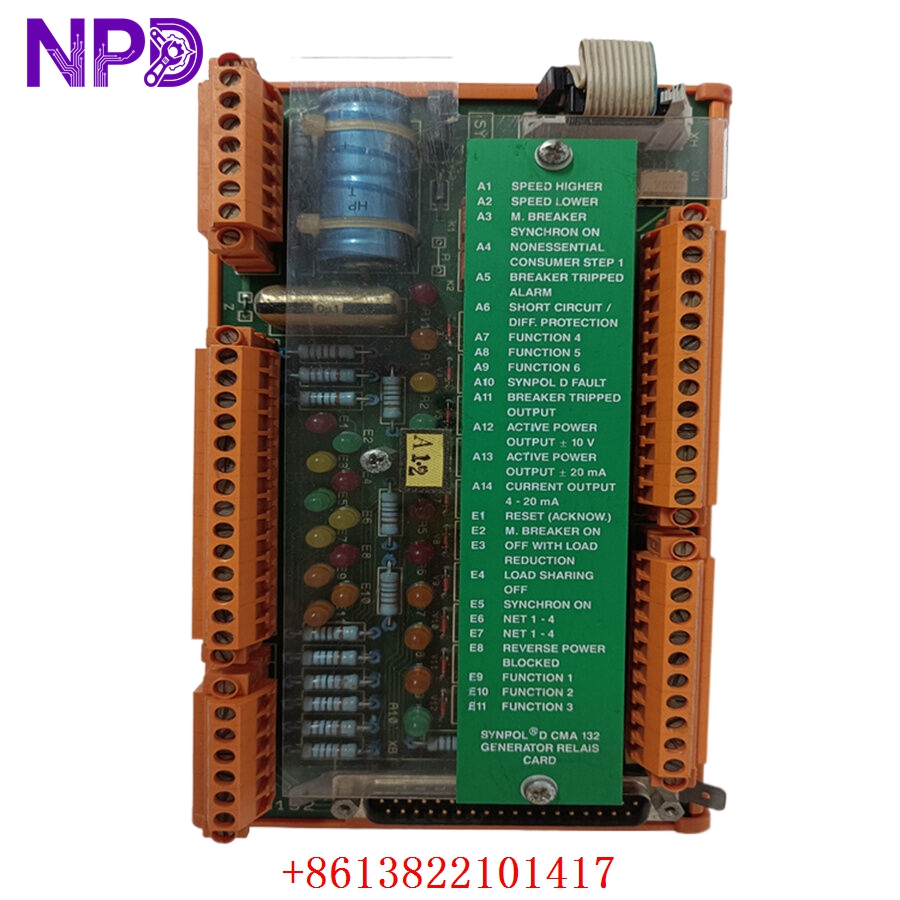
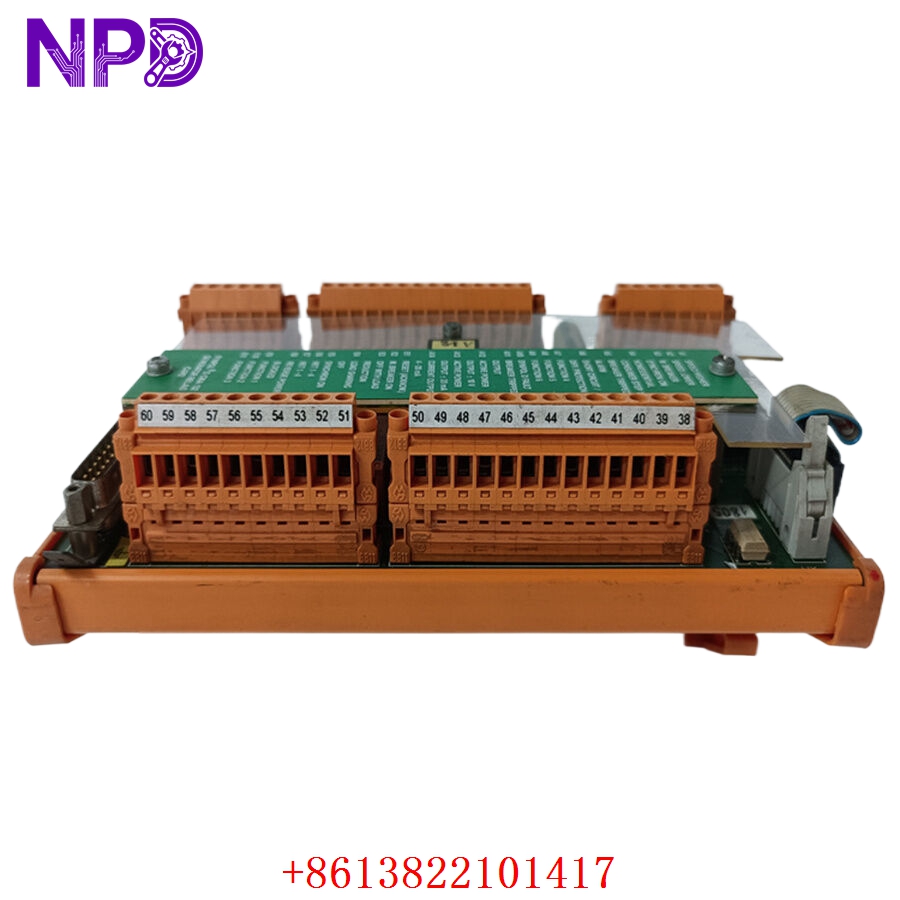
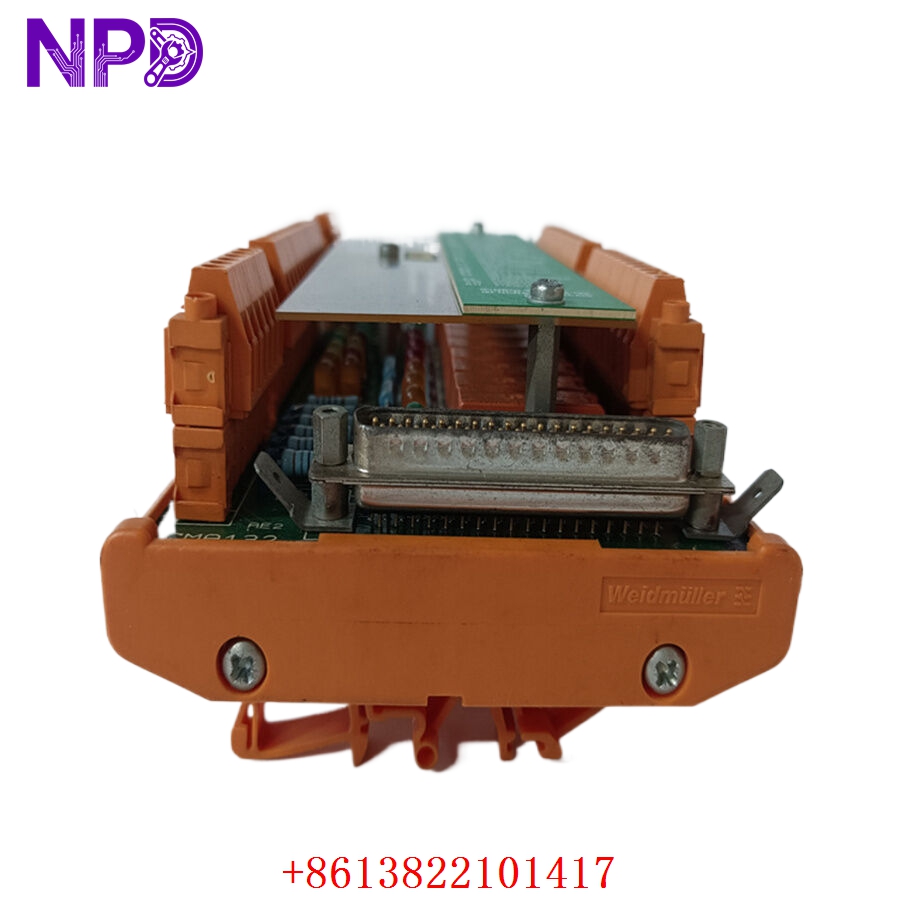
The ABB CMA132 (part number 3DDE300412) is a precision-engineered Analog Output module designed for the ABB MasterPiece 200/1 control series. This module provides high-accuracy conversion of digital control signals into analog outputs, enabling seamless management of field-mounted actuators, variable frequency drives, and pneumatic controllers. It is a critical component for maintaining stable and responsive regulation in complex industrial process control loops.
Technical Specifications
| Parameter | Detail |
| Model | CMA132 |
| Part Number | 3DDE300412 |
| Manufacturer | ABB |
| Device Type | Analog Output Module |
| Compatibility | MasterPiece 200 / 200/1 Systems |
| Output Channels | Multi-channel configurable |
| Mounting | Rack-mounted / Control Cabinet |
| Operating Temperature | 0°C to 55°C |
| Signal Range | Standard industrial ranges (e.g., 4-20mA, 0-10V) |
Fields of Application
The CMA132 is widely used in heavy industrial sectors, including:
- Power Generation: Precise control of fuel valves and feed-water regulators.
- Pulp and Paper: Management of high-speed motor drives and tension controllers.
- Chemical Processing: Control of dosing pumps and flow-regulating valves.
- Steel and Metal: Regulation of heating elements and furnace atmosphere control.
Product Introduction
The CMA132 functions as the command interface between the controller’s logic and the physical process environment. It interprets the digital setpoints generated by the MasterPiece processor and converts them into precise analog electrical signals. Built for longevity and high-precision performance, the module includes internal diagnostics to detect open-circuit or short-circuit conditions, ensuring operators are immediately alerted if a field output loop fails.
Product Use Instructions
- Ensure the control system is powered down and standard lockout/tagout procedures are observed.
- Insert the module into the designated slot on the MasterPiece backplane, ensuring all rear edge connectors are properly aligned.
- Secure the module using the handle-locking mechanism.
- Terminate the field output wires to the corresponding terminal blocks located on the system’s termination unit.
- Power on the system and verify output signal accuracy using a calibrated multimeter at the field termination points.
- Configure the channel scaling within the ABB control software to match the requirements of your specific field actuator.
Product Use Precautions
Avoid electrostatic discharge (ESD) by handling the module only by its handle or non-conductive edges. Ensure that output loads do not exceed the module’s rated current or voltage capacity, as this will lead to permanent hardware damage. Always ensure the cabinet cooling system is operational, as high ambient temperatures can cause signal drift and significantly reduce the lifespan of the internal electronic components.
Frequently Asked Questions (Q&A)
Q: Is the CMA132 module hot-swappable?
A: In most legacy MasterPiece 200 configurations, it is highly recommended to de-energize the rack before inserting or removing modules to prevent electrical arcing or damage to the backplane.
Q: How can I determine if the module has outputted an error?
A: Status LEDs on the front faceplate provide immediate visual feedback. If a channel experiences a fault, the LED will typically change color or blink. You can also view fault registers in the MasterPiece system software.
Q: Can this module be repaired if a single channel fails?
A: Due to the high-density surface-mount components, component-level repair is generally not recommended. It is standard practice to replace the entire module to maintain system reliability.
Product Operation Methods
During operation, the CMA132 is continuously updated by the main controller’s scan cycle. The controller writes a digital value to the module’s buffer, which is immediately converted to an analog signal. The module actively monitors the health of the output loop; if the current loop is broken (e.g., wire breakage), the module will communicate a fault back to the CPU, allowing the control system to initiate a safe-state response for the associated process loop.