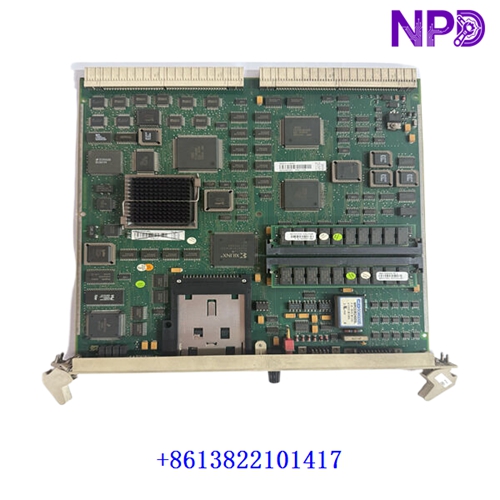

Description
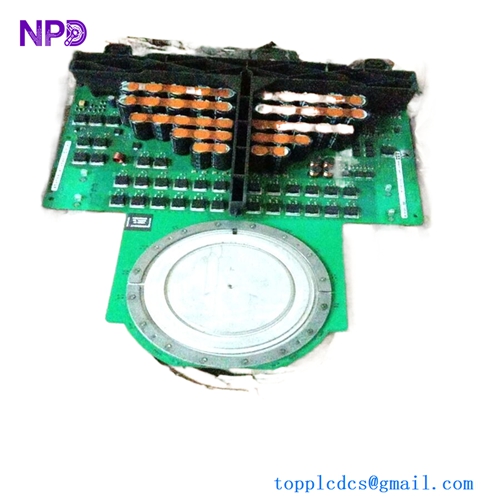
The ABB DSP P4LQ (Catalog Order Code: HENF209736R0003, alternative part/board ID: HENF436961P106) is a high-performance digital signal processor (DSP) and control module. It is engineered for real-time data processing, signal conditioning, and deterministic loop execution within advanced ABB industrial control and PLC/DCS automation architectures (such as AC500 and Symphony Plus platforms).

- Brand: ABB
- Model Designation: DSP P4LQ (DSPP4LQA)
- Primary Part / Order Code: HENF209736R0003
- Alternative / Board ID: HENF436961P106
- Series: ABB Industrial PLC / Distributed Control & Signal Processing Line
- Product Type: Digital Signal Processing Control Card / Processor Board Unit
- Origin Country: Sweden / Estonia / Global Manufacturing Standards
- Lifecycle Status: Mature / Industrial Automation Spare Part Line
- Form Factor: Standard Modular Subrack Printed Circuit Board Assembly
- Weight: Approx. 0.5 kg to 1.5 kg
- Operating Voltage: 24V DC Internal Bus Powered
🔍 Initial Operation Checklist
- Visual and structural inspection: Inspect the printed circuit board, onboard microchips, edge connector fingers, and front panel thoroughly for any transit damage or physical wear.
- Confirm part identifiers: Verify that both the primary order code (
HENF209736R0003) and manufacturing stamp (HENF436961P106) match your system bill of materials and hardware requirements. - Check slot alignment: Carefully align the card into the subrack guide rails to prevent bent pins before pressing firmly to seat it completely into the backplane connector.
- Validate power metrics: Ensure that rack power supply rails and 24V DC auxiliary feeds are stable and within normal operational limits prior to system startup.
- Inspect communication links: Confirm that any onboard communication cables or bus connectors are securely locked into position.
🛠️ Routine Maintenance & Care
- Dust and debris clearance: Periodically clean accumulated dust from the circuit board surface and housing using clean, dry, oil-free compressed air.
- Connector and edge pin audits: Annually inspect backplane edge connectors and plug-in interfaces for secure mechanical seating, thermal stress, or oxidation.
- Environmental monitoring: Ensure control room or cabinet air conditioning and ventilation systems maintain ambient temperatures within specified limits (0°C to +60°C).
- Diagnostic tracking: Routinely check module status indicators and system event logs via the engineering software suite to identify early performance anomalies.
⚠️ Troubleshooting & Common Issues
- Communication or synchronization failures: Check backplane seating, bus termination, and network parameters if the card drops off the control network.
- Initialization or boot errors: Reseat the control card firmly into its subrack slot and verify that internal power supply rails are stable if status LEDs fail to light up.
- Processing bottlenecks: Cross-reference task allocations and execution loads in the engineering toolset if real-time signal loops experience latency warnings.
🛡️ Safety Precautions
- Professional personnel only: Installation, card extraction, and system configuration must be performed strictly by certified automation and electrical engineers.
- Electrostatic discharge (ESD) safety: Always wear a properly grounded wrist strap when handling bare electronic circuit boards to prevent electrostatic damage to sensitive microprocessors.
- Power disconnection: Ensure that control rack power supplies are completely shut off before inserting, extracting, or servicing processing cards.
❓ Frequently Asked Questions (Q&A)
Q1: What is the primary function of the ABB DSP P4LQ card?
A1: It operates as a dedicated digital signal processing (DSP) and control card designed to handle fast, deterministic math computations, signal conditioning, and logic execution independently of standard host controllers.
Q2: Can different revision codes (such as HENF209736R0003 vs. HENF436961P106) be interchanged freely?
A2: Sub-part numbers and manufacturing revisions should be matched carefully against your specific rack configuration and system firmware versions to ensure complete hardware and software compatibility.
Q3: Is hot-swapping supported for this control card?
A3: No, standard procedure for subrack-mounted processor cards requires powering down the rack chassis to prevent backplane arcing or data corruption unless explicit live-insertion support is documented for your specific system rack.