Description
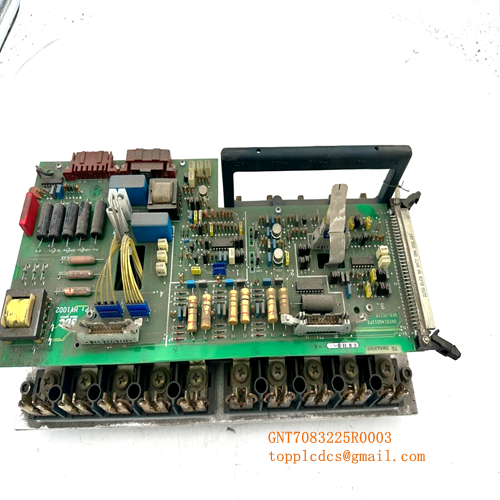
- Model/Type Designation: ABB DSSR122 (Alternative spelling: DSSR 122)
- Product ID/Part Number: 48990001-NK (Exchange P/N: EXC3BSE018059R1 / EXC48990001-NK)
- Brand: ABB (Asea Brown Boveri)
- System Control Architecture: Advant Master / Advant OCS (AC400 / AC410 / AC450 Master Racks)
- Core Function: High-capacity DC-input to DC-output power supply module. It steps down an unregulated 24 V DC backplane or external feed into a highly stabilized, precision-regulated 5 V DC logic rail delivering up to 40 A to power critical rack processors, memory arrays, and local bus transceiver cards.
- Nominal Input Voltage: 24 V DC
- Input Voltage Envelope Limits: 18 V DC to 30 V DC operational range
- Output Voltage Rating: 5 V DC (Precision regulated log rail)
- Maximum Continuous Output Current: 40 A
- Nominal Processing Load Capacity: 280 W output envelope limits
- Efficiency Level Array: >82% at full thermal design profile load boundaries
- Required Overcurrent Spare Fuse: 20A high-capacity fast-acting layout (ABB Part Number: 5672827-20)
- Operating Ambient Temperature: -5°C to +55°C continuous cabinet envelope limits
- Storage Temperature Window: -40°C to +85°C structural environment limits
- Atmospheric Moisture Bounds: 5% to 95% relative humidity (RH, non-condensing tracking)
- Physical Envelope Footprint: Length 238.5 mm \times Height 72 mm \times Width 162 mm
- Net Weight: 2.35 kg (Substantial internal heat-sinking and transformer array)
- Compliance Exemptions: Formally exempt from EU Directive 2011/65/EU (RoHS) under heavy-industrial structural infrastructure provisions (Reference: 3BSE088609 EU Declaration of Conformity)
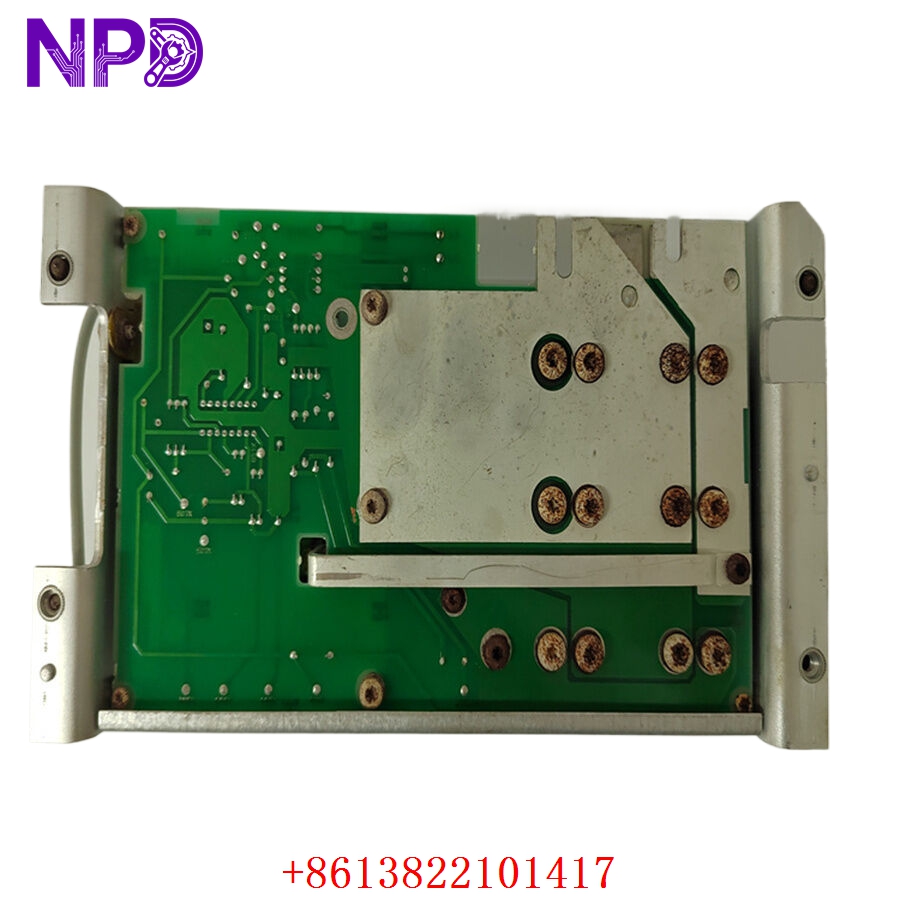
ABB DSSR122 48990001-NK
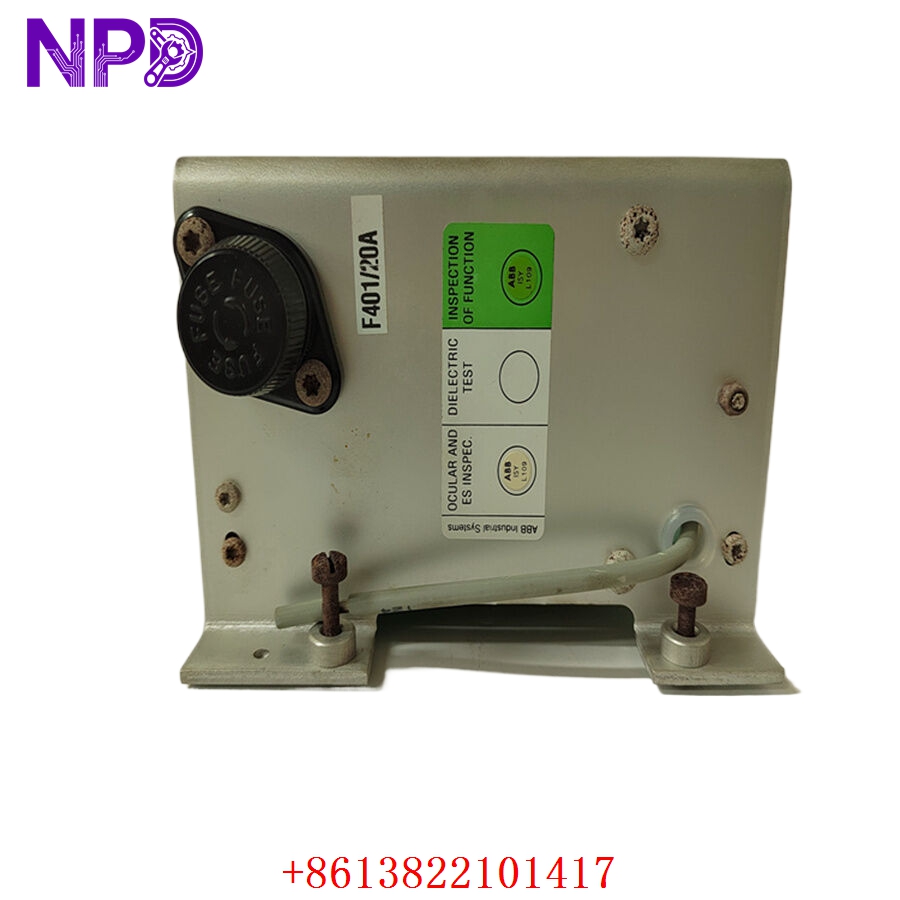
ABB DSSR122 48990001-NK
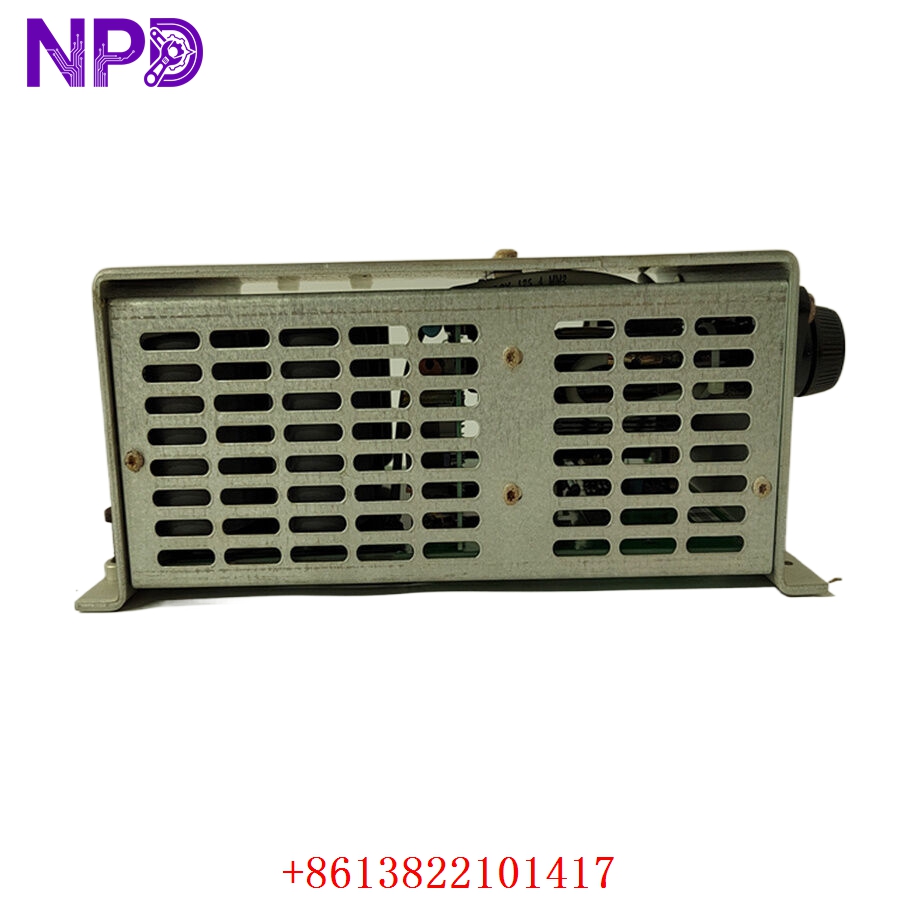
ABB DSSR122 48990001-NK
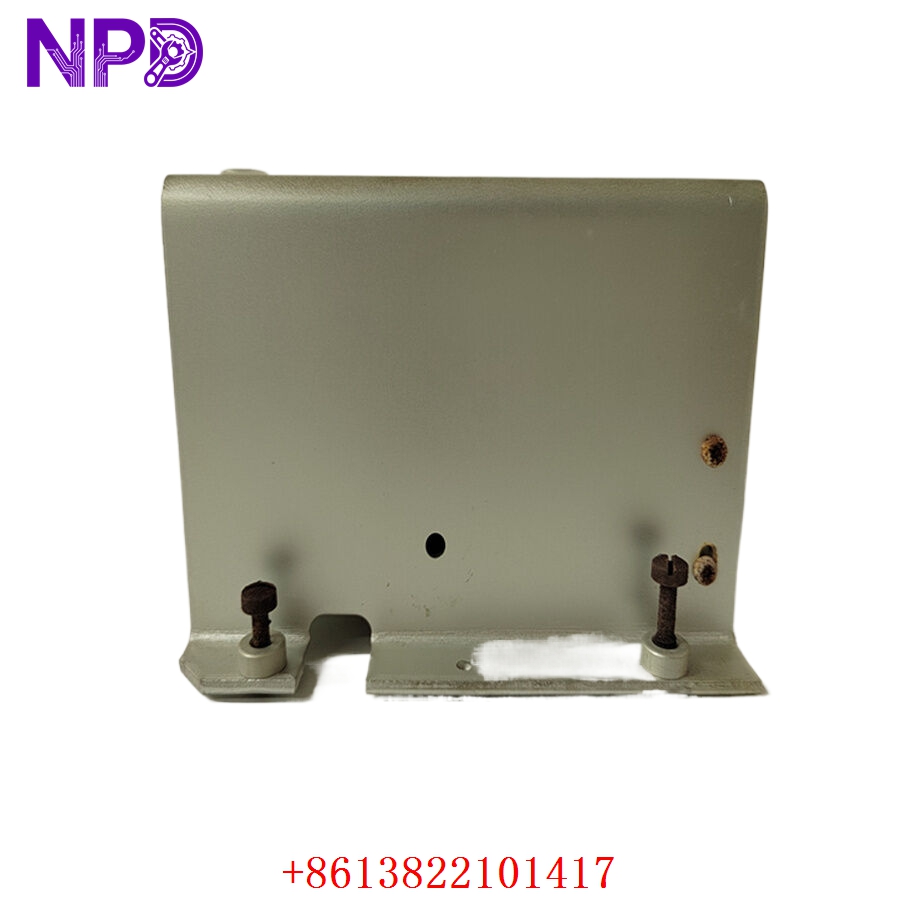
ABB DSSR122 48990001-NK
Installation & Configuration Guide
Pre-Installation Setup
⚠️ CRITICAL SAFETY WARNING:
- Coordinate a comprehensive control bypass window before swapping a DSSR122 module. Because this unit supplies the 5 V DC logic rail for the entire subrack, pulling it down while live will immediately de-energize every processor and communication card in that chassis, resulting in an unmanaged process shutdown or emergency trip.
- Ensure that the 24 V DC main isolation breaker upstream of the target subrack slot is open and locked out (LOTO) before beginning the replacement sequence.
- Verify that the matching system frame is properly grounded to plant earth.
- Required Tools & Gear:
- Grounded anti-static wrist strap clamped to the enclosure’s bare metal frame.
- Standard 5.5 mm flathead insulated screwdriver for rack faceplate screws.
- Digital multimeter (such as a Fluke 87V) with calibrated low-voltage tracking accuracy.
- Replacement 20A spare fuses (Part 5672827-20) for the input protection rails.
- Backup Procedures:
- Prior to power isolation, verify that the master processor module backup battery LED is healthy. This ensures that when the 5 V DC logic rail drops during the swap, the volatile application memory (RAM) profile remains intact.
- Perform a complete software backup of the master node controller database via your engineering workstation to safeguard against unexpected RAM loss.
Old Module Removal
- Isolate Primary Input Power: Trip the designated 24 V DC distribution line circuit breaker feeding the subrack power slot. Use a digital multimeter to confirm that voltage across the input terminals reads 0.0 V DC.
- Back Out Retaining Screws: Use your flathead insulated screwdriver to fully loosen the upper and lower captive mounting screws on the DSSR122 faceplate.
- Eject the Module: Pull out the integrated card ejection tabs on the faceplate simultaneously to disengage the high-current pin arrays from the backplane receiver sockets.
- Slide Out Smoothly: Keep the card level and slide it forward along the chassis guide rails. Support the bottom of the module—it weighs 2.35 kg due to its heavy internal transformers and copper heat-sinking arrays. Place it on an ESD-safe workbench mat.
New Module Mounting and Configuration
- ESD Mitigation Check: Wear a grounded anti-static wrist strap while removing the new DSSR122 / 48990001-NK module from its protective shielding bag. Do not touch the rear heavy-duty connector pins.
- Inspect Protection Array: Check that the onboard 20A primary safety fuse is fully seated in its retention block and shows no signs of shipping stress or open resistance lines.
- Align with Chassis Tracks: Position the card into the slot guides within the Advant master rack assembly housing.
- Seat the High-Current Pins: Slide the unit smoothly backward into the subrack until the heavy-duty rear pins meet the backplane. Firmly push the faceplate levers inward to fully seat the high-current connectors into the backplane matrix.
- Secure the Fasteners: Tighten the upper and lower captive faceplate retaining screws down snug (to roughly 0.8 N·m torque) to lock the module in place and ensure structural grounding with the rack enclosure frame.
Post-Installation Verification Checklist
- [ ] Verify that the 20A input fuse is properly inserted and seated in the card structure.
- [ ] Confirm that all faceplate retaining screws are tightened down snug to establish a solid frame ground.
- [ ] Double-check that adjacent processor or interface cards were not jarred loose during installation.
- [ ] Ensure all tool inventory is accounted for and no metallic debris remains inside the chassis slot.
Power-Up & Loop Commissioning
- Re-engage the upstream 24 V DC primary input isolation circuit breaker.
- Monitor the front status indicators on the DSSR122 faceplate immediately:
- Input OK (Green): Steady illumination indicates that the incoming 24 V DC primary feed falls well within the required 18–30 V DC operating window.
- Output OK (Green): Steady illumination indicates that the internal step-down switching controller is delivering a clean, regulated 5 V DC output rail.
- Fault/Error (Red/Amber): If this illuminates, trip the primary breaker immediately. This indicates an internal regulator failure or a downstream short circuit on the 5 V DC bus rail.
- Use your digital multimeter to verify the test points on the front panel (if available) to ensure the 5 V DC rail reads within a tight tolerance window of 4.98 V DC to 5.02 V DC under load.
- Verify that the neighboring master controller, memory modules, and bus communication cards initialize properly through their boot sequences as the 5 V DC rail stabilizes.
- Check your engineering terminal to verify that the controller rack nodes are communicating normally without reporting low-voltage faults or power supply alerts. Clear any historical system event logs to finalize the commissioning process.
Customer Cases & Industry Applications
Case 1: Paper Mill Controller Intermittent Fault Resolution
A major containerboard manufacturing plant in Shandong province faced random, intermittent safety trips on an Advant AC450 controller that managed a high-speed paper machine line. The diagnostic error logs flagged intermittent memory corruption and bus communication timeout errors, but the processor cards themselves passed all local testing. Closer inspection revealed that the 5 V DC logic rail was dipping down to 4.7 V DC whenever the mechanical load on neighboring cards spiked. The root cause was traced to a degraded, aging DSSR122 power supply unit that could no longer maintain high-current regulation at 40 A.
To prevent an extended production shutdown, the plant’s automation team needed an immediate replacement module. Because the Advant OCS series is a legacy architecture, sourcing parts through standard factory channels can involve long lead times. The team reached out to us to check our ready surplus stock. We pulled a brand-new surplus DSSR122 48990001-NK card, ran it through a 24-hour high-current load test on our specialized AC400 series test rig, and shipped it via priority express courier the same day. Technicians swapped the power supply during a scheduled maintenance window that weekend. The new module locked the logic rail at a stable 5.01 V DC, completely eliminating the random safety trips and restoring reliable operation to the production line.
Case 2: Metallurgical Plant Subrack Lifecycle Extension
During an infrastructure review at a steel processing facility, engineers sought to extend the service life of their rolling mill’s core Advant Master controller assets. Several of the legacy power modules in the subracks showed signs of heavy thermal wear and degrading filter capacitors after years of continuous operation in a hot environment.
[Degraded 5V Bus Rails] ──> [Processor Dropouts & Unplanned Mill Downtime]
                                             │
             ┌───────────────────────────────┴───────────────────────────────┐
             ▼                                                               ▼
 [Option A: Full DCS Migration]                                  [Option B: Targeted Power Supply Renewal]
 • Cost: Very high capital expenditure (~$250,000+)              • Cost: ~85% savings compared to migration
 • Downtime: 2 weeks of engineering, re-wiring, testing          • Downtime: Completed in under 30 minutes per subrack
 • Execution Risk: High; requires complete logic rewrite         • Execution Risk: Drop-in replacement; zero software changes
The facility’s engineering team chose a targeted hardware renewal strategy, deciding to replace the worn units with brand-new surplus DSSR122 48990001-NK modules from our inventory. The maintenance crew completed the quick drop-in hardware swaps during a scheduled shift change, requiring zero changes to the underlying control logic or application code. This cost-effective update stabilized the system’s internal power framework, protected the downstream processors from voltage-induced faults, and extended the lifecycle of the rolling mill’s control system by several years.
Frequently Asked Questions (FAQ)
Q1: What is the primary difference between the DSSR122 and standard 24V industrial power supplies?
A: Standard industrial power supplies typically step down 120/230 V AC utility lines to a 24 V DC distribution level. The DSSR122 is a specialized, high-current subrack step-down regulator module designed specifically for the ABB Advant Master architecture. It takes that internal 24 V DC distribution feed and converts it down to a precision-regulated 5 V DC logic rail. Delivering up to 40 A of current at 5 V DC requires advanced internal line filtering, heavy duty components, and robust heat dissipation networks to protect sensitive microprocessor chips from high-frequency switching noise.
Q2: Does this power supply unit require any software configurations or node ID programming?
A: No, the DSSR122 is a purely hardware-driven power conversion card. It does not contain an internal application micro-controller or flash memory array that requires node ID setting, firmware matching, or software configuration downloads. Once it is physically mounted into the subrack slot and input power is applied, it automatically begins regulating the output lines, making it a true plug-and-play maintenance asset.
Q3: How do you verify the current output capacity of the DSSR122 before shipping?
A: Our quality assurance testing goes far beyond basic voltage checks. We place every surplus module into an authentic ABB Advant series subrack chassis and connect it to a multi-channel programmable electronic load bank.
[Advant Test Chassis] ──> [DSSR122 Power Supply] <──> [Programmable Electronic Load Bank]
                                                               │
                                                               ▼
                                              [24-Hour Continuous 40A Stress Test]
We subject the module to a continuous 24-hour stress test, drawing a full 40 A load from the 5 V DC rail while monitoring its thermal profile and voltage stability. This testing ensures that the step-down circuits maintain full voltage regulation and operate reliably under maximum load before the module leaves our facility.
Q4: Why is this module listed as exempt from the European RoHS directive?
A: The DSSR122 power supply unit is an integral spare component designed specifically for large-scale, fixed industrial process control systems (such as the ABB Advant OCS network). Under Article 2(4) of EU Directive 2011/65/EU, complex large-scale industrial installations and their dedicated maintenance components are exempt from standard consumer electronics material restrictions. This exemption allows the module to retain its original heavy-duty component trace metallurgy, ensuring full backward compatibility and operational performance within existing legacy control racks.
Q5: What are the most common failure modes of a degraded DSSR122 board?
A: The most common failure points in legacy high-current power modules are electrolytic filter capacitors and internal switching transistors, which can degrade after years of continuous operation in warm control cabinets. Common indicators of wear include a faint high-frequency humming sound, an amber or red fault light on the front panel, an increased ripple voltage on the 5 V DC rail, or intermittent processor drops and communication timeouts during high production loads.
Q6: What payment and shipping options are available for urgent emergency plant shutdowns?
A: We accept international wire transfers (T/T), corporate credit cards, and standard letters of credit. For emergency repairs during an unplanned outage, send over a copy of your bank’s wire transfer confirmation slip. Our logistics team will immediately pull the part from our stock, complete our quality verification testing, and hand it off to an express air courier (like DHL or FedEx) to minimize your facility’s downtime.