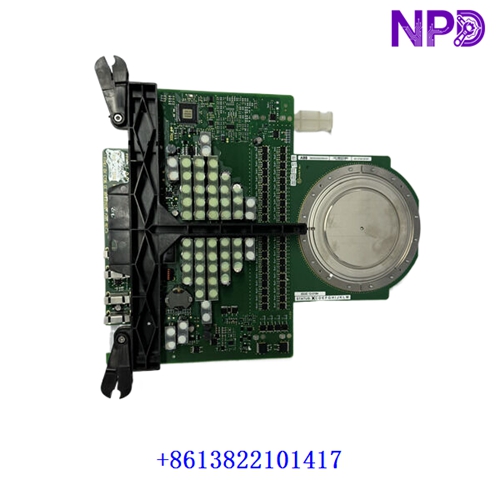

Description
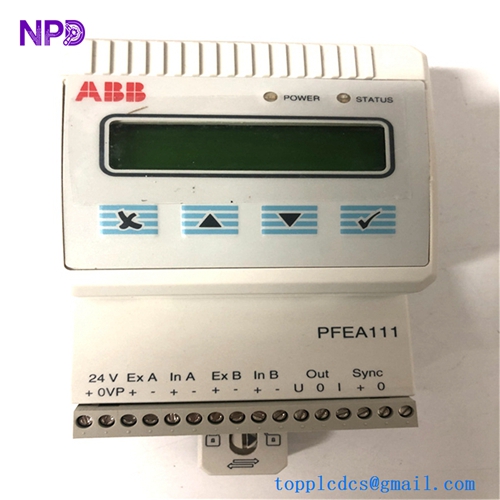
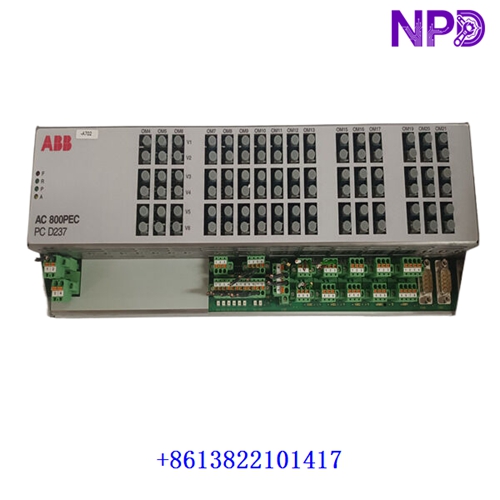
The ABB GFD233A (3BHE022294R0101) is a specialized PLC and machine control module engineered for rigorous industrial automation environments. It provides high-speed logic execution, reliable signal processing, and robust communication interfacing, making it an essential control component for complex industrial machinery, power systems, and manufacturing infrastructure.
- Brand: ABB
- Model: GFD233A (3BHE022294R0101)
- Series: PLCs / Machine Control Line
- Product Name: Control / Processing Module
- Place of Production: Sweden / Germany
- Lifecycle Status: Active / Industrial Core Line
- Dimensions: Standard Modular Rack Mount Form Factor
- Weight: Approx. 1.0 kg
- Original Origin: European Union
- Power Consumption: 24V DC / Max 12W
📋 Initial Startup Inspection Checklist
- 🔍 Visual Integrity: Inspect the module housing, front interface connectors, and backplane pins for any physical transit damage, bending, or moisture exposure.
- 🔍 Firmware Compatibility: Confirm that the internal software version and hardware revision align correctly with the target machine control configuration requirements.
- 🔍 Power Supply Verification: Measure the incoming DC supply voltage with a calibrated multimeter to ensure stable operation within the specified 24V DC tolerance.
- 🔍 Grounding Continuity: Verify that rack earth paths and shielding clamps are securely connected to maintain high electromagnetic compatibility (EMC) and noise immunity.
- 🔍 Environmental Assessment: Ensure that cabinet internal temperatures and humidity levels comply strictly with operational specifications.
🛠️ Routine Maintenance and Servicing
Regular maintenance ensures continuous system reliability and prevents unexpected downtime in industrial workflows.
- 🔧 Ventilation Maintenance: Periodically clear cabinet air filters and cooling paths using clean, dry, oil-free compressed air to prevent thermal accumulation.
- 🔧 Connector Inspection: Annually check network cables, plug-in connectors, and terminal blocks to prevent loosening caused by industrial vibration.
- 🔧 Diagnostic Monitoring: Routinely audit module status LEDs and system event logs via the engineering workstation to detect early operational anomalies.
- 🔧 Configuration Backups: Maintain secure, up-to-date archives of control programs and parameter files in off-site storage.
🔍 Troubleshooting and Common Faults
Systematic fault isolation ensures rapid recovery from operational disruptions.
- ⚠️ Fault Symptom 1 (Module Unresponsive / Power LED Off): Check primary power feed distribution, internal board protection fuses, and backplane seating depth.
- ⚠️ Fault Symptom 2 (Communication Failure): Inspect network cables, fiber links, or bus termination blocks for physical damage, loose contact, or incorrect settings.
- ⚠️ Fault Symptom 3 (Internal Error Alarms): Verify slot alignment and clean backplane connector pins gently with electronic-grade contact cleaner if oxidation is detected.
⚡ Safety Precautions
- 🛡️ Qualified Personnel Only: Installation, programming, and servicing must be executed exclusively by certified electrical and automation engineers.
- 🛡️ ESD Protection: Always utilize a calibrated grounding wrist strap and handle internal circuit boards strictly by their non-conductive edges.
- 🛡️ Energy Isolation: Completely de-energize and lock out the rack system prior to inserting or removing the control module.
❓ Frequently Asked Questions (Q&A)
- 💡 Q1: Can this control module be hot-swapped in a live rack?
- A1: Hot-swapping is generally restricted unless explicitly supported by the specific system rack architecture and redundancy configuration. Always consult system documentation before module extraction.
- 💡 Q2: What should be done if the module fails its self-test upon startup?
- A2: Power down the unit immediately, re-verify physical slot seating and power stability, and attempt a recovery using the authorized engineering utility or replace with a verified spare.