
Description
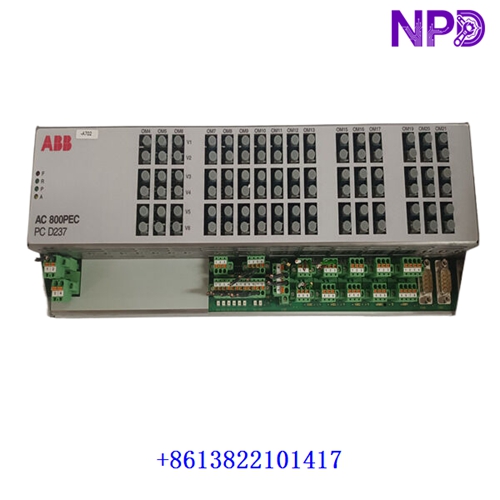
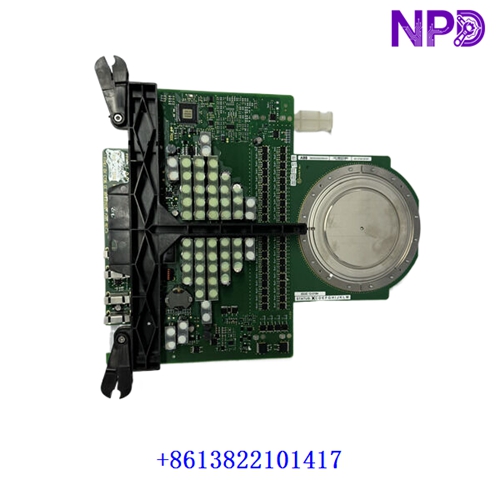
The ABB HC800 is the core Control Processor Module for the high-performance HPC800 controller family within ABB’s Symphony® Plus SD Series distributed control system (DCS). It is engineered to manage heavy, data-intensive industrial automation workloads, executing complex continuous, batch, and sequential control strategies.
- Brand: ABB (Symphony Plus / S+ SD Series)
- Model: HC800
- Product Name: Control Processor Module (Part of HPC800 Controller Assembly)
- Microprocessor Architecture: High-speed 32-bit processor setup
- Capacity & Function Blocks: Supports up to 30,000 function blocks and execution of over 5,000 I/O points in under 250 milliseconds
- Lifecycle Status: Active Industrial Automation Standard
- Dimensions: Height: 243.84 mm, Depth/Length: 78.74 mm (Standard DIN-rail mount form factor)
- Weight: Approx. 0.88 kg to 0.96 kg
- Power Requirement: 24V DC bus powered via mounting base (MB810)
🔍 Initial Operation Checklist
- Visual & physical inspection: Inspect the module housing, backplane connector pins, and keying structures for any shipping damage or environmental wear.
- Confirm slot placement: Ensure the HC800 processor is mounted into its designated slot on the MB810 base (typically mapped to key position 1 = E) alongside its companion CP800 communication processor if applicable.
- Check network connections: Verify that high-speed Fast Ethernet plant network (PN800) and HN800/CW800 control bus cables are firmly locked into position.
- Validate power metrics: Confirm that the system 24V DC power supply rails are stable and within operational limits before energizing the rack.
🛠️ Routine Maintenance & Care
- Thermal management: The fanless, low-power design relies on natural convection; ensure that cabinet air vents and vertical spacing remain completely unobstructed.
- Firmware and configuration backups: Periodically back up application logic and controller configurations via S+ Engineering toolsets.
- Terminal & bus inspections: Annually check backplane connections and network ports for secure mechanical seating and oxidation prevention.
- Diagnostic tracking: Routinely monitor processor load, memory utilization, and error logs through the Symphony Plus operation environment.
⚠️ Troubleshooting & Common Issues
- Processor redundancy switchover faults: Inspect optical or electrical peer-to-peer links if automatic controller hot-standby switchovers fail to synchronize.
- Execution cycle warnings: Review task allocations and function block loads via the engineering workstation if scan-time bottlenecks or slow loop responses occur.
- Boot or initialization failures: Ensure the module is firmly seated into the MB810 mounting base and verify that internal power supply rails are active if the unit fails to start.
🛡️ Safety Precautions
- Professional personnel only: Installation, rack mounting, and network configuration must be performed exclusively by certified automation or electrical engineering technicians.
- Electrostatic discharge (ESD) protection: Always use a properly grounded wrist strap when handling exposed electronic modules to prevent static damage to sensitive microcircuits.
- Power disconnection: Ensure system rack power supplies are completely shut off before installing, extracting, or servicing control hardware components.
❓ Frequently Asked Questions (Q&A)
Q1: What role does the HC800 module play within the HPC800 controller?
A1: The HC800 acts as the primary control processor, executing the user’s application logic, control algorithms, and mathematical function blocks, while working alongside companion communication processors (like the CP800).
Q2: Is the HC800 backward compatible with legacy ABB control systems?
A2: Yes, the HPC800 controller environment supports standard function code algorithms utilized in legacy Harmony and INFI 90 systems, facilitating risk-free migration and reuse of established control strategies.
Q3: What I/O subsystems are compatible with the HC800 processor?
A3: It simultaneously supports multiple I/O architectures, including ABB’s SD Series DIN-rail I/O, traditional Harmony Rack I/O, and S800 I/O subsystems.