
Description
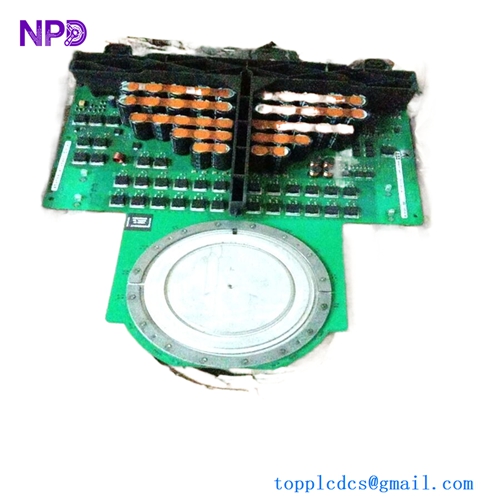
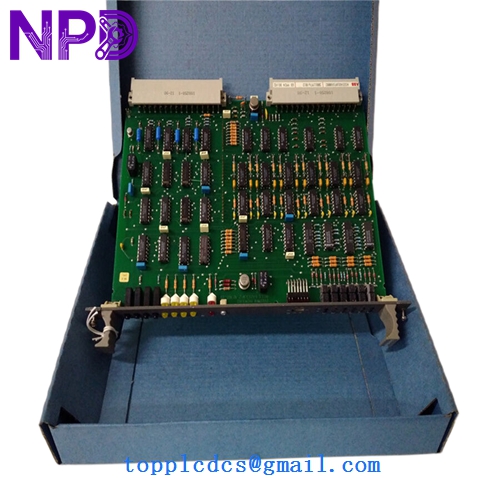
The ABB KU C755 AE / KU C711 AE (3BHB004791R0101) is a specialized gate power supply unit and driver interface assembly engineered specifically for high-power industrial drives, frequency converters, and power electronics systems. Designed to operate within demanding electrical architectures, this unit delivers regulated auxiliary power and precise control signals to IGBT or IGCT gate driver circuits.
Built with robust electrical isolation and advanced power regulation capabilities, the module ensures reliable switching performance and high system availability. Its standardized form factor enables seamless integration into ABB power conversion cabinets, supporting critical energy management and motor control workflows across heavy industrial applications.

📊 Product Datasheet & Technical Parameters
- Brand: ABB
- Model: KU C755 AE / KU C711 AE
- Series / Part Number: 3BHB004791R0101
- Product Name: Gate Power Supply Unit and Control Interface
- Place of Manufacture: Sweden / Switzerland (Global ABB Manufacturing Facilities)
- Physical State: Solid-State Electronic Power Supply and Circuit Board Assembly
- Dimensions: Standard industrial rack-mount / cabinet card layout (~200 mm x 140 mm x 45 mm variant dependent)
- Weight: ~0.85 kg
- Origin of Materials: Europe / Global Sourced Electronic Components
- Power Rating: Low-to-medium voltage internal control and gate power distribution rails (Standard industrial auxiliary DC supply input)
🛠️ Operational Specifications & Usage Methods
Installation of the ABB gate power supply unit must be performed by certified technicians within a de-energized, ESD-safe electrical enclosure. Carefully align the module along the designated backplane card guides and insert it securely to prevent damage to edge connectors or interface pins.
Maintain operating cabinet temperatures between 0°C and 55°C, ensuring that relative humidity remains below 95% non-condensing. Keep cooling airflow paths around the unit free from external cabling or physical obstruction to maintain proper thermal dissipation.
🛑 Emergency Shutdown Procedure
In the event of an electrical emergency, severe system fault, or critical power conversion alarm, execute the primary facility emergency shutdown to remove power from the control rack assembly and associated high-voltage drive systems.
Isolate all auxiliary control power supplies feeding the backplane. Allow sufficient time for internal circuitry and storage capacitors to discharge entirely before attempting physical handling, wiring adjustments, or module extraction.
🔍 Troubleshooting & Common Issues
Common operational anomalies typically involve power supply output fluctuations, communication timeouts, loose slot connections, or environmental dust buildup on terminal pins. If diagnostic indicators show a power fault, verify that the module is firmly seated in its backplane slot and that input voltage rails are stable.
Use static-safe compressed air to clear any accumulated dust from the circuit assembly. If operational faults continue after a system reset, verify controller configuration settings and check input power cabling integrity.
🧰 Routine Maintenance & Servicing
Establish a semi-annual preventive maintenance routine to verify long-term operational reliability. Inspect all mounting hardware, terminal blocks, and grounding straps for mechanical loosening caused by vibration or signs of thermal wear.
Clean external module surfaces using a dry, anti-static cloth or brush. Avoid applying liquid solvents, moisture, or cleaning sprays directly onto electronic circuitry.
❓ Frequently Asked Questions (Q&A)
- Q1: What is the primary function of the ABB KU C755 AE / KU C711 AE unit?
- A1: It serves as a specialized gate power supply and driver interface unit designed to deliver regulated auxiliary power to switching elements within ABB high-power drives.
- Q2: Can this power supply module be hot-swapped during active system operation?
- A2: Maintenance protocols require powering down the drive and control rack prior to module insertion or removal to prevent electrical arcing and component damage.
- Q3: What type of environment is required for installing this unit?
- A3: It must be installed inside a temperature-controlled, ESD-safe electrical cabinet protected from moisture, excessive dust, and corrosive industrial gases.