
Description
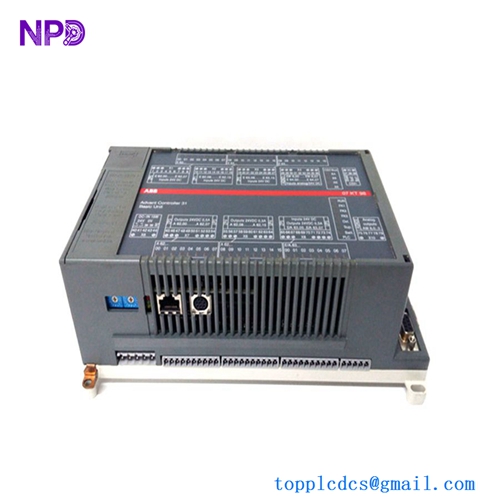
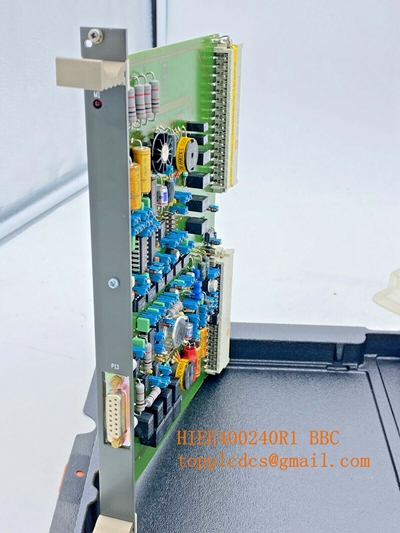
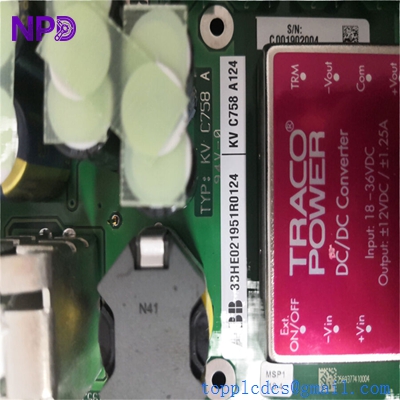
- Model: ABB KVC758A124 3BHE021951R1024
- Brand: ABB (Sweden/Switzerland)
- Series: Industrial Controller / Logic Module
- Core Function: Logic and control execution module for discrete I/O and process logic
- Type: Control Logic Module
- Key Specs: 24 V DC I/O Discrete logic control Rugged industrial design
- Supply Status: ⚠️ Discontinued, stock available
- Stock: 8 units available
- Warranty: 12 months
- Ship From: Shenzhen / Hong Kong
- Condition: Brand New Surplus (Original New), not refurbished
This unit is sourced as Brand New Surplus with original ABB packaging or equivalent protective packaging post-inspection. Each module is verified for authenticity, serial number traceability, and functional readiness before shipment.
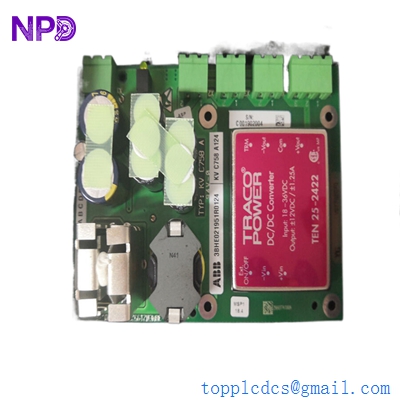
ABB KVC758A124 3BHE021951R1024
Part 3: Key Technical Specifications
- Input Voltage: 24 V DC industrial power supply
- I/O Type: Discrete digital I/O logic module
- Number of I/O Channels: Typically 16 digital channels (configurable)
- Output Type: Digital transistor or relay outputs (model dependent)
- Logic Execution: On-board programmable logic sequencing
- Communication: Backplane fieldbus interface to ABB control rack
- Mounting: DIN rail or rack mount compatible
- Operating Temperature: 0 °C to 55 °C industrial range
- Isolation: Optical isolation between I/O and logic circuitry
- Protection Rating: Industrial sealed enclosure (IP20)
- Diagnostics: Status LEDs and bus fault indicators
- Response Time: Millisecond class for logic updates
Part 4: Installation & Configuration Guide
Replacing a control logic module like ABB KVC758A124 requires careful preparation to avoid unplanned downtime. An experienced automation technician should budget ~30–45 minutes for the full process when documentation and backups are ready.
Phase 1: Pre-Installation (Estimated 10 minutes)
⚠️ Safety First
- Notify operations of planned maintenance and secure a safe window.
- Bring the controlled process to a defined stop (valves closed, motors de-energized).
- Shut down all relevant control cabinet power, including UPS or redundant supplies.
- Allow 5–10 minutes for internal capacitors to discharge.
Tools Required
- Anti-static wrist strap and mat
- PH1 screwdriver set
- Digital multimeter (I personally use a Fluke 115)
- Wire labels and marker
- Smartphone for high-resolution photos of wiring and settings
Documentation Tasks
- Export the controller program and configuration from the ABB engineering station.
- Photograph:
- Module slot ID
- Terminal connections
- Any jumpers or setting switches
Clear documentation prevents miswiring or configuration drift.
Phase 2: Removal of Old Module (5–10 minutes)
- Remove front cover if equipped (often “snap-on” design).
- Label each wire at the terminal blocks to match original positions.
- Loosen clip terminals or screw terminals (counter-clockwise).
- Release module locking tabs on the rack or DIN rail.
- Gently pull the module straight out — avoid yanking sideways.
⚠️ Inspect the rack backplane for bent pins, corrosion, or dust. Clean with compressed air if present.
Phase 3: Installation of New Module (10–15 minutes)
- Wear anti-static protection.
- Confirm new module’s part number KVC758A124 3BHE021951R1024 matches the original.
- Align and insert the module into the rack or DIN rail backplane until fully seated.
- Reconnect all labeled field wiring one terminal at a time.
- Tighten screws snugly (~0.5 N·m) — avoid overtightening.
Self-check list:
- Correct slot location
- All wires returned to labeled terminals
- Module seated flush with rack
- No loose wire strands present
Phase 4: Power-On & Functional Testing (10–15 minutes)
Before energizing:
- Verify incoming 24 V DC (±10%).
- Check for shorts between +24 V and ground (>10 kΩ).
Power sequence:
- Energize control cabinet power.
- Watch module status LEDs:
- Green steady → normal logic operation
- Yellow/Amber → diagnostics warning
- Red → configuration or fault condition
- Connect to ABB engineering workstation.
- Check module recognition on fieldbus and verify firmware.
- Run a quick logic test on representative I/O channels.
Functional check:
- Toggle 2–3 digital outputs through manual test mode.
- Confirm the controller reads discrete inputs correctly.
- Monitor for 10–30 minutes without alarm conditions.
Issues? If communication fails, re-check backplane address and fieldbus cabling first — those are common misconfigurations.
Part 5: Customer Cases & Industry Applications
Case 1: Petrochemical Facility Emergency Logic Replacement
Situation
A coastal petrochemical plant running an older ABB DCS experienced intermittent logic faults on a discrete control loop after 12 years in service. The module controlling pump interlocks began failing intermittently.
Task
The logic fault caused unplanned switching between manual and automatic modes, forcing operators to intervene frequently.
Action
The plant identified the ABB KVC758A124 as the failed module. The OEM’s lead time was quoted at 10+ weeks. We confirmed stock of Brand New Surplus units, tested them against load banks, and shipped within 24 hours.
Result
Replacement completed during a planned shutdown, and the system returned to automatic control without program changes. Estimated production loss avoided: ~$150,000. Based on this experience, the plant established a min/max buffer stock policy for critical logic modules.
Case 2: Power Generation Plant Strategic Last-Time-Buy
Situation
A coal-fired power station running ABB legacy control systems faced discontinued parts for discrete logic modules controlling boiler feedwater valves.
Task
With a planned 2030 decommissioning horizon, the plant could not afford prolonged outages due to parts scarcity.
Action
We performed Life Cycle status confirmation and recommended a last-time-buy of 5 units, aligning reorder points with historical failure rates.
Result
Within 18 months, two modules were used in regular maintenance replacements with no impact on generation schedules. The plant’s inventory strategy smoothed capital spend and avoided premium emergency freight for parts.
Case 3: Water Treatment System Expansion
Situation
An integrator expanded a municipal water treatment system using ABB controllers. Logic modules were required to match the existing automation infrastructure.
Task
Long OEM lead times threatened project delivery milestones and incurred liquidated damages.
Action
We verified firmware compatibility, provided serial-number traceable units, and supplied them within 72 hours.
Result
The project was delivered on schedule, avoiding penalties. The integrator later consolidated spare sourcing with us for future phases.
Part 6: Frequently Asked Questions (FAQ)
Q1: Is ABB KVC758A124 still in production?
A: This part is discontinued. OEM support for ordering new units is typically limited or subject to long lead times. For legacy systems, a controlled last-time-buy or strategic buffer stock is recommended.
Q2: Are these units new or refurbished?
A: We supply Brand New Surplus only. Not used, not refurbished. Each unit has original packaging (if available), verifiable serial numbers, and passes functional testing. Reports can be shared upon request.
Q3: Does this module require configuration after installation?
A: If replacing the exact same model with matching firmware, no configuration changes are usually needed. Always verify firmware compatibility. When migrating to a newer logic module, programming adjustments may be required.
Q4: Can I hot-swap this module?
A: Many ABB control racks have hot-swap capability for I/O modules, but it depends on your specific system architecture. When in doubt, power down the affected section to minimize risk.
Q5: What stocking strategy should I follow for this module?
A: From field experience:
- Critical control modules: keep 1–2 units on site as buffer stock
- High failure risk plants: Min = 2, Max = 4 with reorder point at 1
- Multi-site consolidation: pool stock to reduce carrying costs
Buffer stock reduces total cost of ownership compared to emergency procurement and downtime penalties.
Q6: Why is your price lower than OEM pricing?
A: We source global surplus inventory and operate with lean overhead. The hardware is original and traceable. Lower pricing does not mean lower quality — we validate every unit before shipment.