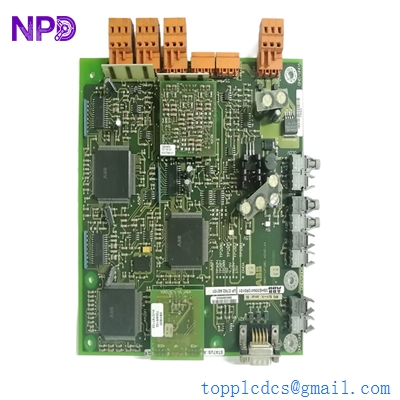
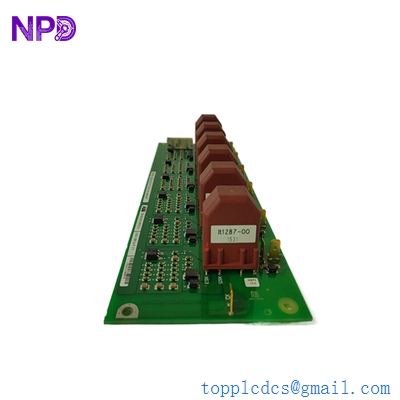
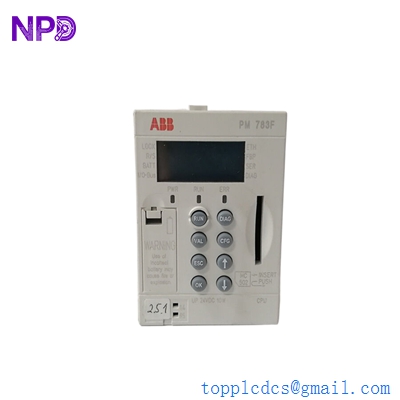

Description
- Model: LD800HSE
- Ordering Code: 3BDH000320R0101
- Brand: ABB (Germany)
- Series: Industrial IT / 800xA Architecture
- Core Function: Linking Device connecting FOUNDATION Fieldbus High-Speed Ethernet (HSE) to H1 field segments.
- Product Type: Fieldbus Gateway / Linking Device (New Surplus)
- Key Specs: 4x FF H1 Channels | 10/100 Mbps Ethernet | Redundancy support | Integrated Link Master (LM).
- Communication Interface:
- Upstream: 10/100 Base-TX Ethernet (HSE – High-Speed Ethernet)
- Downstream: 4 independent FOUNDATION Fieldbus H1 channels (31.25 kbit/s)
- Redundancy: Supports internal redundancy (HSE and H1) when used in pairs.
- Capacity: Supports up to 16 field devices per H1 segment (depending on power/cable lengths).
- Functionality: Acts as a Bridge and Link Master (LM) for time synchronization and scheduling on the H1 bus.
- Configuration: Managed via ABB 800xA Fieldbus Builder or third-party FF configuration tools.
- Diagnostics: Comprehensive LED status for Power, HSE Link, and H1 channel activity.
- Power Supply: 24 VDC (Typical consumption 250 mA).
- Mounting: 35mm DIN-rail mounting.
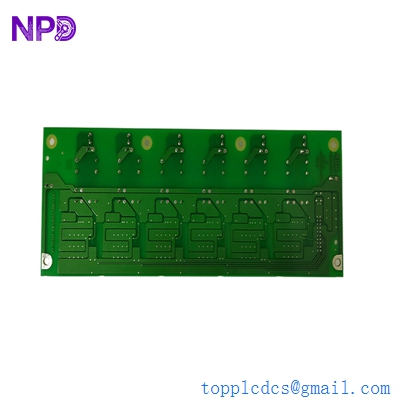
ABB UNS0881a-P,V1 3BHB006338R0001
Installation & Configuration Guide
Phase 1: Preparation (Pre-Installation)
⚠️ Safety First:
- Network Segregation: Ensure the HSE Ethernet network is isolated from non-industrial traffic to prevent latency issues in FF scheduling.
- H1 Power: The LD800HSE does not provide power to the H1 segments. You must use a dedicated FF H1 Power Conditioner.
- Firmware: Ensure the firmware version of the 3BDH000320R0101 is compatible with your 800xA System version (e.g., v5.1, v6.0).
Phase 2: Physical Installation
- Mounting: Snap the module onto the DIN rail. Ensure there is adequate spacing for heat dissipation.
- Ethernet Wiring: Connect the RJ45 HSE cable. If using redundancy, connect the second HSE port to the secondary network switch.
- H1 Connections: Connect the H1 trunk cables to the 4-channel terminals. Note: Ensure a 100-ohm FF terminator is installed at both ends of the H1 segment.
Phase 3: Configuration & System Integration
- IP Assignment: Use the ABB IP Setting Tool or a DHCP server to assign a static IP address to the HSE port.
- Fieldbus Builder: Import the LD800HSE into the ABB 800xA hardware tree.
- Scheduling: Define the Macrocycle and VCRs (Virtual Communication Relationships). The linking device will handle the precise scheduling of data from field transmitters to the AC 800M controller.
Phase 4: Commissioning & Testing
- Link Check: The “HSE” LED should be solid green, and the “H1” LEDs should flicker as the device polls the field instruments.
- Device Discovery: Verify that all connected FF instruments (pressure, temperature, valve positioners) appear in the Live List.
- Redundancy Test: If a redundant pair is installed, simulate a network failure on the primary HSE link to verify a seamless failover.
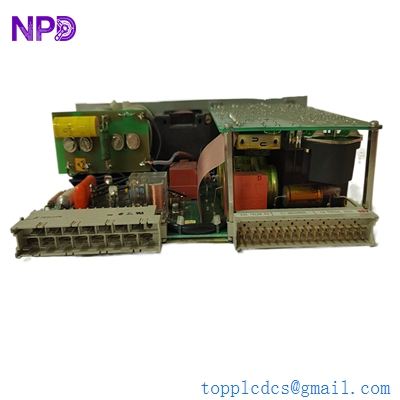
ABB KX8974c V24 HIEE320606R1
Customer Cases & Industry Applications
Case 1: Petrochemical Plant Expansion (Legacy Integration)
Situation: A petrochemical facility in Singapore was adding a new reactor wing. They were using an existing ABB 800xA system and required FOUNDATION Fieldbus integration to utilize advanced diagnostics from their new smart valves.
Task: The plant needed to bridge the gap between their Ethernet-based control room and the hazardous area field instruments.
Action: We provided the LD800HSE (3BDH000320R0101). This allowed the facility to use a single Ethernet run to the field cabinet, where the linking device branched out to 4 separate H1 segments.
Result: The plant saved significantly on copper wiring by using the multi-drop H1 architecture. The LD800HSE provided the high-speed data throughput needed for the 800xA asset management suite to monitor valve health in real-time.
Case 2: Emergency Replacement for a Pharmaceutical Batch Process
Situation: During a critical batch run, a pharmaceutical plant in Ireland experienced a failure in their primary linking device. Communication to 24 field instruments was lost, risking the loss of a $200,000 batch.
Task: The OEM lead time was quoted at 3 weeks. The plant needed a “Plug-and-Play” replacement immediately.
Action: We dispatched a New Surplus LD800HSE via international express. Because it was an identical model and revision, the site engineer was able to swap the unit and restore communication in under 15 minutes.
Result: The batch was saved. The plant subsequently purchased a second unit from us to keep as an on-site strategic spare.
Frequently Asked Questions (FAQ)
Q: Does the LD800HSE support redundant H1 segments? A: Yes. For full redundancy, you use two LD800HSE units. The system manages the primary/backup status automatically via the HSE protocol.
Q: Can I use this device with non-ABB controllers? A: Yes. As it follows the FOUNDATION Fieldbus HSE standard, it can theoretically bridge to any HSE-compliant host. However, it is most commonly and reliably used within the ABB Industrial IT/800xA ecosystem.
Q: Why choose “New Surplus” over “Refurbished”? A: Fieldbus gateways handle high-speed data processing and timing synchronization. Refurbished units may have weakened transceivers or aged internal capacitors. Our New Surplus 3BDH000320R0101 units are fresh, ensuring the clock precision required for FF scheduling.
Q: How many H1 channels does it have? A: The LD800HSE features 4 independent H1 channels, each capable of supporting a full segment of field devices.
Q: What is the purpose of the “Link Master” (LM) function? A: The LM function is critical. If the main controller is disconnected, the LD800HSE takes over the “bus schedule,” ensuring that control-in-the-field (e.g., a PID loop between a transmitter and a valve) continues to function safely.
- Communication Interface: