
Description
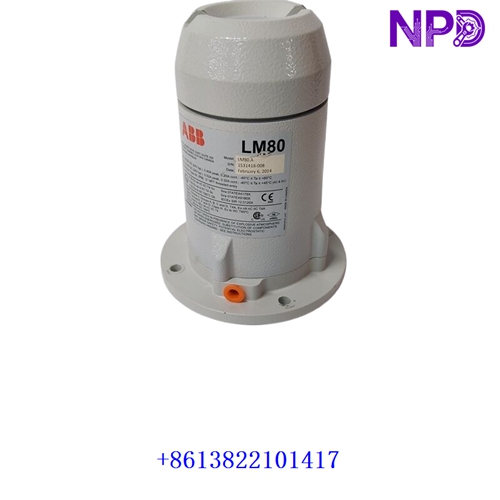
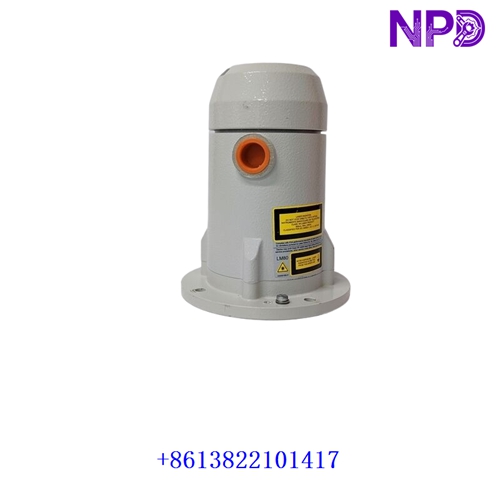
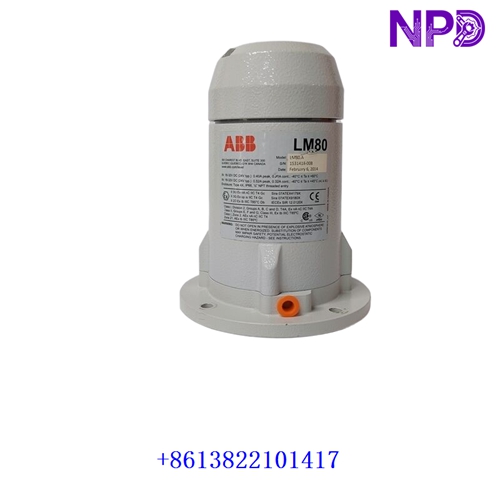
The ABB LM80.A is an advanced, high-performance laser level transmitter engineered for non-contact continuous level, distance, and position measurement in extreme industrial environments. Utilizing pulsed laser technology, it is specifically designed to monitor granular solid materials and opaque liquids within storage silos, bins, and tanks.
Operating via line-of-sight optics, the device features a narrow laser beam with minimal divergence, allowing it to target surfaces accurately without interference from internal vessel structures, falling material, or protective grids. It provides reliable, real-time data output to optimize inventory management and automated process control.
📊 Product Datasheet & Technical Parameters
- Brand: ABB
- Model: LM80.A
- Series: LM80 Laser Level Transmitter Series
- Product Name: Non-Contact Laser Level and Distance Transmitter
- Place of Manufacture: Switzerland / United States (Global ABB Manufacturing Facilities)
- Physical State: Solid-State Optical and Electronic Transmitter Assembly
- Dimensions: Base plate diameter varies by flange configuration (~140 mm to 172 mm width options)
- Weight: ~1.6 kg (Aluminum enclosure) to 4.2 kg (316 Stainless Steel enclosure variant)
- Origin of Materials: Europe / North America Sourced Industrial Components
- Power Rating: Standard industrial loop power / low-voltage DC control supply (Supporting continuous 4–20 mA output and dual relay outputs)
🛠️ Operational Specifications & Usage Methods
Installation of the ABB LM80.A transmitter must be performed by qualified personnel in accordance with site safety regulations. Mount the unit securely to a standard flange or bracket looking straight down into the vessel, ensuring the optical lens has an unobstructed line of sight to the target surface. Utilize the built-in laser pointer for precise physical alignment during setup.
During operation, maintain ambient temperatures between -40°C and +60°C (-40°F to +140°F) for standard configurations. Ensure that electrical conduit connections and cable glands are tightly sealed, and verify that the unit is properly connected to a solid earth ground to protect against static electrical discharge.
🛑 Emergency Shutdown Procedure
In the event of a severe electrical fault, facility emergency, or maintenance overhaul on the associated vessel, isolate and disconnect the primary power and signal loop feeds to the transmitter.
De-energize the 4-20 mA control loop and any auxiliary power lines connected to the unit’s relay outputs. Verify a zero-energy state using a calibrated multi-meter before handling, cleaning the optical lens, or removing the device from its mounting port.
🔍 Troubleshooting & Common Issues
Common operational challenges typically involve heavy dust accumulation on the lens, optical misalignment, or blocked line-of-sight paths. If signal loss occurs, safely access the unit to inspect and clean the optical aperture using a soft, dry, static-safe cloth.
Verify that loop wiring terminals are completely secure and free of partial or floating connections that could introduce signal noise. Check programming parameters and configuration settings if measurement values drift or fail to update.
🧰 Routine Maintenance & Servicing
Establish a routine preventive maintenance schedule based on environmental particulate levels. Periodically inspect the exterior enclosure, process connections, and ground screws for signs of corrosion, vibration loosening, or physical damage.
Clean the optical lens elements regularly to ensure optimal laser transmission and reflection. Avoid using abrasive cleaners or liquid solvents directly on the optical window.
❓ Frequently Asked Questions (Q&A)
- Q1: Does the ABB LM80.A require calibration prior to installation?
- A1: No calibration is required prior to installation; the unit measures directly in engineering units (feet or meters) based on real physical distance from its optical face.
- Q2: Can the LM80.A measure through dust or falling material?
- A2: Yes, it features advanced last-pulse detection and signal processing algorithms capable of penetrating moderate dust and operating around intermittent falling material.
- Q3: What types of output signals does the transmitter provide?
- A3: It provides a continuous 4–20 mA analog output alongside dual point relay outputs configured for alarm or control functions.