
Description
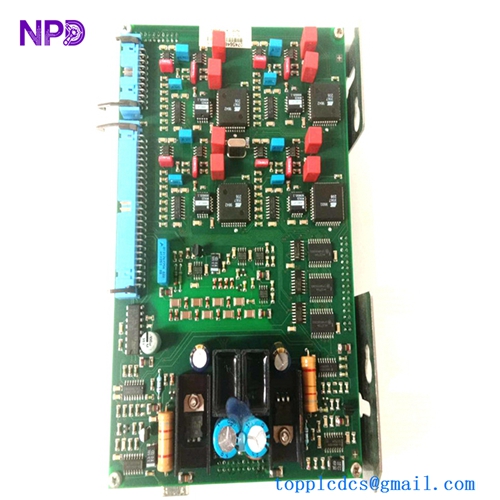
This technical overview provides specifications, handling, and maintenance guidelines for the ABB NW20060G printed circuit board sourced from Newave SA (located in CH-6572 Quartino, Switzerland) for deployment within ABB PowerScale Uninterruptible Power Supply (UPS) systems.
⚙ Product Technical Parameters
- 1. Brand: ABB / Newave SA
- 2. Model / Part Number: NW20060G (Newave SA, CH-6572 Quartino)
- 3. Series: ABB PowerScale Three-Phase UPS Hardware Series
- 4. Product Name: Internal Printed Circuit Board (PCB) / Control Module
- 5. Country of Origin: Switzerland (Quartino manufacturing and engineering hub)
- 6. Physical State: Electronic printed circuit board assembly with surface-mount and solid-state components
- 7. Dimensions: Standard modular chassis-insert format designed for PowerScale frames
- 8. Weight: Approx. 0.5 kg – 1.0 kg (Depending on exact onboard component layout)
- 9. Origin Location: CH-6572 Quartino, Switzerland
- 10. Power Consumption: Low-power internal control/regulation draw governed by the UPS main rack bus
📋 Initial Operation Checklist
Before installing or commissioning this replacement circuit board within an ABB PowerScale system, verify all physical and electrical parameters to prevent hardware faults or system downtime:
- Inspect the PCB traces, components, and edge connectors carefully for any signs of transit damage, micro-cracks, or dust contamination.
- Confirm that the PowerScale UPS system is completely de-energized, isolated from mains power, and that internal DC link capacitors are fully discharged.
- Verify that all plug-in wiring harnesses, multi-pin connectors, and slot guides are properly aligned and securely seated.
- Ensure ambient operating temperature within the UPS enclosure remains strictly within the specified industrial range of 0°C to +40°C.
- Check jumper settings, version tags, and configuration revisions against your specific PowerScale unit architecture prior to startup.
🛠 Routine Maintenance and Upkeep
Regular system oversight ensures long-term operational reliability and maximum uptime across critical power protection infrastructure:
- Perform bi-annual visual inspections of the UPS internal layout to check for dust buildup, cabinet moisture, or oxidation on terminal blocks.
- Clean board surfaces gently using a dry, anti-static brush or clean compressed air; strictly avoid chemical solvents, sprays, or liquids.
- Monitor system diagnostic logs and alarm event counters periodically via the UPS display interface during scheduled maintenance windows.
- Check chassis mounting screws and internal fastening points annually to prevent loosening caused by environmental vibration.

🔧 Troubleshooting and Common Issues
Systematic problem isolation minimizes MTTR (Mean Time to Repair) when operational anomalies occur within the power module:
- Board Initialization / Communication Failure: Verify that the edge connector is firmly pushed into the backplane slot and check for bent pins.
- Internal UPS Fault Alarm Active: Review the event log on the main control panel to trace whether the error originates from this logic board or external power stages.
- Intermittent Control Glitches: Inspect internal shielding, check for loose ground connections, and verify that nearby cabling is clear of electromagnetic interference (EMI) sources.
- Power Rail Instability: Measure internal DC regulation voltages on the rack to ensure the board is receiving clean auxiliary power from the system power supply.
🛡 Safety Precautions
Strict adherence to safety guidelines protects personnel from severe electrical hazards and prevents permanent hardware damage:
- High Voltage Warning: Always disconnect and lock out external AC mains and verify that internal DC capacitors are fully discharged before handling internal boards.
- ESD Compliance: Observe standard electrostatic discharge (ESD) wrist strap handling protocols when interacting with bare printed circuit boards.
- Qualified Personnel Only: Installation, replacement, and servicing must only be performed by trained technicians familiar with high-power UPS architectures.
- Compliance: Ensure all replacement activities comply strictly with local electrical codes and manufacturer service instructions.
❓ Frequently Asked Questions (Q&A)
- Q1: Does this replacement PCB require firmware configuration after installation?
- A1: Depending on the specific sub-circuit function within the PowerScale architecture, calibration or software parameter verification via the system service port may be required.
- Q2: Can this board be replaced while the UPS system is online (hot-swapped)?
- A2: No. Replacing internal logic and control PCBs requires a complete system shutdown, power isolation, and capacitor discharge to prevent severe electrical shock and component destruction.
- Q3: Where was this specific component originally manufactured?
- A3: The hardware is engineered and manufactured by Newave SA based in CH-6572 Quartino, Switzerland, as an integral component for the ABB PowerScale UPS product line.