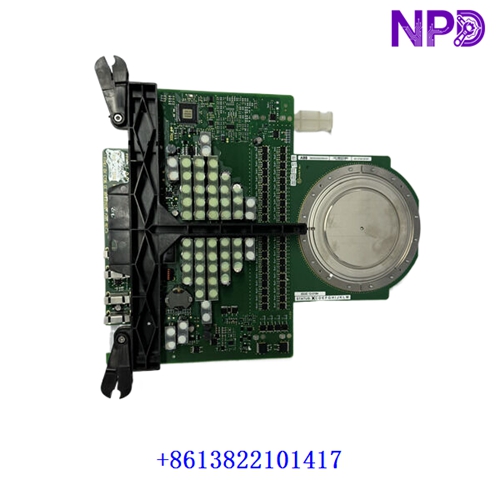

Description
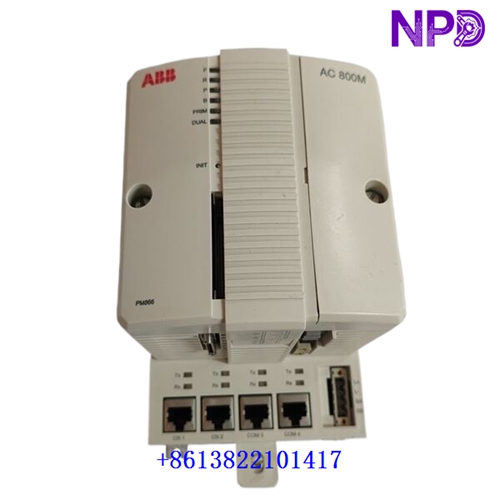
The ABB PM858 (Part Number: 3BSE093350R1, also known as PM858-C) is a high-performance processor unit designed for the ABB AC 800M controller family within System 800xA and distributed control network environments. It provides fast processing capabilities, robust communication features, and options for controller redundancy to handle complex, mission-critical industrial automation applications.
- Brand: ABB
- Model: PM858 / PM858-C
- Part / Catalog Number: 3BSE093350R1
- Series: ABB AC 800M Controller Line
- Product Name: Processor Unit / CPU Module
- Origin Country: Sweden / Germany / Manufacturing Standard Locations
- Lifecycle Status: Active Industrial Automation Standard
- Dimensions: Width: 119 mm, Height: 186 mm, Depth: 135 mm (Standard AC 800M Form Factor)
- Weight: Approx. 1.2 kg (Including base mounting plate)
- Power Rating: 24V DC Input (19.2–30V DC), typical power consumption 210–360 mA
🔍 Initial Operation Checklist
- Verify hardware visual condition: Inspect the module housing, baseplate interface, and connector pins thoroughly for any shipping damage.
- Confirm part identifiers: Ensure that the model number (PM858) and part number (3BSE093350R1) match your exact system architecture specs.
- Check baseplate and DIN rail mounting: Securely snap and lock the controller module onto its designated DIN rail mount using the slide & lock mechanism.
- Validate power metrics: Confirm that incoming 24V DC power feeds are stable and within the acceptable 19.2V to 30V DC operational range prior to energization.
- Establish network links: Verify that Ethernet cables (CN1, CN2) and serial connection cables (COM3, COM4) are properly seated before boot-up.
🛠️ Routine Maintenance & Care
- Environmental surveillance: Ensure that control cabinet internal cooling systems keep operational temperatures between 0°C and +55°C.
- Terminal and port inspections: Annually inspect screw terminals, power connections, and RJ45 communication ports for secure seating and dust accumulation.
- Battery checks: Periodically monitor the internal 3.6V lithium backup battery status to prevent real-time clock or memory loss during power cycles.
- Diagnostic tracking: Regularly review system logs and CPU load stats via the ABB Control Builder engineering software to identify early hardware or software anomalies.
⚠️ Troubleshooting & Common Issues
- Redundancy synchronization failures: Check optical or communication link cables between primary and backup units if switchover or sync faults occur.
- CPU overload warnings: Monitor execution task times and application cycle loads if the processor experiences performance slowdowns or memory limits.
- Initialization or startup errors: Reseat the processor module firmly onto its baseplate and verify that the 24V DC power supply input is active if the unit fails to boot.
🛡️ Safety Precautions
- Professional personnel only: System installation, rack mounting, and wiring modifications must be performed exclusively by certified automation or electrical technicians.
- Electrostatic discharge (ESD) protection: Always wear a properly grounded wrist strap when handling exposed electronic circuit boards to prevent semiconductor component failure.
- Power disconnection: Ensure external power feeds are completely shut off before inserting, extracting, or servicing system controller modules and baseplates.
❓ Frequently Asked Questions (Q&A)
Q1: Does the PM858 processor support high-availability redundancy configurations?
A1: Yes, the PM858 supports CPU redundancy, redundant CEX-bus lines, and redundant S800 I/O arrangements to achieve fast switchover times (typically under 10 ms).
Q2: What engineering software is used to program the ABB PM858 controller?
A2: It is configured, programmed, and monitored using the ABB Control Builder tool within the System 800xA environment.
Q3: What communication ports are natively available on the PM858 controller baseplate?
A3: It features two RJ45 Ethernet ports (CN1, CN2) for the control network, one general RS-232C serial port (COM3), and one isolated RS-232C serial port (COM4) designated for service and configuration tools.