
Description
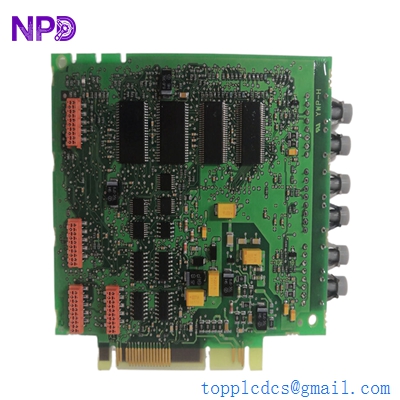
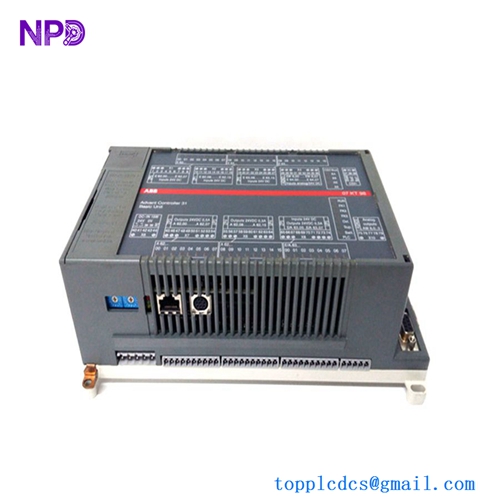
- Model: ABB RET670 (1MRK004816-AC)
- Brand: ABB (Switzerland-Sweden)
- Series: Relion® 670 Series (High-performance Protection & Control)
- Core Function: Advanced transformer protection, monitoring, and control for power grids.
- Condition: Brand New Surplus (Original hardware, never commissioned).
- Product Type: Intelligent Electronic Device (IED) / Protection Relay.
- Key Specs: IEC 61850 compliant, multi-winding transformer support, 24-210 V DC aux voltage
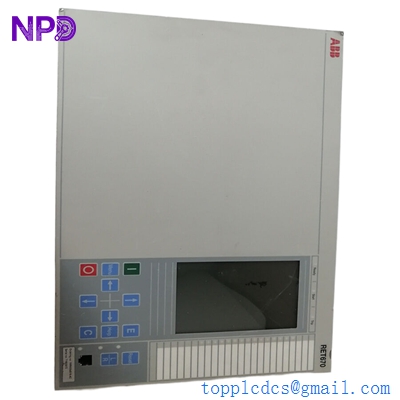
ABB RET670 1MRK004816-AC
Key Technical Specifications
- Auxiliary Voltage: 24-210 V DC (wide-range power supply)
- Communication Protocols: IEC 61850-8-1, IEC 60870-5-103, DNP 3.0
- Analog Inputs: Up to 24 analog inputs (CT/VT combination)
- Binary I/O: Configurable digital inputs/outputs (typically 6-12 slots)
- Protection Functions: 87T (Differential), 50/51 (Overcurrent), 59/27 (Voltage)
- Sampling Rate: 4,000 Hz (for 50 Hz systems) / 4,800 Hz (for 60 Hz systems)
- HMI: Large integrated LCD with 15 freely programmable LEDs
- Enclosure Rating: IP67 (Front), IP20 (Rear terminals)
- Case Size: 1/2 x 19″ or 3/4 x 19″ (depending on I/O density)
- Operating Temperature: -25°C to +55°C (standard range)
Installation & Configuration Guide
Phase 1: Pre-Installation (Preparation)
Safety First (Critical):
- Notify the grid dispatch center of the planned outage.
- Short-circuit all Current Transformer (CT) secondary circuits. Opening a CT circuit under load generates lethal voltages.
- Verify the auxiliary power matches the 1MRK004816-AC label (24-210 V DC).
- Use a Fluke 1587 or similar to verify insulation resistance before connecting sensitive electronics.
Tools & Backup:
- Torque wrench (small) for terminal screws.
- ABB PCM600 software installed on a laptop.
- LHMI (Local HMI) navigation map.
Phase 2: Removal of Faulty Unit
- Disconnect Power: Pull the power fuse/breaker first.
- Labeling: Use a marker and tape to label every single wire. These RET670 units can have over 50 wires; a single mistake in the differential trip circuit is a disaster.
- Hardware Removal: Unscrew the four corner mounting screws on the relay faceplate.
- Extraction: Pull the unit forward slowly. Check for any “sticky” terminal blocks or bent pins on the backplane.
Phase 3: Installation & Configuration
- Configuration Mirroring: Check the DIP switch settings on the communication modules (e.g., LDCM or SLM) of the new unit. They must match the old one.
- PCM600 Upload: * Connect via the front RJ45 port.
- Compare the Firmware Version. If the new unit is V2.2 and the old one was V2.0, you may need to migrate the project in PCM600 before downloading.
- Setting the Node: Manually set the IP address via the LHMI (Local HMI) menu:
Configuration/Communication/Ethernet/Front port. - Hardware Insertion: Slide the unit into the rack until it seats firmly against the rear terminal blocks.
Phase 4: Power-On & Live Testing
- Initial Power: Flip the DC breaker. The green “Ready” LED should blink, then stay solid after ~60 seconds.
- The “Check” Phase:
- Verify the internal clock is synchronized.
- Check Analog Measurements: Ensure the relay sees realistic CT/VT values before enabling “Trip” outputs.
- Trip Test: Use the “Test Mode” in the relay to simulate a trip and verify the external lockout relay (86) actually fires.
- Sign-off: Document the serial number of the new 1MRK004816-AC in the substation logbook.
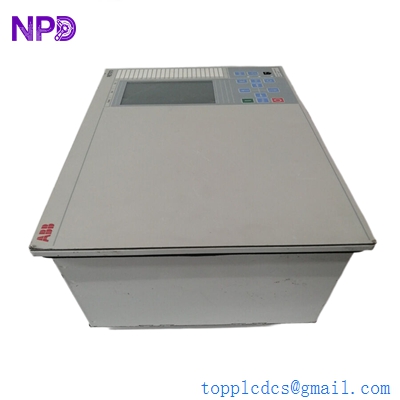
ABB RET670 1MRK004816-AC
Customer Cases & Industry Applications
Case 1: 220kV Substation Emergency Replacement A utility provider in Southeast Asia experienced a catastrophic failure of a transformer relay due to a power supply surge. The original unit (RET670) was out of production with a 14-week lead time from the factory.
By sourcing our New Surplus 1MRK004816-AC, they received the part in 4 days. Since it was the exact hardware match, their protection engineer simply imported the .pcmsel configuration file. The substation was back online in under a week, avoiding millions in potential grid instability penalties.
Case 2: Industrial Steel Mill Upgrade A major steel plant was running on aging 500-series relays. During a planned maintenance window, they realized their “last-time-buy” stock was corrupted by moisture in the warehouse.
We provided two units of the RET670 1MRK004816-AC. In my experience, steel mills are harsh environments—we specifically recommended adding additional desiccant packs to their relay cabinets. The units have now been running for 18 months without a single nuisance trip, providing much better stability for their EAF (Electric Arc Furnace) transformers.
Frequently Asked Questions (FAQ)
Q: Is the 1MRK004816-AC compatible with older RET670 versions? A: Generally, yes, but watch the Version Number (e.g., Ver 1.1, 1.2, 2.0). While the hardware footprint is often identical, the configuration file from an older version might need a “Migration” step in ABB PCM600 software. If you send us your current .pcmsel or .pcmi file, our tech team can verify compatibility for you.
Q: Why should I buy “New Surplus” instead of a cheaper refurbished unit? A: Honestly? It’s about the capacitors. Refurbished relays have often sat in energized racks for 10+ years. The electrolytic capacitors in the power supply module age even when the relay is idle. A “New Surplus” unit like ours has zero energized hours, meaning you get the full 15-20 year lifespan. For a critical transformer worth 500k+, saving 2k on a used relay is a bad gamble.
Q: Does this unit include the specific licenses for Differential Protection? A: This specific model 1MRK004816-AC comes with a standard “A30” or “B30” configuration. We provide a copy of the License Key (the .txt file) so you can activate all the programmed functions in PCM600.
Q: Can you ship it today? A: If the order is confirmed before 3:00 PM (GMT+8), we usually get it to the courier the same day. For an RET670, we use double-walled boxes with customized foam inserts because these units are heavy (approx. 10 kg) and sensitive to shock.
Q: What happens if the unit doesn’t power up? A: In the rare event of a “Dead on Arrival” (DOA), we offer a 7-day immediate swap or full refund. Beyond that, you have our 12-month warranty. We’ve sold dozens of these Relion modules and the failure rate is near zero because we perform a Power-on Self-Test (POST) before every shipment.