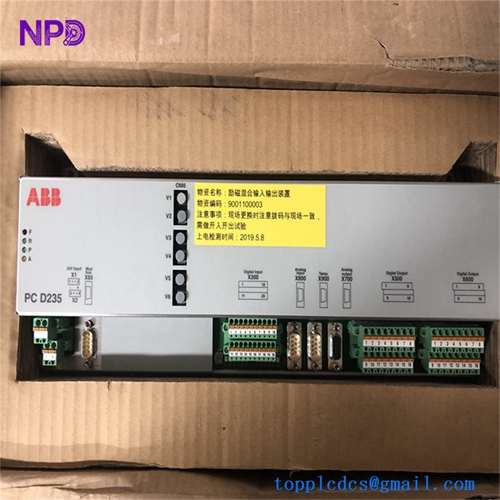
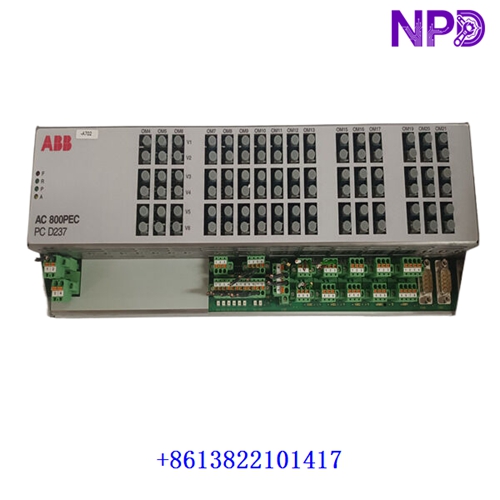


Description
The ABB SPAJ 140C (incorporating integrated sub-module SPCJ 4D2) is a numerical combined overcurrent and earth-fault protection relay designed for selective protection of radial distribution networks, overhead lines, and cable feeders in industrial and utility power systems. It provides multi-stage definite time and inverse time overcurrent and earth-fault protection, local indication, and measurement functions.
| Parameter | Specification |
|---|---|
| Brand | ABB |
| Model | SPAJ 140C (SPCJ 4D2) |
| Series | SPACOM Numerical Protection Series |
| Product Name | Combined Overcurrent and Ground Fault Relay |
| Place of Origin | Finland / Sweden / Switzerland |
| Product Status | Mature / Legacy Industrial Automation Support |
| Dimensions | Standard flush-mounting case (approx. 142 mm × 183 mm panel cutout) |
| Weight | Approx. 3.0 kg |
| Country of Origin | Finland |
| Power Consumption | Low-voltage auxiliary DC/AC power supply (internal dual-voltage range power module) |

First-Run Inspection Checklist
- ☑ Physical Integrity Check
Inspect the outer relay case, front-panel HMI buttons, LED indicators, and rear-panel short-circuiting terminal blocks for any transportation damage, cracks, or loose structural parts.
- ☑ Auxiliary Power & Earthing Verification
Verify that the auxiliary control supply voltage matches the relay nameplate range using a calibrated multimeter prior to energization. Ensure the rear protective earth terminal is securely wired to the switchgear ground bus.
- ☑ Hardware & Setting Configuration
Confirm that the internal relay sub-module settings, current transformer (CT) ratio configurations, and protection parameters match the feeder coordination study and plant electrical drawings before putting the unit into service.
Routine Maintenance & Servicing
- 🛠 Environmental Monitoring
Regularly inspect the switchgear panel climate control to ensure operating temperatures remain within the recommended range (-10°C to +55°C) and relative humidity does not exceed acceptable non-condensing limits.
- 🔌 Terminal & Wiring Inspection
Perform periodic visual checks on current transformer secondary wiring blocks and control circuit terminals to ensure terminal screw tightness and freedom from vibration-induced loosening or corrosion.
Troubleshooting & Common Issues
- ⚠️ Auxiliary Power Failure or Blank Display
If the relay indicators fail to light up or power is lost, check incoming auxiliary supply fuses, measure terminal voltage levels, and inspect internal auxiliary power supply module connections.
- ⚠️ Spurious Overcurrent Tripping
If unexpected trips occur, review fault records, check load current measurements against threshold settings, and verify that CT secondary circuits are free from loose contacts or open conditions.
Safety Precautions
- 🔐 Electrostatic Discharge (ESD) Protection
Always utilize a grounded ESD wrist strap and appropriate antistatic procedures if handling internal modules or conducting maintenance to protect sensitive static-sensitive integrated circuits.
- ⚠️ Current Transformer (CT) Safety
Never open-circuit secondary terminals of live current transformers while the primary feeder circuit is energized. Always short-circuit CT secondary windings before disconnecting input wiring to prevent lethal high-voltage generation.
Frequently Asked Questions (Q&A)
- ❓ Q1: What is the function of the SPCJ 4D2 sub-module within the SPAJ 140C relay?
A: The SPCJ 4D2 acts as the core measuring and processing relay module responsible for executing the numerical overcurrent and earth-fault protection algorithms.
- ❓ Q2: How can relay settings and fault data be accessed locally?
A: Protection settings, measured values, and fault codes can be viewed and configured locally using the pushbuttons and digital display windows on the front panel of the SPAJ 140C unit.