
Description
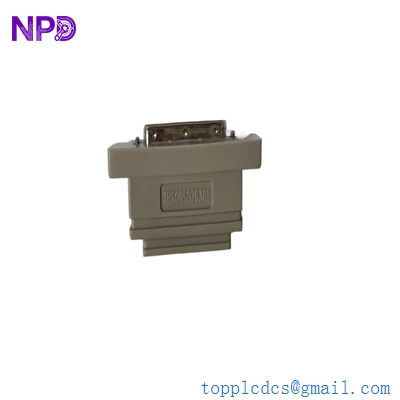
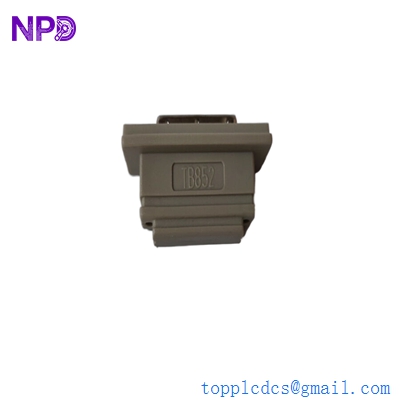
- Model: TB852
- Ordering Code: 3BSC950263R1
- Brand: ABB (Sweden)
- Series: S800 I/O / AC 800M
- Core Function: Redundant Control Unit (RCU) Link Terminator for the ModuleBus
- Product Type: Termination Unit / Bus Accessory (New Surplus)
- Key Specs: Passive termination | Redundant Link Support | DIN-rail mountable
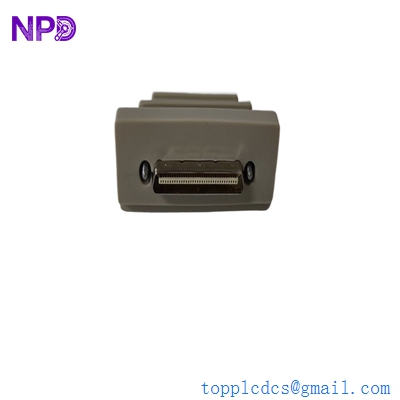
ABB TB852 3BSC950263R1
Key Technical Specifications
- Module ID: TB852
- Part Number: 3BSC950263R1
- Application: Used at the physical ends of a redundant ModuleBus to prevent signal reflection
- Compatibility: Dedicated for ABB AC 800M controllers and S800 I/O clusters
- Connection: Attaches to the TB815 or TB840/TB840A cluster interface
- Power Consumption: 0 mA (Passive component)
- Network Topology: Supports Redundant ModuleBus (RCU Link)
- Protection Class: IP20 (Standard for cabinet-mounted DIN-rail equipment)
- Mounting: Snap-on mounting for 35mm DIN-rail
- Operating Temperature: 0 °C to +55 °C (32 °F to 131 °F)
- Storage Temperature: -40 °C to +70 °C (-40 °F to 158 °F)
Installation & Configuration Guide
Phase 1: Preparation (Pre-Installation)
⚠️ Safety First:
- While the TB852 is a passive component, ensure you are not working on a “live” redundant bus that could cause a controller switchover or “ModuleBus Communication Failure” alarm.
- Identification: Verify that you are installing the TB852 (Redundant Link Terminator) and not the TB850 (Non-redundant) version.
Phase 2: Removal of Faulty Module
- Unlocking: Use a small flat-head screwdriver to release the DIN-rail locking clip at the bottom of the module.
- Disconnecting: Gently slide the terminator off the ModuleBus connector. These connectors are high-density; do not tilt the module as you pull, or you may bend the pins on the carrier.
Phase 3: New Module Installation
- Orientation: Align the TB852 with the end of the S800 I/O cluster.
- Seating: Push the module firmly onto the DIN-rail and slide it horizontally until it fully engages with the adjacent bus unit. You should hear a distinct click.
- Redundancy Check: Ensure that BOTH terminators (Primary and Redundant) are installed if you are running a fully redundant system.
Phase 4: Commissioning & Testing
- Controller Scan: Check the AC 800M Hardware Tree in Control Builder M. There should be no “Bus Error” or “Termination Missing” alarms for the ModuleBus.
- Signal Integrity: Use a diagnostic tool to verify that the signal quality on the redundant bus is within the expected range. A missing or faulty terminator will typically manifest as intermittent I/O dropouts or “Module Missing” errors.
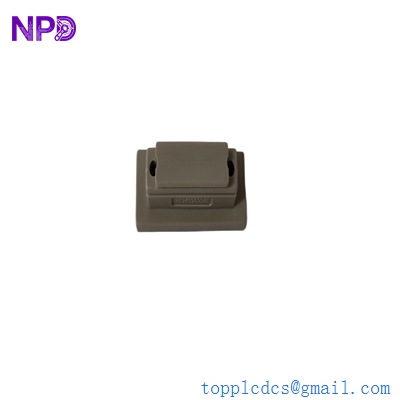
ABB TB852 3BSC950263R1
Customer Cases & Industry Applications
Case 1: Resolving Intermittent I/O Faults in a Pulp & Paper Mill
Situation: A paper mill in Finland experienced recurring, random “I/O Module Missing” alarms across their S800 clusters. The system used redundant AC 800M controllers, but the faults occurred even when the primary controller was healthy.
Task: The maintenance team suspected a loose connection or a faulty termination. Signal reflection on the long ModuleBus was identified as the primary suspect.
Action: We provided two New Surplus TB852 terminators. Replacing the existing 15-year-old terminators—which had been subjected to vibration and thermal cycling—was the first logical step.
Result: After swapping in the new 3BSC950263R1 units, the signal reflections vanished. The “Module Missing” alarms ceased immediately. The plant lead noted: “It’s a simple part, but without a clean termination, the redundant bus is useless.”
Case 2: Redundancy Restoration for an Offshore Oil Platform
Situation: During a routine inspection of the DCS cabinets on an offshore platform, it was discovered that a non-redundant terminator (TB850) had been accidentally installed on a redundant ModuleBus segment.
Task: The platform required the correct TB852 to ensure that the redundant link was properly balanced and terminated to prevent potential failure during a controller switchover.
Action: We supplied the correct TB852 from our strategic stock. We ensured the revision matched their existing S800 hardware to maintain system consistency.
Result: The correct terminator was installed during the next maintenance window. The platform’s safety-critical I/O system is now fully compliant with its redundant design specifications.
Frequently Asked Questions (FAQ)
Q: Can I use a TB850 instead of a TB852? A: No. The TB850 is for single (non-redundant) ModuleBus clusters. The TB852 is specifically designed for Redundant Control Unit (RCU) links. Using the wrong terminator will cause impedance mismatches and communication errors.
Q: Do these passive modules expire? A: While they don’t have a software “expiry,” the internal resistors and physical connectors can degrade over 10–20 years due to oxidation and thermal stress. If you are experiencing “ghost” alarms on your bus, replacing the terminators is a low-cost, high-value troubleshooting step.
Q: Is “New Surplus” as good as “New from Factory”? A: In the case of the TB852, yes. Since it is a passive hardware module with no electrolytic capacitors or firmware, it does not age while sitting on a shelf. Our New Surplus units are in original packaging and provide identical performance to a factory-direct unit at a significantly lower cost.
Q: How many TB852 modules do I need? A: Typically, you need two per redundant ModuleBus cluster—one for each physical end of the bus.
Q: Does the TB852 require any software configuration? A: No configuration is required. It is a “plug-and-play” hardware component. However, the Control Builder software will detect if a termination is missing based on signal feedback.