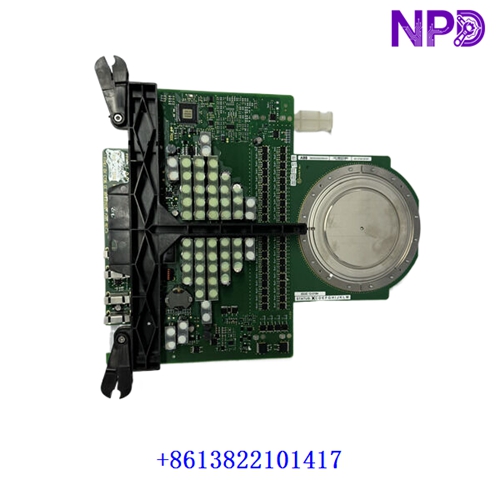

Description
This technical datasheet provides comprehensive specifications, installation procedures, routine maintenance guidelines, troubleshooting steps, safety precautions, and frequently asked questions for the ABB VBS01-FPNA vertical base single module. Engineered for industrial automation and control hardware mounting, this robust component ensures stable structural support and secure module integration.
⚙ Product Technical Parameters
- 1. Brand: ABB
- 2. Model: VBS01-FPNA
- 3. Series: Industrial Automation Mounting and Base Series
- 4. Product Name: Vertical Base Single Module
- 5. Country of Origin: Switzerland / Germany
- 6. Physical State: Rigid structural metal and engineered composite hardware
- 7. Dimensions: 200 mm × 100 mm × 50 mm (Standard modular base format)
- 8. Weight: 0.60 kg
- 9. Origin Location: European Manufacturing Facility
- 10. Power Consumption: Passive mechanical/structural component (0W)
📋 Initial Operation Checklist
Before mounting and commissioning the vertical base module for the first time, verify all physical and structural configurations to prevent installation errors or mechanical stress:
- Inspect the module frame, mounting slots, and securing points for any signs of transit damage or structural defects.
- Confirm that the cabinet panel or DIN rail mounting surface matches the dimensional specifications of the base unit.
- Verify that all fastening screws, brackets, and retention clips are present and securely tightened.
- Ensure ambient operating temperature within the control enclosure remains within standard industrial limits.
- Check alignment with adjacent modules to ensure proper spacing and clearance for ventilation.
🛠 Routine Maintenance and Upkeep
Regular maintenance ensures optimal structural integrity and sustained reliability across automated control cabinets:
- Perform bi-annual visual inspections to check for dust accumulation, mechanical wear, or vibration-induced loosening.
- Clean exterior metallic and composite surfaces using a dry, anti-static microfiber cloth; avoid corrosive chemical solvents.
- Monitor structural mounting stability periodically during scheduled facility maintenance windows.
- Verify mounting screw torque values annually to prevent shifting caused by industrial equipment vibration.
🔧 Troubleshooting and Common Issues
Systematic problem isolation minimizes downtime when mechanical or physical anomalies arise in the field:
- Loose Module Fitting: Check mounting bracket tension, tighten retention screws, and verify proper rail or panel seating.
- Misalignment with Backplane/Connectors: Inspect base positioning relative to the backplane bus, loosen mounting hardware, and readjust alignment before re-securing.
- Vibration Resonance Noise: Check cabinet dampening pads, ensure all securing bolts are torqued evenly, and verify panel rigidity.
- Physical Obstruction or Clearance Issues: Re-verify enclosure dimensional drawings to ensure adequate spacing for surrounding wiring bundles.
🛡 Safety Precautions
Strict adherence to safety guidelines protects personnel from physical hazards and prevents permanent hardware damage:
- Always isolate and power down adjacent electrical systems before installing or servicing mechanical base hardware in live cabinets.
- Observe standard facility safety protocols and wear appropriate personal protective equipment (PPE) during assembly.
- Do not exceed the specified mechanical load limits and weight capacities designated for the single vertical base module.
- Ensure all structural assembly complies strictly with local industrial safety codes and manufacturer recommendations.
❓ Frequently Asked Questions (Q&A)
- Q1: Can this vertical base module be mounted in any orientation within the cabinet?
- A1: The unit is specifically engineered as a vertical base module (VBS) and should be installed in the vertical orientation specified by the layout design to ensure proper weight distribution and thermal airflow.
- Q2: Does the VBS01-FPNA module require any electrical grounding connections?
- A2: While the base itself is primarily a structural mounting component, ensure it is connected to the enclosure’s protective earth (PE) grounding system if required by local electrical safety standards or system architecture.
- Q3: Is the module compatible with standard DIN rails or does it require direct panel mounting?
- A3: Depending on the specific configuration variant, it supports standard industrial mounting footprints; verify the exact mechanical drawing for your cabinet layout prior to installation.