
Description
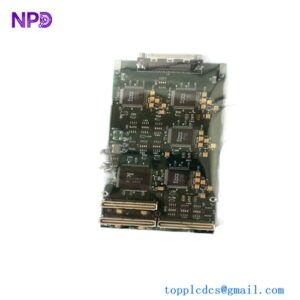
The Basler Electric DECS-200-1L Digital Excitation Control System is a microprocessor-based excitation control and voltage regulation package engineered for synchronous generators and motors. Designed to deliver precise excitation power and robust system protection, this controller ensures superior voltage regulation, fast transient response, and reliable field current management across demanding industrial and utility power generation environments.

📊 Product Technical Datasheet
- Brand: Basler Electric
- Model: DECS-200-1L
- Series: DECS-200 Series
- Product Name: Digital Excitation Control System
- Place of Production: United States
- Condition Status: Factory New / Refurbished Available
- Dimensions: 310 mm x 240 mm x 135 mm
- Weight: 4.50 kg
- Origin Country: USA
- Power Consumption: 45W (Operating via auxiliary control power supply)
🔍 Initial Operation Checklist
- Verify physical integrity: Inspect the controller chassis enclosure, terminal barrier strips, communication ports, and front human-machine interface (HMI) for any shipping damage prior to installation.
- Check power compatibility: Ensure that the auxiliary control power and field excitation source voltages match the controller’s rated input requirements before energizing the system.
- Inspect wiring terminations: Confirm that all potential transformer (PT) sensing inputs, current transformer (CT) lines, field output cables, and discrete I/O wiring are securely fastened and torqued.
- Verify firmware and configuration: Power on the unit and check the software version and loaded configuration file to ensure alignment with the synchronous machine’s electrical parameters.
- Perform excitation loop checks: Test manual and automatic voltage regulation (AVR) control loops, limiter functions, and trip interlocks before attempting generator excitation startup.
🔧 Routine Maintenance and Care
- Environmental monitoring: Regularly inspect the excitation control cabinet ventilation fans and air filters to ensure internal ambient temperatures remain within the operating range of -40°C to +70°C.
- Terminal tightening: Periodically check and retighten all power and control screw terminal blocks to prevent loose connections caused by mechanical vibration in heavy industrial settings.
- Battery backup maintenance: Inspect and test internal real-time clock batteries and external control power backups on a scheduled basis to ensure uninterrupted event logging and fault recording.
- Software backups: Export and archive current controller settings, limiters, and tuning files using Basler BESTCOMS software whenever modifications or firmware upgrades are implemented.
- Surface cleaning: Clean the front panel display and enclosure exterior using a soft, lint-free cloth dampened with mild detergent or isopropyl alcohol. Avoid abrasive chemical solvents.
⚠️ Troubleshooting and Common Issues
- Loss of Field (LOF) Alarms: If a field loss trip occurs, check excitation power fuses, inspect field breaker auxiliary contacts, and verify continuity of the generator field winding circuit.
- Voltage Regulation Instability: Hunting or oscillation in generator terminal voltage usually points to improper PID loop tuning, unstable PT sensing signals, or incorrect power system stabilizer settings.
- Communication Timeouts: If monitoring software fails to connect to the controller, verify RS-485 or Ethernet port configurations, baud rates, and network cable shielding continuity.
- Limiters Activation: Unintended reactive power or under-excitation limiter clamping indicates that generator operating points have exceeded pre-programmed safety boundaries in BESTCOMS.
🛡️ Safety Precautions
- Lethal DC Voltages: Excitation output circuits carry high DC voltages and currents capable of causing severe shock or arc flash hazards. Never touch live field terminals while energized.
- Qualified Personnel Only: Installation, wiring, tuning, and maintenance of the excitation system must be executed exclusively by certified electrical and power system specialists.
- Power Isolation: Completely isolate all AC generator voltages, auxiliary control power supplies, and field breaker feeds before opening the cabinet or servicing internal hardware components.
- Operational Safety: Never bypass critical excitation system limiters, overexcitation protection, or loss-of-field trips while the synchronous machine is operating online.
❓ Frequently Asked Questions (Q&A)
- Q1: What is the primary function of the DECS-200-1L controller? A1: The DECS-200-1L regulates the output voltage of synchronous generators by controlling the DC excitation current supplied to the generator field winding, ensuring stable voltage under varying load conditions.
- Q2: What software tool is used to configure and monitor this system? A2: Basler’s BESTCOMS software suite is utilized for comprehensive system configuration, real-time metering, oscillography analysis, and firmware updates via communication ports.
- Q3: Does the controller support dual-channel excitation control? A3: The DECS-200 series offers advanced control architectures, with specific configurations supporting redundant control channels and automatic tracking for high-reliability applications.
- Q4: What actions should be taken if the controller registers an internal hardware fault? A4: Record the exact alarm code displayed on the HMI or BESTCOMS software, verify input power stability, and consult authorized Basler technical support for diagnostic troubleshooting.