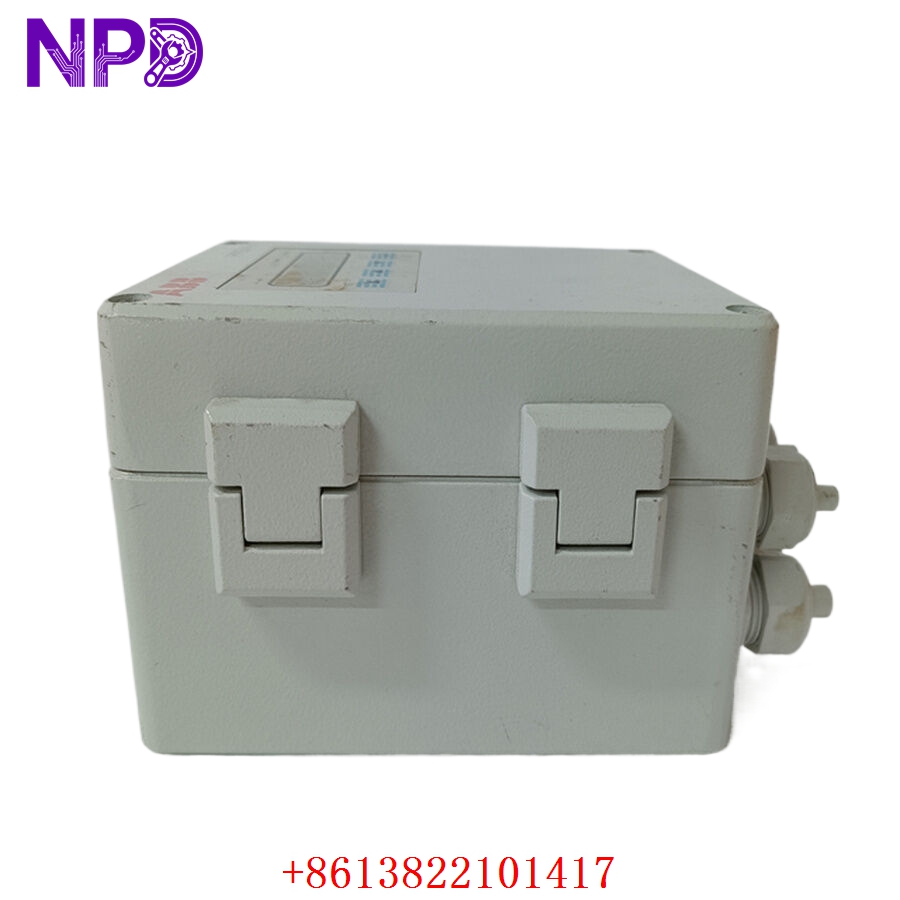

Description
The Basler Electric SR4A1B05A3E is a high-precision Static Voltage Regulator (SVR) engineered for industrial generator applications. It serves as a solid-state voltage control device that maintains a constant output voltage from an AC generator by monitoring the generator’s terminal voltage and adjusting the exciter field current accordingly. This model is renowned for its reliability, fast response time, and ability to handle the rigorous demands of power generation environments, ensuring stable grid or standalone operation.

📋 Technical Specifications
- Model Number: SR4A1B05A3E
- Manufacturer: Basler Electric
- Type: Static Voltage Regulator (SVR)
- Input Voltage: Typically 120/240 VAC sensing
- Output: Precise DC excitation control
- Dimensions: 6.0 x 4.0 x 2.0 inches (approx. chassis size)
- Weight: 1.2 lbs (0.54 kg)
- Country of Origin: United States
⚙️ Application Areas
- Synchronous AC Generators
- Industrial Cogeneration Plants
- Standby Power Systems for Data Centers
- Marine Generator Sets
- Oil and Gas Drilling Power Units
🛠️ Operating Instructions & Guidelines
- Installation: Mount the regulator in a cool, dry location within the generator control panel. Use vibration-isolation mounts if the unit is installed directly on the generator skid. Ensure all sense leads are shielded to prevent noise induction.
- Environmental Requirements: Operating ambient temperature should not exceed 60°C. Keep the unit away from excessive moisture, oil vapors, and metal shavings that could cause short circuits on the PCB.
- Maintenance: Periodically check the tightness of terminal connections. Ensure that the sensing leads are clean and that there is no signs of charring on the terminal board.
⚡ Power Sequence & Operation
- Power-On Sequence: 1. Ensure the generator circuit breaker is open. 2. Start the prime mover and bring the generator to rated speed. 3. Monitor the regulator’s response as the generator voltage builds up. 4. Verify the output voltage against the setpoint on your control panel meter.
- Power-Off Sequence: 1. Reduce the load on the generator to near zero. 2. Open the main generator breaker. 3. Shut down the prime mover. 4. Allow the regulator capacitors to discharge fully before performing any service.
- Step-by-Step Operation: 1. Set the voltage droop and gain controls according to the generator manufacturer’s recommendations. 2. Monitor voltage stability during initial load application. 3. Fine-tune the potentiometer for precise voltage regulation. 4. Engage the synchronization switch if paralleling with the grid.
❓ Frequently Asked Questions (Q&A)
- Why is the generator voltage unstable? Check for loose sensing wires, incorrect stability (gain) settings on the regulator, or intermittent contact in the excitation circuit. Also, verify that the prime mover speed is constant.
- Can I replace this regulator while the engine is running? Absolutely not. Attempting to replace the regulator while the generator is running will cause a loss of excitation, potentially leading to catastrophic damage to both the generator and the regulator itself.
- What does the “static” designation mean? It indicates that the unit uses solid-state electronic components rather than moving parts (like mechanical vibrating contacts), which allows for much higher precision, durability, and a faster response to load changes.
- What if the voltage fails to build up? Ensure that the residual magnetism of the generator is sufficient. If not, a “field flashing” procedure may be required as per the generator’s maintenance manual.