
Description
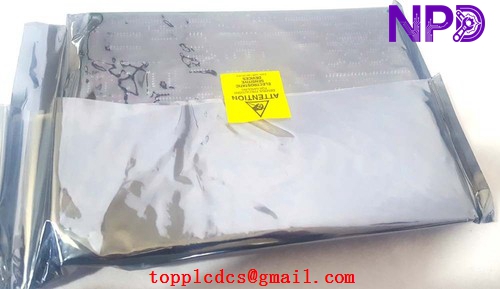
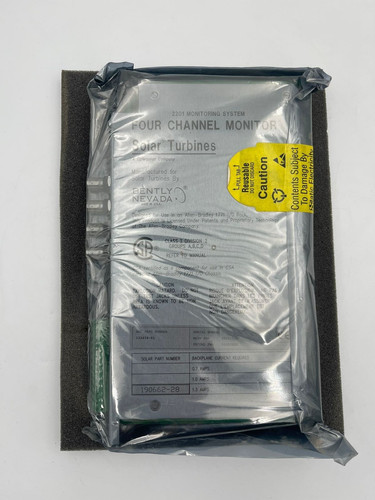
The Bently Nevada 2201 (Part: 190662-28) is a specialized four-channel monitoring instrument within the legacy Bently Nevada monitoring ecosystem. This system was designed to provide continuous, high-speed monitoring of radial vibration, thrust position, and speed for critical rotating machinery. The 190662-28 configuration specifically provides the necessary signal processing to interface with proximity probes, converting raw gap voltage into actionable engineering units (mils or microns) to detect mechanical degradation before catastrophic failure occurs.
📋 Technical Specifications
| Parameter | Specification |
|---|---|
| Product Name | 2201 Four-Channel Monitor |
| Model Number | 190662-28 |
| Channel Capacity | 4 independent monitoring channels |
| Input Type | Proximity Probe (Eddy Current) inputs |
| Core Function | Vibration measurement and alarm setpoint processing |
| Alarm Logic | Programmable alert and danger setpoints |
| Output Signals | Buffered raw signal (for oscilloscopes/analyzers), 4-20mA proportional output |
| Power Supply | Standard industrial DC power distribution |
| Mounting Style | Individual panel-mount or rack-compatible chassis |
| Dimensions | Standard 2201 series industrial housing |
🚀 Recommended Series Integration
The 2201 series is a foundational monitoring tool often integrated with higher-level diagnostic platforms:
- 3300 XL Proximity Transducer System – The primary sensor interface for the 2201 monitor.
- 125744-01 – Keyphasor Module (essential for phase/speed reference).
- 3500 Series Monitoring System – The modern successor platform for the 2201.
- System 1 – Diagnostic software for advanced vibration analysis.
- 125760-01 – Extension cables for proximity probe signal transmission.
- 128229-01 – Connector Protector Kit for hazardous environments.
- Signal Conditioner Modules – For long-distance signal routing to control rooms.
- 4-20mA Data Gateway – For integration into DCS/PLC systems.
⚠️ Maintenance & Calibration Note
The 190662-28 relies on precise calibration to the Static Gap Voltage of the proximity probes. If you are replacing this unit, you must ensure that the “Scale Factor” and “Zero Bias” settings on the new monitor are matched to your specific probe type (e.g., 200 mV/mil). Failure to do so will result in false alarms or undetected machinery faults.