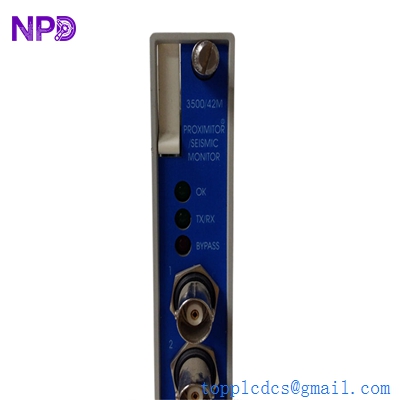
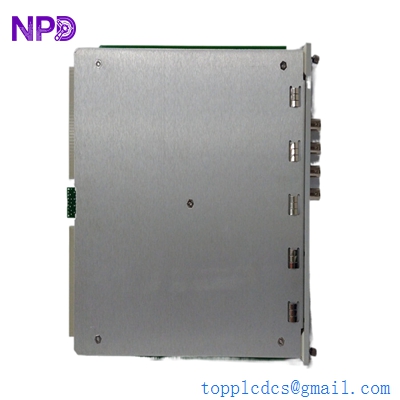

Description
Product Core Brief
- Model: BENTLY 3500/42M
- Brand: Bently Nevada (Baker Hughes)
- Series: 3500 Machinery Protection System
- Core Function: Continuous vibration and proximity monitoring for rotating machinery
- Type: Condition Monitoring Module
- Key Specs: Proximitor & seismic inputs Alarm setpoints Rack-based diagnostics

BENTLY 3500/42M
Key Technical Specifications
- Input Channels: 4 dynamic signal channels
- Sensor Types: Proximitor®, velocity, and acceleration sensors
- Frequency Range: 0.5 Hz to 10 kHz (sensor-dependent)
- Input Signal Range: ±10 V dynamic
- Alarm Functions: Alert and Danger setpoints per channel
- System Integration: Bently Nevada 3500 rack
- Communication: Backplane data exchange to 3500/22M TDI
- Configuration Method: 3500 Rack Configuration Software
- Operating Voltage: Supplied via 3500 rack backplane
- Operating Temperature: −30 °C to +65 °C
- Mounting: 3500 series rack slot installation
Installation & Configuration Guide
Phase 1: Pre-Installation (≈10 minutes)
⚠️ Safety First
- Coordinate downtime with operations and maintenance.
- Confirm machinery is in a safe state—no rotating shafts, no stored energy.
- Power down the 3500 rack and associated power supplies.
- Wait 5 minutes to allow internal capacitors to discharge.
Tools & Prep
- ESD wrist strap and mat
- Phillips screwdriver (PH1)
- Multimeter for voltage checks
- Labels and marker
- Smartphone for configuration photos
Backup
- Export the current 3500 configuration file.
- Photograph channel assignments and alarm settings.
Phase 2: Removal of Existing Module (≈5 minutes)
- Remove the rack front cover.
- Label and disconnect field wiring if applicable.
- Loosen the retaining screws.
- Pull the module straight out—no rocking.
- Inspect the backplane connector for bent pins or debris.
A small thing, but worth saying: if the connector looks worn, stop and clean it. Rushing here causes more trouble later.
Phase 3: Installing the New 3500/42M (≈10 minutes)
- ESD protection on before opening the anti-static bag.
- Verify the model number matches exactly.
- Slide the module into the correct rack slot.
- Apply even pressure until fully seated.
- Tighten the retaining screws.
- Reconnect wiring per labels and photos.
Quick checklist:
- Correct slot
- Screws secured
- No bent pins
- Wiring restored correctly
Power-On & Functional Check (≈10–15 minutes)
- Restore power to the 3500 rack.
- Observe front-panel LEDs:
- Green steady → normal
- Red or flashing → configuration or channel fault
- Connect to the 3500 configuration software.
- Verify:
- Channel recognition
- Sensor scaling
- Alarm setpoints
- Simulate a signal (if permitted) to confirm alarms respond.
Let it run for at least 30 minutes. If no diagnostics appear, you’re done.
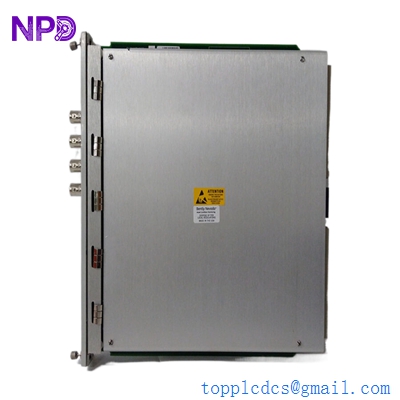
BENTLY 3500/42M
Customer Cases & Industry Applications
Case 1: Refinery Compressor Protection After Unexpected Failure
Situation
A coastal refinery was running a centrifugal compressor train protected by a Bently 3500 system. The installation had been stable for nearly nine years.
Task
One morning, vibration data from a single train went dark. The 3500/42M module stopped reporting, forcing operators to reduce load. Every hour at reduced throughput cost roughly $45,000.
Action
The maintenance lead contacted us for an immediate replacement. We confirmed stock, performed a full bench test, documented firmware and channel response, and shipped the same day.
Result
The module was installed within 24 hours. Full load resumed the next shift. Estimated avoided loss exceeded $500,000. After that event, the refinery revised its buffer stock policy to keep one spare 3500/42M on-site.
Case 2: Power Plant Prevents Forced Outage with Strategic Spare
Situation
A gas-fired power plant relied on multiple 3500 racks for turbine protection. Several modules were approaching ten years in service.
Task
The reliability engineer noticed increasing lead time variability from OEM sources and worried about a forced outage during peak season.
Action
We recommended a last-time-buy style strategy for critical monitors: one spare per rack, stored under controlled conditions. The plant purchased two new 3500/42M units as insurance.
Result
Six months later, one installed module showed intermittent channel noise. The spare was swapped in the same day. No outage. The carrying cost was trivial compared to lost generation revenue.
Case 3: EPC Project Execution Without Schedule Slip
Situation
An EPC contractor was upgrading vibration monitoring on an LNG facility. The design locked in the 3500/42M.
Task
OEM delivery slipped to 10 weeks. Contract penalties were looming.
Action
We supplied tested, brand new surplus modules with full documentation. Configuration matched the project baseline.
Result
The project stayed on schedule. The EPC later consolidated vendors and listed us as a preferred spare parts supplier.
Frequently Asked Questions (FAQ)
Q1: Is the 3500/42M still supported by Bently Nevada?
A: Yes. The 3500 platform remains widely deployed and supported. That said, lead times can fluctuate. From an inventory standpoint, I usually recommend holding at least one spare per critical rack.
Q2: Can this module be hot-swapped?
A: No. The 3500/42M requires rack power-down for replacement. Hot insertion risks backplane damage and data corruption. If uptime is critical, redundancy and spare availability matter more than speed alone.
Q3: Is this unit new or refurbished?
A: It is brand new surplus—unused, original factory hardware. We do not sell refurbished or repaired modules. Interfaces show no insertion wear, and serial numbers remain traceable.
Q4: What testing do you perform before shipment?
A: Every unit goes through:
- Incoming inspection with serial verification
- Live rack test on a Bently 3500 test stand
- Channel input simulation and alarm verification
- Insulation resistance checks
- Final QC sign-off with photos and test report
We can share reports if needed.
Q5: How many should we stock?
A: My rule of thumb:
- Critical machinery: 1–2 units on-site
- Non-critical or duplicated systems: shared spare across plants
Beyond that, carrying cost usually outweighs risk.
Q6: What’s the total cost of ownership angle here?
A: The purchase price is only part of it. A single stock-out can cost more than years of carrying cost. For slow movers like the 3500/42M, controlled buffer stock beats emergency air freight every time.
Q7: Can you ship internationally?
A: Yes. We ship globally with standard export documents. Duties depend on destination and declared value. If timing matters, air freight usually delivers within 5–7 days.