
Description
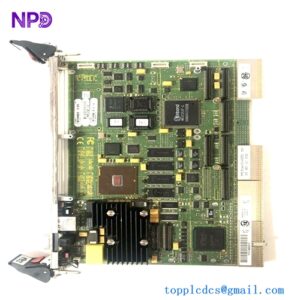
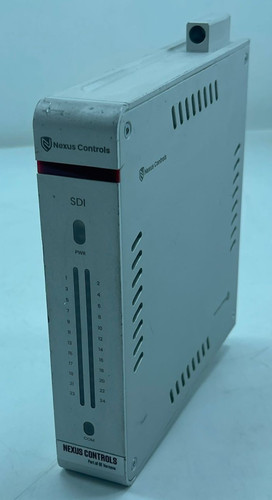
The GE Nexus Controls (formerly Bently Nevada/General Electric) SDI60 (Part: 369B1843G5009) is a high-density, 24-channel Digital Input (DI) module. It is a critical component typically deployed within the Mark VIe or related distributed control system (DCS) architectures. This module is engineered to monitor the state of field-level discrete devices—such as limit switches, pushbuttons, and relay contacts—and convert those field inputs into high-speed digital signals for processing by the control system’s main processor (controller).
📋 Technical Specifications
| Parameter | Specification |
|---|---|
| Product Name | SDI60 24-Channel Digital Input Module |
| Part Number | 369B1843G5009 |
| Input Channels | 24 Isolated Digital Inputs |
| Signal Type | Discrete (On/Off) |
| Core Function | State monitoring of field-mounted discrete devices |
| Isolation | Channel-to-channel and group-to-ground isolation |
| System Compatibility | Mark VIe / Nexus Control Systems |
| Diagnostics | On-board status LEDs for channel health and signal presence |
| Mounting Style | Rack-mounted / Terminal block assembly integration |
| Dimensions | Standardized industrial I/O module footprint |
🚀 Recommended Series Integration
The SDI60 module is designed for modular integration within GE Nexus Control racks. Common associated components include:
- TBCI / DTBA – Compatible Terminal Boards for signal termination.
- Mark VIe Controller (e.g., UCPA/UCPH) – The brain that processes inputs received from the SDI60.
- 176449-01 – Mark VIe I/O Pack (interface module).
- Power Supply Modules – Required to maintain the 24V DC loop power for field sensors.
- I/O Racks / Enclosures – Standard Nexus/Mark VIe mounting hardware.
- Cabling Solutions – Shielded interface cables for noise-sensitive environments.
⚠️ Maintenance & Troubleshooting Note
The 369B1843G5009 module is designed for high-density applications, which means managing cable density and ground loop interference is vital.
- LED Diagnostics: Use the front-panel LEDs to differentiate between a field device failure and a module-level failure. A blinking LED typically indicates a heartbeat or communication status, while a steady ON/OFF reflects the state of the input.
- Loop Power: Ensure the external 24V supply providing the loop power for your discrete sensors is within tolerance, as voltage drops over long cable runs can lead to “ghosting” or intermittent input state changes.
- Firmware Matching: Always verify that the firmware version loaded on the module is compatible with your current controller project files in the ToolboxST configuration software.