Description
- Model: CTC SC203-100A-002IR-010-01K-05
- Brand: Connection Technology Center (CTC) / PRO Line
- Series: SC200 Series
- Core Function: Converts raw accelerometer signals into standard process variables for loop monitoring.
- Condition: Brand New Surplus (New Surplus), Non-Refurbished
- Type: Vibration Signal Conditioner Module
- Key Specs: 100 mV/g sensor input, 0 to 2 IPS RMS full-scale range, dual 4-20 mA and 0-10 V DC outputs
- Sensor Input Configuration: 100 mV/g constant current accelerometer
- Full-Scale Measurement Range: 0 to 2 IPS (Inches Per Second) RMS velocity
- Primary Analog Output: 4-20 mA loop-powered current signal
- Secondary Voltage Output: 0 to 10 V DC dynamic scaled signal
- Analysis Interface: Front-facing buffered BNC terminal port
- Electrical Signal Isolation: 1,000 V DC between circuit nodes
- Sensor Excitation Supply: 24 V DC at 4 mA constant current
- Input Operating Voltage: 24 to 32 V DC unregulated supply window
- Internal Processing Frequency: 10 Hz to 1,000 Hz filter spectrum
- Environmental Thermal Range: -40 °C to 70 °C operating window
- Chassis Mounting Base: Standard 35 mm DIN rail bracket
- Removable Wiring Blocks: Keyed detachable screw-clamp terminal sockets
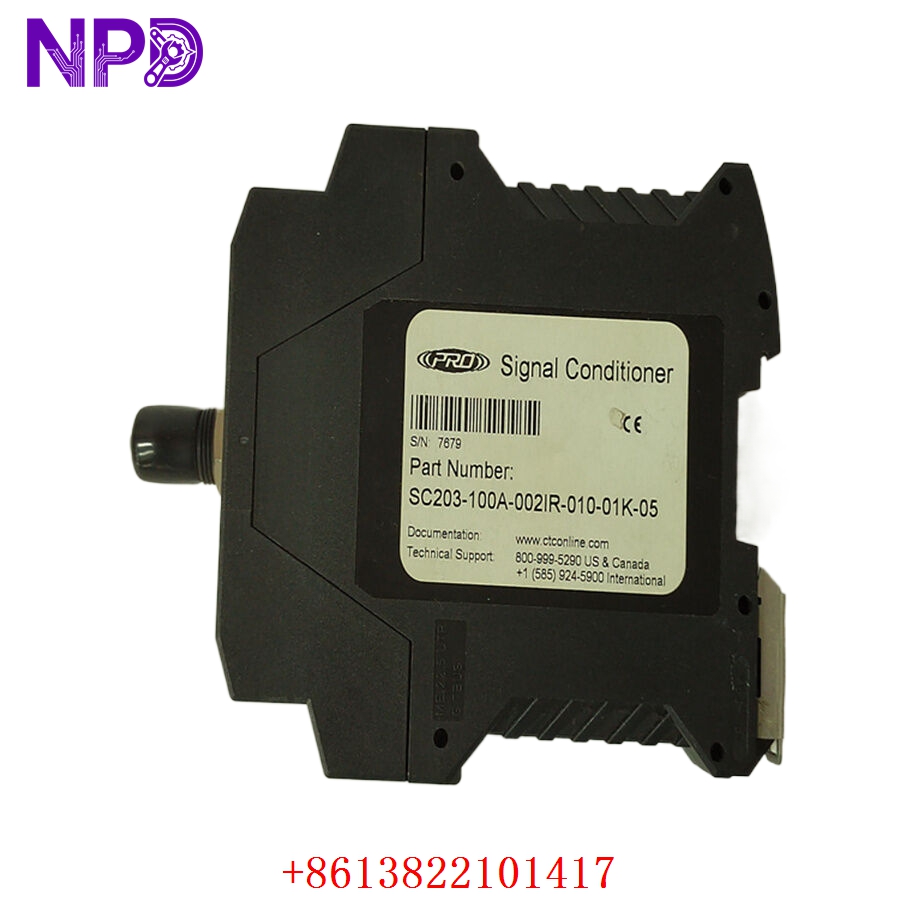
CTC SC203-100A-002IR-010-01K-05
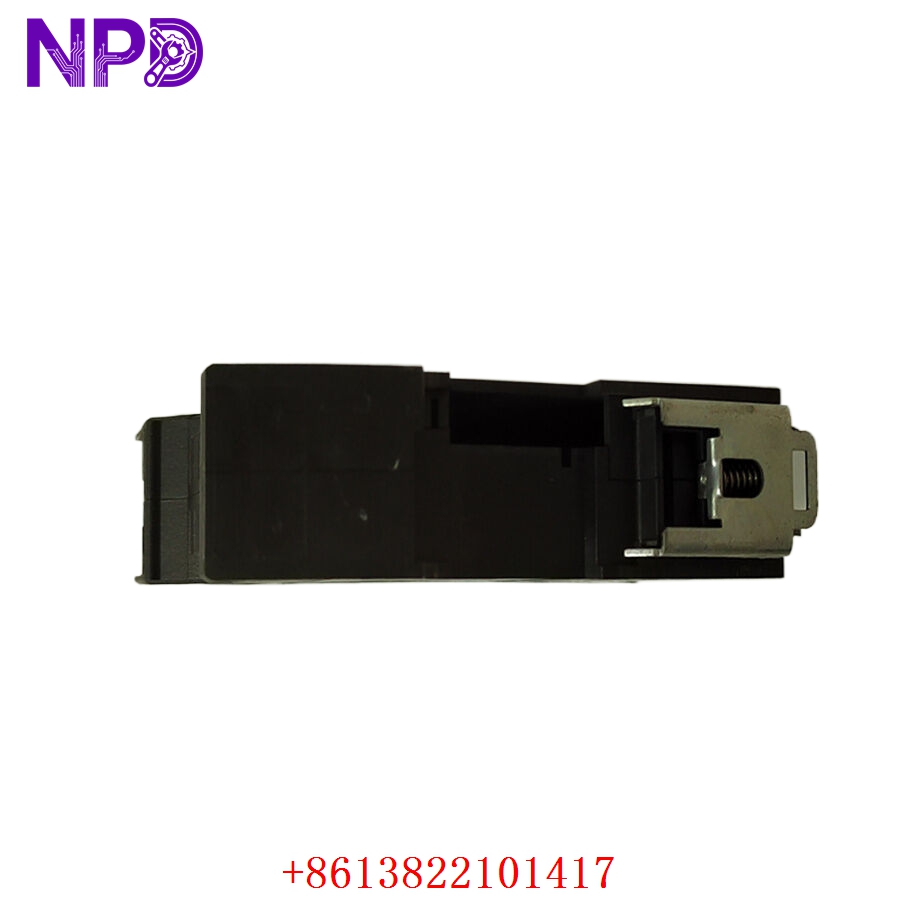
CTC SC203-100A-002IR-010-01K-05
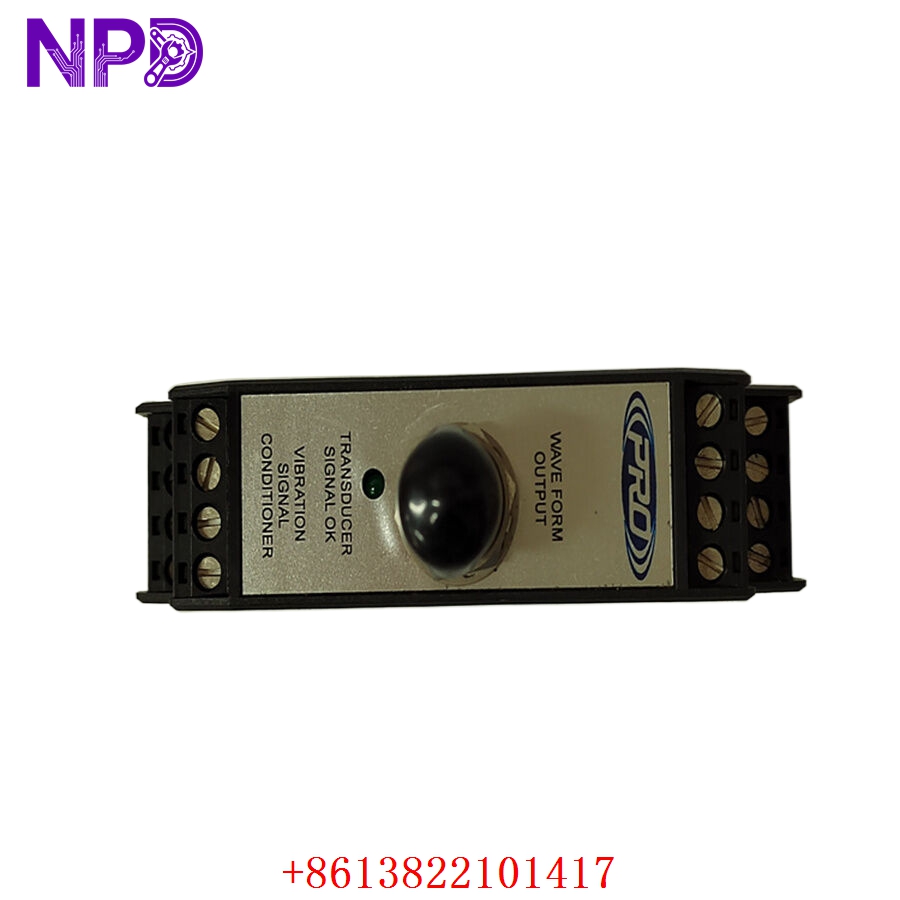
CTC SC203-100A-002IR-010-01K-05
Installation & Configuration Guide
Phase 1: Pre-Installation (Estimated time: 10 minutes)
⚠️ Safety First:
- Coordinate with control room operators before interrupting active machinery tracking lines to prevent false alarms.
- Ensure critical rotating asset safety interlock loops are placed in bypass mode during this hardware maintenance cycle.
- Isolate the local 24 V DC distribution breaker feeding the target signal conditioner mounting rack.
- Establish an electrostatic protection zone using a grounded connection.
Tools and Materials:
- Anti-static wrist strap and grounded ESD mat
- Precision terminal screwdriver (2.5 mm flat head)
- Fluke 87V digital multimeter for circuit verification
- Label makers for terminal wire tracking
Backup Actions:
- Record the internal DIP switch positions by photographing the side legend panel configuration.
- Document full-scale baseline calibration parameters from the master plant DCS or PLC analog input processing map.
Phase 2: Removal (Estimated time: 5 minutes)
- Disconnect the pluggable terminal blocks by gripping the sides and pulling directly outward rather than pulling individual wires.
- Unplug any specialized dynamic coaxial analysis lines attached to the front panel BNC interface.
- Locate the spring-loaded DIN rail locking tab on the lower rear aspect of the chassis block.
- Insert a flathead screwdriver tip into the tab eyelet, pry downward, and swing the module up off the mounting track.
- Place the legacy card into an ESD-shielded storage pocket immediately.
Phase 3: Installation (Estimated time: 10 minutes)
- Extract the new signal conditioner module from its factory moisture barrier film.
- Configure the internal DIP switch arrays to dictate input type, scaling factor, and filter ranges matching the original system profile.
- Hook the upper mounting bracket claw onto the top ridge of the 35 mm DIN rail structure.
- Push firmly inward on the lower face of the housing until the spring latch engages the rail with an audible snap.
- Reinsert the pre-labeled, pluggable wire blocks back into their keyed receptacle slots until fully seated.
Phase 4: Power-On & Testing (Estimated time: 15 minutes)
- Execute a resistance verification test between the 24 V DC input pins and common ground utilizing a multimeter to guarantee zero terminal shorts.
- Re-energize the local supply loop breaker.
- Inspect the front-panel status markers; the green power indicator must exhibit a steady state.
- Connect a portable data collector to the BNC jack to verify the raw 100 mV/g AC waveform is transmitting without distortion.
- Validate current loop calibration by checking that a 4-20 mA output response registers at the master control panel, verifying proper system loop integrity.
- Track signal continuity for 30 minutes to capture potential drift or loop anomalies prior to signing off the service ticket.
Customer Cases & Industry Applications
Case 1: Petrochemical Pump Station Emergency Replacement
Situation: A downstream refining plant in East China experienced sudden tracking dropout on a critical 450 kW crude transport pump. The issue stemmed from a liquid-ingress short circuit inside a legacy vibration monitor terminal box.
Task: Because this asset feeds real-time predictive data to a Honeywell Experion DCS, running blind introduced severe risks of catastrophic pump bearing failure. The maintenance group needed an exact, immediate replacement card to avoid shutting down the entire line.
Action: The facility procurement officer reached out to us regarding our available inventory. We processed, ran a comprehensive quality verification sequence using our specialized test benches, and dispatched the brand new surplus unit via expedited courier within 4 hours.
Result: The component arrived at the refinery plant floor the following morning. Technicians completed the swap-out in 25 minutes, bringing the critical loop online before any process upsets occurred. Sourcing this surplus asset eliminated a 6-week factory lead time variability risk and saved the client an estimated $85,000 in un-planned shutdown losses.
Case 2: Power Plant Induction Fan Proactive Overhaul
Situation: A regional coal-fired power station operating multi-stage boiler induction fans relied on older loop-powered monitors that were prone to thermal drift in high ambient environments.
Task: During a planned maintenance outage, the instrumentation superintendent initiated a strategy for vendor consolidation, aiming to replace unreliable legacy modules with the stable architecture of the SC200 series.
Action: The utility engineering group utilized our stock to secure identical, factory-certified surplus components. By purchasing these as a bulk deployment rather than ordering individual piecemeal replacements from overseas factory sources, they optimized their capital allocation.
Result: The power station updated their monitoring panel, successfully maintaining a critical buffer stock without increasing carrying cost liabilities across their multi-plant logistics hubs.
Frequently Asked Questions (FAQ)
Q1: What does the specific string code in this model configuration denote?
A: The alphanumeric matrix defines factory-calibrated setpoints. Specifically, 100A configures the module for a standard 100 mV/g sensitivity accelerometer. The 002IR designation indicates a 0 to 2 Inches Per Second (IPS) full-scale velocity tracking parameter, utilizing Root Mean Square (RMS) calculation metrics. The 010 suffix dictates a complementary 0-10 V DC dynamic voltage output loop running alongside the primary 4-20 mA current loop.
Q2: Can I adjust this module in the field if our process requirements alter?
A: Yes. The device features an accessible internal array of multi-position DIP switches. In my experience with these units, you can easily shift the filtering boundaries, scale parameters, or output profiles on-site. However, always refer to the factory side-panel schematic guide before changing switch logic to maintain strict calibration alignment.
Q3: Are these units sourced from used machinery or trade-ins?
A: Absolutely not. We strictly supply factory-authentic New Surplus components in original packaging blocks. We do not participate in or offer refurbished, repaired, or pulled equipment due to the catastrophic failure rates associated with aged internal capacitors and input terminal traces. Our quality team runs every item through an incoming validation sequence, including insulation tests, to verify absolute field reliability.
Q4: How do I utilize the front panel BNC connection point?
A: The BNC port provides an isolated, unconditioned buffered output reproducing the raw AC acceleration waveform directly from the active sensor field loop. This design allows route-based maintenance teams to hook up external portable data collectors (such as a CSI 2140 or a Commtest analyzer) for deep-dive spectrum analysis without interrupting the 4-20 mA process loop feeding the plant DCS.
Q5: Is an external barrier necessary when installing this device near hazardous locations?
A: Yes, if your accelerometers reside within Class I, Div 1 environments. The module itself is not intrinsically safe and must be positioned within an unclassified local cabinet or a suitable NEMA enclosure. You must place an approved galvanic isolation barrier or Zener barrier in series between the field sensor line and the input block terminals to maintain compliance.
Q6: What is the exact billing policy for tax documentation and freight?
A: We provide complete commercial invoicing support. Value-Added Tax (VAT) special or standard corporate filings are fully accommodated upon request based on regional tax laws. Shipments travel via expedited courier services like DHL, FedEx, or SF Express from our regional fulfillment centers to minimize delivery latency to your plant floor.