
Description
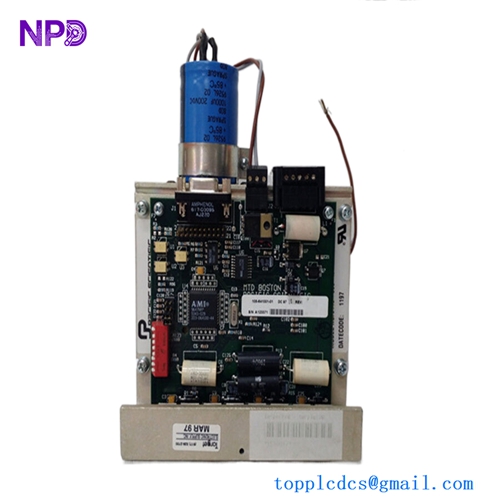
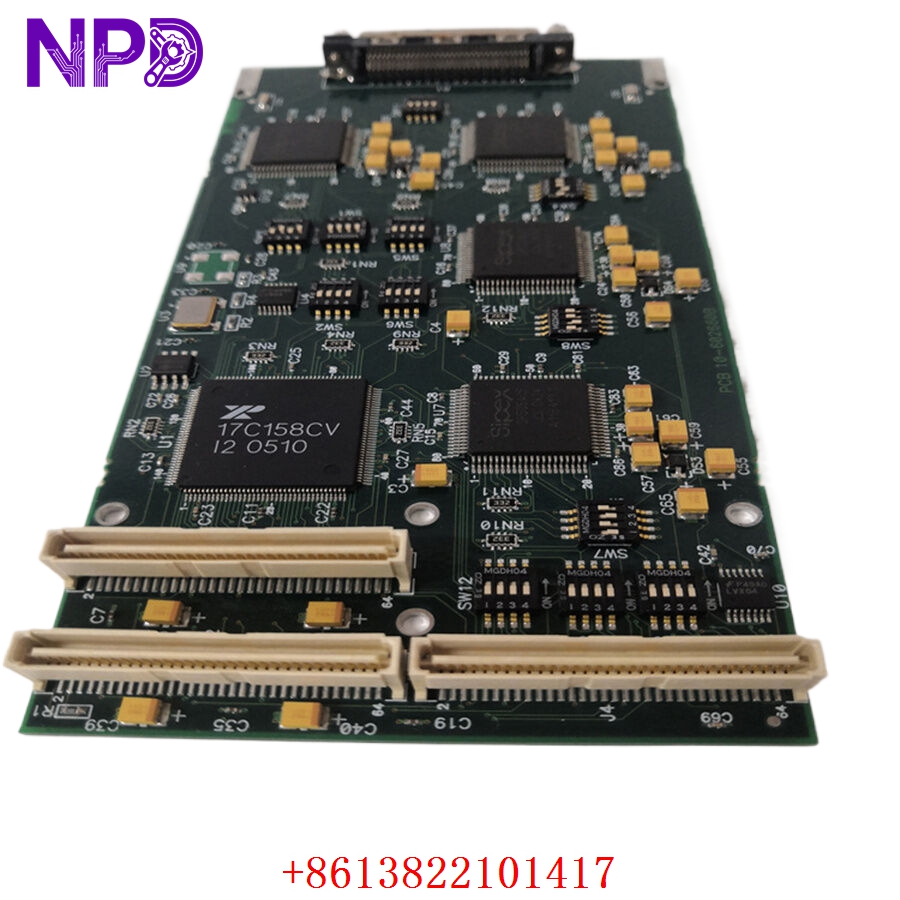
The DAMCOS EMERSON VISION CPU 165B9168 is a high-performance control processing unit designed for marine valve control systems and hydraulic automation. As a central component in the Damcos Vision series, this CPU is responsible for executing control logic, managing I/O communication, and ensuring the precise operation of actuators in demanding offshore and maritime environments. Its robust design allows for reliable performance in managing valve positioning and monitoring feedback loops.

Technical Specifications
| Parameter | Description |
| Model | 165B9168 |
| Series | Damcos Vision |
| Manufacturer | Emerson (Damcos) |
| Function | Central Processing Unit / Valve Control |
| Form Factor | Modular Rack-Mount Controller |
| Weight | Approximately 0.70 kg |
| Origin | Denmark |
Operational Guidelines & Usage
🔹 Startup Sequence
- Ensure the CPU module is firmly seated into the Vision control rack, verifying that backplane connectors are fully engaged.
- Confirm that the system power supply is stable at 24VDC (or per system requirement).
- Switch on the power to the control cabinet.
- The CPU will automatically initialize; monitor the front-panel status LEDs (System, Comm, Power) to confirm it transitions to an “Operational” or “Active” state.
- Once active, the CPU will establish communication with connected valve actuator nodes and HMI panels.
🔹 Shutdown Sequence
- Before removal, ensure the valve control system is set to “Manual” or “Off” mode via the HMI to prevent accidental actuator movement.
- Power down the system rack.
- Allow for a short discharge time to ensure all internal circuits are safe.
- Use an anti-static wrist strap when removing the module from the rack to prevent static damage to the internal logic components.
🔹 Normal Operational Flow
- The CPU receives feedback signals (position, pressure, status) from field-based valve actuators.
- It compares these signals against the programmed logic defined in the control software.
- The CPU calculates the necessary output commands to achieve the desired valve state.
- It continuously manages the communication bus, ensuring synchronized data exchange across the network.
🔹 Parameter Configuration
- Configuration is handled through the Emerson Damcos Vision engineering software.
- Connect a laptop to the CPU’s communication port and download the specific project file or parameter settings.
- Calibration of valve travel and limits is performed via the software interface after the CPU has successfully linked with the actuators.
- Save the configuration to the unit’s memory to ensure the system resumes correctly after a power failure.
🔹 Mode Switching
- Auto/Remote Mode: The CPU processes commands from the central automation system or bridge controls.
- Local/Manual Mode: Commands from the bridge are bypassed; the CPU responds to local inputs (if configured) or direct software-based control overrides for maintenance.
Common Questions & Answers (Q&A)
💡 Q: What should I do if the “System” LED is flashing red?
A: A flashing red light indicates a diagnostic fault, such as a watchdog timeout, communication failure with the I/O rack, or an internal memory checksum error. Check the system log via the engineering software to identify the specific error code.
💡 Q: Can the 165B9168 CPU be repaired on-site?
A: No. Because this unit contains sophisticated surface-mount components and is critical for maritime safety, it is not user-serviceable. If hardware diagnostics indicate a permanent failure, the unit must be replaced with a certified spare.
💡 Q: How does the CPU maintain consistency during network instability?
A: The Vision CPU utilizes a fail-safe communication protocol. If the network link is lost, the CPU is programmed to command valves to a “Default” or “Last Known” state, preventing erratic movement during communication drops.
💡 Q: Is this CPU sensitive to electromagnetic interference (EMI)?
A: Yes, despite its industrial rating, the CPU should be housed in an appropriately shielded control cabinet. Ensure all shield drain wires for communication cables are correctly grounded to the cabinet’s ground bus to minimize noise-induced resets.