
Description
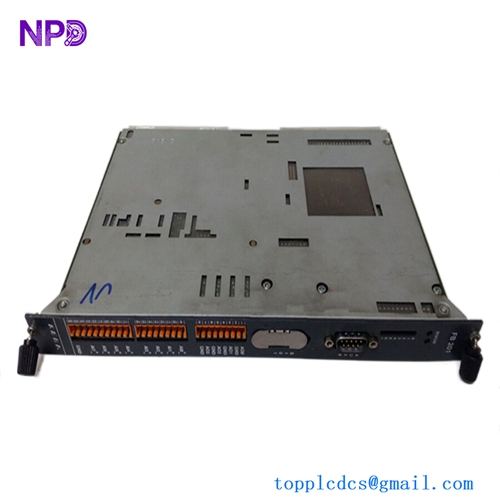
The DEIF Delomatic-3 DGU 3 is a modular, high-reliability multi-function control system designed for comprehensive power management, engine protection, and generator control in marine vessels and decentralized land power stations. Operating within the 19-inch dual-height DGU 3 subrack, the system relies on specialized plugin modules to perform precise power distribution tasks. The SCM-1 card (Synchronizing and Measuring Module) is a critical component of this setup. By integrating an advanced multi-transducer, a dynamic synchronizer, and a generator breaker controller into a single plugin assembly, the SCM-1 card enables seamless automated load sharing and breaker execution.
Technical Specifications & Datasheet
- Model Designation: Delomatic-3 DGU 3 (System Rack Platform)
- Module Part Number: SCM-1 (Synchronizing / Measuring Module)
- Manufacturer: DEIF A/S
- System Platform: Delomatic Multi-Function System (Generation 3)
- Input Voltage Range: Low (100-200V AC), Medium (201-379V AC), High (380-690V AC, ±20% phase-to-phase)
- Measurement Frequency Range: 40 to 70 Hz (Accuracy Class 1 according to IEC 688)
- Current Input: 3-phase current input configured for -/1A or -/5A CT ratios
- Synchronization Accuracy: Within ±5° electrical
- Power Supply Requirement: 24V DC nominal (Acceptable window: 18V to 32V DC via rack PSM-1)
- Communication Bus: ARCNET coaxial transmission loop line (2.5 Mbit data speed)
- Module Dimensions: Standard dual-height Eurocard plugin module profile for 19-inch racks
- Module Weight: 1.2 kg (System panel total weight approx. 4.9 kg)
- Country of Origin: Denmark

Target Applications
This multi-function card and its control panel assembly are primary choices for critical power networks requiring parallel generator configurations. Common installations include commercial cargo ship engine rooms, shaft generator systems, naval vessel auxiliary power grids, main breaker tie-ins, shore connection facilities, and land-based combined heat and power plants.
Operating Guidelines & Instructions
The SCM-1 card must be properly inserted into its assigned slot within the Delomatic-3 DGU 3 rack enclosure, and its front-retaining screws tightened to guarantee a firm connection with the backplane bus. The hardware configuration requires setting the base I/O address via the S2 DIP switches located on the internal SCM-B circuit board, ensuring no address conflicts occur with other installed modules (such as the SCM-2 or IPM-1). Voltage range adjustments for the specific generator or busbar lines must be selected manually before deployment by configuring the jumpers on the SCM-C board. Output regulation wires to electronic governors or automatic voltage regulators should keep distinct separating paths from high-power line cables to minimize signal noise. System setup, setpoint adjustments, and parameter edits should be input using the password-protected interface on the front control panel.
Frequently Asked Questions
What parameters does the SCM-1 card evaluate before granting a breaker closure?
The SCM-1 carries out a dynamic synchronization check. It continuously measures the difference in frequency, voltage, and phase angle across the breaker. The closure command is executed only when the frequency is slightly over-synchronous, the voltage variance drops below the programmed limit, and the phase angle perfectly aligns with the breaker closing time.
What is the function of the sub-boards named SCM-A, SCM-B, and SCM-C?
The SCM-1 module splits tasks across three internal boards connected by a front ribbon bus. The SCM-A board holds the speed and voltage regulation relays. The SCM-B board manages the rack address configuration using DIP switches. The SCM-C board handles the hardware voltage sensing modifications through placement jumpers.
Can the SCM-1 handle mechanical speed governors directly?
Yes. While the standard board supports analog signals for electronic governors, you can mount an optional OPR-1 relay board onto the SCM-A module section. This expansion adds potential-free mechanical pulse contacts to handle mechanical speed governors and manual voltage regulators.