Description
The EPRO MMS6120 (often branded under Emerson or Philips) is a high-precision, dual-channel bearing displacement monitor. It is a core component of the MMS6000 Machine Monitoring System, designed to measure and monitor shaft vibration and displacement in large rotating machinery such as turbines, compressors, and pumps.
Product Parameters (Datasheet)
- Model Number: MMS6120
- System Series: MMS6000
- Channels: 2 independent measurement channels
- Input Signal: Eddy current sensors (e.g., PR6422, PR6423, PR6424, PR6425)
- Measurement Modes: * Relative Bearing Vibration
- Shaft Displacement
- Eccentricity
- Frequency Range: 0.1 Hz to 2,000 Hz (depending on configuration)
- Output Signals: * 2 x 0/4 to 20mA Analog outputs
- 2 x AC outputs (buffered sensor signals)
- Communication: RS-232 / RS-485 (via rack backplane)
- Power Supply: +24V DC via the system rack
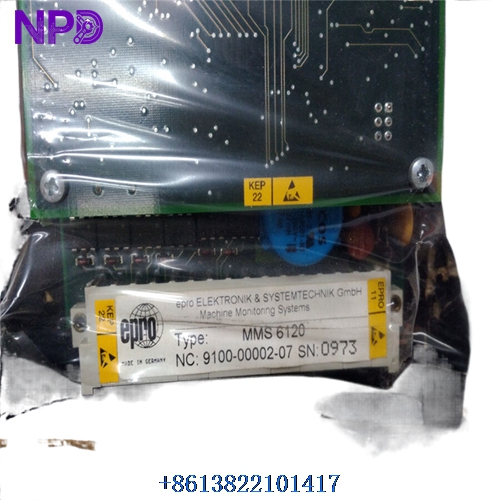
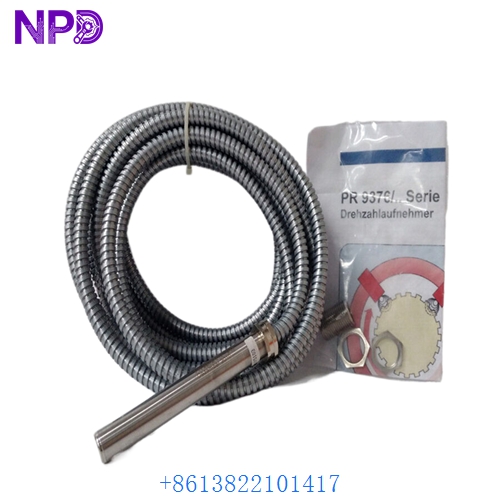
EPRO MMS6120
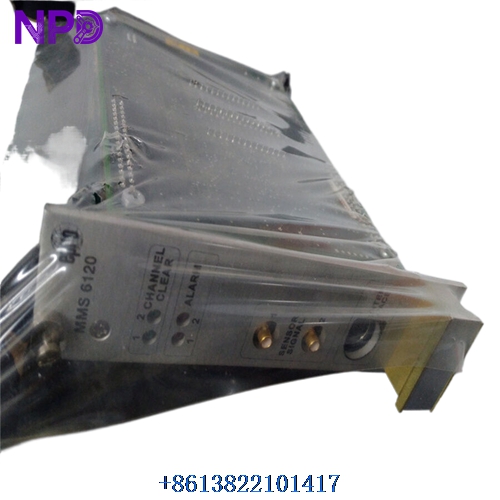
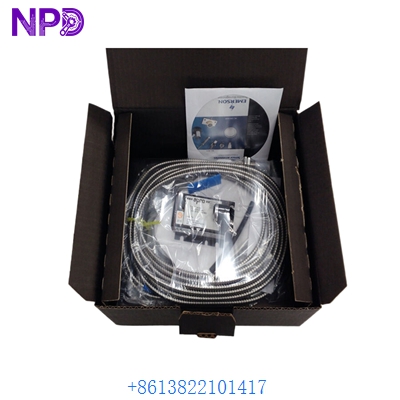
EPRO MMS6120
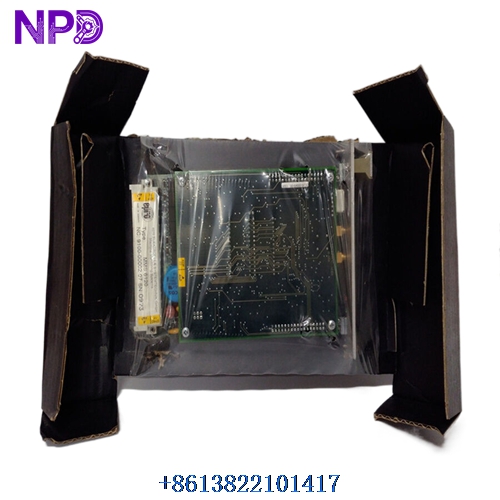
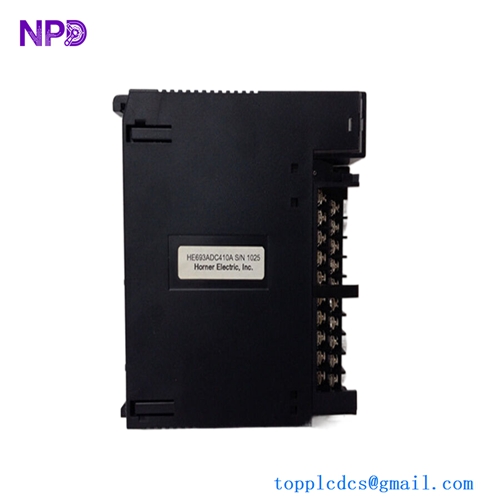
EPRO MMS6120
Country of Origin
This precision monitoring module is manufactured in Germany by EPRO GmbH (now part of Emerson’s Power & Water Solutions), adhering to the highest European standards for machinery protection.
Application Fields
The MMS6120 is essential for the predictive maintenance and protection of high-value rotating assets:
- Steam and Gas Turbines: Monitoring shaft vibration and axial position to prevent catastrophic contact between the rotor and stator.
- Large Centrifugal Compressors: Detecting surge-related vibration and bearing wear.
- Hydroelectric Generators: Measuring eccentricity and vibration in large vertical and horizontal shafts.
- Industrial Pumps and Fans: Providing real-time monitoring for high-speed critical equipment in oil and gas refineries.
Product Usage Instructions
- Rack Installation: Slide the MMS6120 into a vacant slot in the MMS6000 19-inch subrack. Secure the module using the front-panel locking screws.
- Sensor Connection: Connect the eddy current displacement sensors through the screw-terminal blocks on the rear of the rack. Ensure the sensor drivers (transducers) are properly calibrated for the target material.
- Configuration: Use the MMS6000 Configuration Software via a PC connected to the rack’s interface. Define the alarm setpoints (Alert/Danger) and signal scaling (e.g., 0-200 µm).
- Signal Testing: Utilize the front-panel “SMB” buffered outputs to connect an oscilloscope or vibration analyzer for real-time analysis of the raw sensor signal without interrupting the monitoring loop.
- Grounding: Ensure the rack and sensor shields are correctly grounded to prevent electrical noise from causing “False Trips.”
Product Technical Description
The MMS6120 functions by processing the high-frequency carrier signal from eddy current sensors. Technically, it measures the distance between the sensor tip and the rotating shaft. As the shaft vibrates, the distance changes, modulating the signal. The MMS6120 demodulates this into a precise displacement measurement (peak-to-peak or DC gap). The module features high-reliability logic that performs “Self-Check” routines on the sensor health (OK-circuitry); if a sensor cable breaks, the module identifies the fault to prevent a false alarm.
Q&A (Common Questions)
Q: What is the difference between Relative Vibration and Absolute Vibration? A: Relative vibration (monitored by the MMS6120) measures the movement of the shaft relative to the bearing housing. Absolute vibration measures the movement of the housing itself in space.
Q: Can I replace an MMS6110 with an MMS6120? A: The MMS6110 is typically for “Bearing Vibration” (seismic), while the MMS6120 is for “Displacement” (eddy current). They use different sensor inputs and are generally not interchangeable without changing the sensors and wiring.
Q: Does the module need periodic calibration? A: While the digital electronics are very stable, the sensors and their corresponding converters should be verified during plant turnarounds to ensure the gap-to-voltage ratio remains accurate.
Q: What do the LEDs on the front mean? A: Green indicates “Module OK,” Yellow indicates “Alert/Alarm 1,” and Red indicates “Danger/Alarm 2.” A flashing “Module OK” LED often indicates a communication fault or sensor loop error.
Similar Model Recommendations
- EPRO MMS6110 (Dual-channel Bearing Vibration Monitor)
- EPRO MMS6210 (Dual-channel Shaft Displacement / Eccentricity Monitor)
- EPRO MMS6312 (Speed / Overspeed Monitor)
- EPRO PR6423/000-000 (Associated Eddy Current Sensor)
- EPRO MMS6822 (Rack Gateway/Communication Module)
For technical support or to procure the EPRO MMS6120, please contact our machinery protection specialists.