
Description
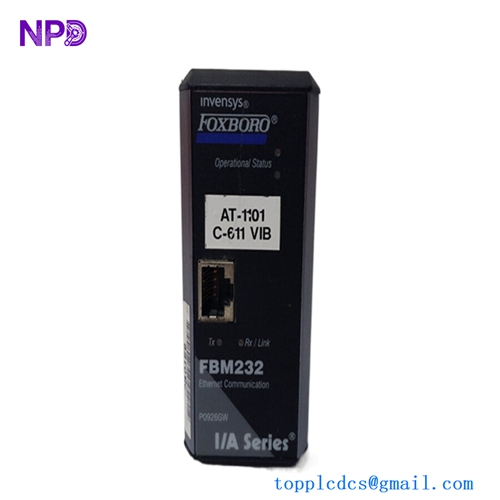
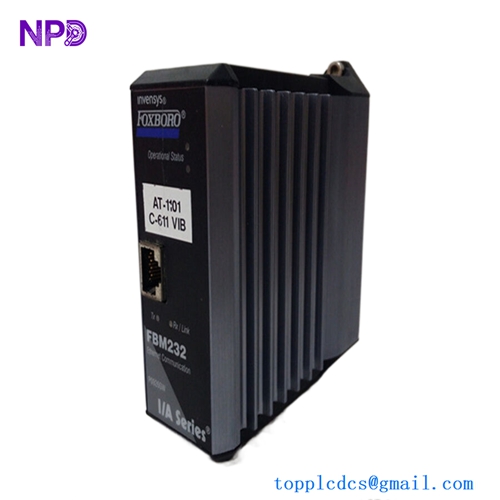
The Foxboro FBM232 (Part Number: P0926GW) is a specialized 10/100 Mbps Ethernet Fieldbus Interface Module belonging to the EcoStruxure Foxboro DCS (formerly I/A Series) family. This module is designed to serve as a high-performance communication gateway between the Foxboro control system and external third-party devices over Ethernet-based protocols.
The FBM232 acts as a protocol translator, allowing the DCS to integrate data from various intelligent electronic devices (IEDs), such as motor control centers, programmable logic controllers (PLCs), and power monitors, into the native Foxboro control environment.
FOXBORO FBM232 P0926GW
Product Parameters (Datasheet)
The following specifications detail the hardware and functional capabilities of the P0926GW:
| Parameter | Specification |
| Model Number | FBM232 |
| Part Number | P0926GW |
| Module Type | 10/100 Mbps Ethernet Communication Interface |
| Communication Protocol | Modbus TCP, EtherNet/IP (depending on software) |
| Number of Ports | 2 Ethernet ports (RJ-45) |
| Data Rate | 10 Mbps or 100 Mbps (Auto-sensing) |
| Input Voltage | 24 V DC (via baseplate) |
| Power Consumption | 3.5 W (Maximum) |
| Isolation | 500 V AC for 1 minute (Ethernet ports to ground) |
| Operating Temperature | -20°C to +70°C (-4°F to +158°F) |
| Relative Humidity | 5% to 95% (Non-condensing) |
| Regulatory Compliance | CE, UL, CSA, ATEX (Zone 2) |
Technical Description & Features
- High-Speed Integration: The FBM232 enables the seamless integration of large data sets from Ethernet-capable devices into the Foxboro control strategy at speeds up to 100 Mbps.
- Redundancy Support: In critical applications, the FBM232 can be used in a redundant configuration. If the primary module fails, the control system bumplessly switches to the redundant module to maintain communication.
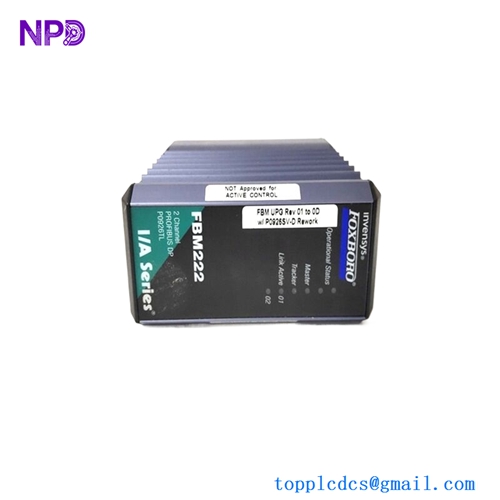
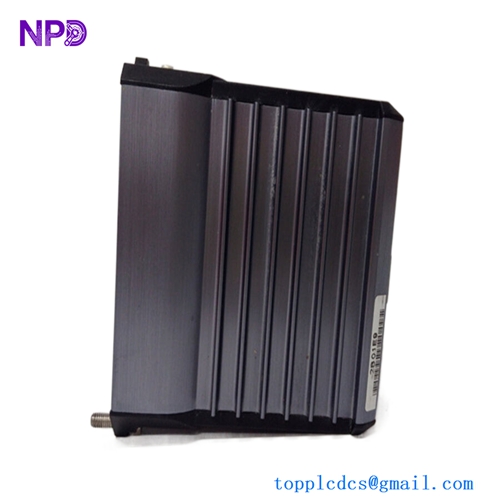
- Compact Footprint: Like all modules in the 200 Series FBM family, the FBM232 has a rugged, compact design that snaps into standard Foxboro baseplates.
- Enhanced Diagnostics: The module features front-panel LEDs that indicate the status of the module (Ready, Run, Fault) as well as the link and activity status for each Ethernet port.
- Deterministic Communication: It provides deterministic data delivery to the control processor, ensuring that time-critical process data is updated within the required scan cycles.
Country of Origin
- Primary Origin: United States (USA)
Installation & Usage Guidelines
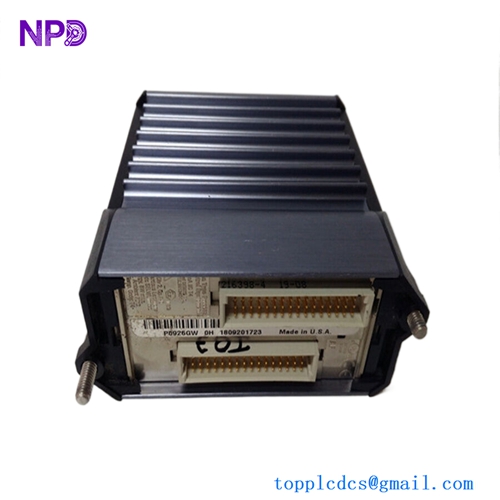
- Baseplate Mounting: The FBM232 must be installed on a compatible Foxboro 200 Series baseplate (e.g., P0926KE). Align the module pins with the baseplate connectors and press firmly until the module is fully seated.
- Cabling: Use shielded Category 5 (or better) Ethernet cables for connections. The dual ports allow for various network topologies, including star or redundant mesh configurations.
- Configuration: The module is configured using the Foxboro I/A Series Configuration Component (IACC) or EcoStruxure Foxboro DCS Control Software. Engineers must define the IP addresses, device profiles, and data mapping between the external devices and the DCS Compound/Block structure.
- Security: Since this module connects the DCS to Ethernet networks, it is recommended to use managed switches and follow industrial cybersecurity best practices to isolate the control network from the business network.
FOXBORO FBM232 P0926GW
Recommended Related Foxboro (Schneider Electric) Models
To build a complete I/O and communication subsystem, the following 200 Series modules are frequently used alongside the FBM232:
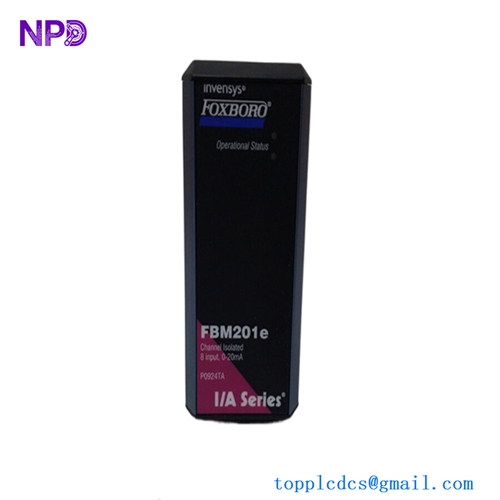
- FBM201 (P0914SQ): 8-Channel Analog Input Module (0-20 mA) for standard field sensors.
- FBM217 (P0914TR): 32-Channel Discrete Input Module for monitoring switches and contacts.
- FBM242 (P0916TA): 16-Channel Discrete Output Module for driving solenoids and relays.
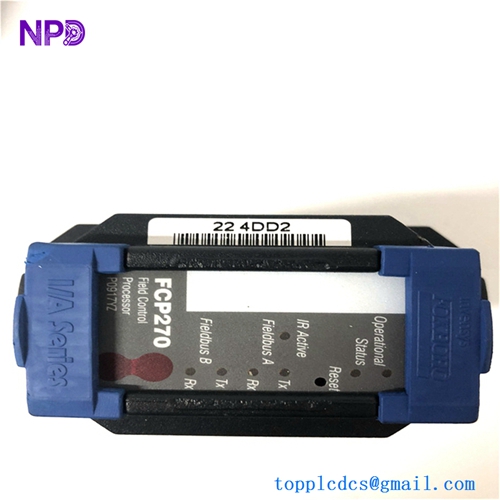
- FCP270 (P0917CP): Field Control Processor, the high-level CPU that manages data from the FBM232.
- FBM230 (P0926GU): RS-232/RS-422/RS-485 Serial Communication Module for legacy serial device integration.
- P0926KE: High-performance 8-position baseplate used to house the FBM modules.