Description
- Model: 104X905BA603 (Reference: G-95-149-H-9550)
- Brand: General Electric (GE – USA)
- Series: Speedtronic Mark V (TMR or Simplex configurations)
- Core Function: Relay output or signal conditioning for turbine control sequences.
- Product Type: Printed Circuit Board / Control Module
- Key Specs: Multi-channel relay/digital output | High reliability for utility-scale turbines
- Operating Voltage: 125 V DC / 115 V AC (Contact rating dependent)
- Control Platform: Speedtronic Mark V (DS200 / DS215 architecture compatible)
- Configuration: Typically used in the <R>, <S>, or <T> cores for TMR systems
- I/O Capacity: Multi-channel relay outputs (dry contacts)
- Isolation: High dielectric strength between control logic and field circuits
- Connectors: Standard GE Mark V ribbon cable headers and screw terminals
- Environment: Rated for high-temperature control cabinets (up to 70 °C)
- Indicator LEDs: Board-level status for coil excitation
- Compliance: Manufactured to GE Turbine Control standards
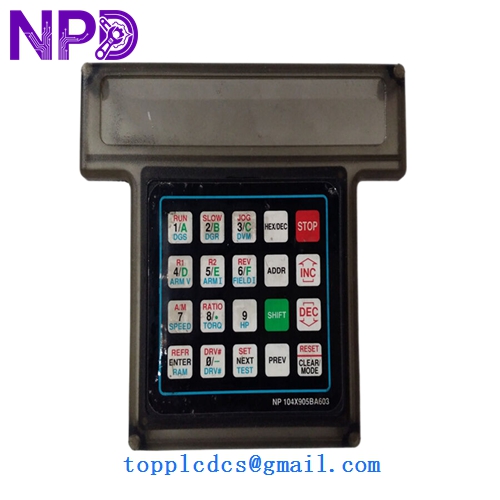
GE 104X905BA603 G-95-149-H-9550
Application Scenarios & Pain Points
The 104X905BA603 belongs to the legendary Mark V family, the backbone of gas and steam turbine control for decades. Since the Mark V is now a “Legacy” system, GE has largely moved support to the Mark VI and VIe. For power plant operators, this makes finding original, functional 104X-series boards a critical challenge. A failure in an output card can prevent a turbine from “Firing” or “Syncing,” resulting in massive “Loss of Generation” penalties from the grid operator.
Typical Application Scenarios:
- Gas Turbine Control (Frame 6, 7, & 9) Executing critical start-up/shutdown sequences and fuel valve solenoid control.
- Steam Turbine Protection Managing trip solenoids and auxiliary pump starters in combined-cycle power plants.
- Retrofit Systems Used in aging industrial sites where the control architecture remains Mark V but needs reliable spare parts to extend service life by 5-10 years.
Engineering Case Study: The Midnight Trip
Background: A municipal power plant running a GE Frame 7EA turbine experienced a “Voted Output Mismatch” alarm followed by a turbine trip during a peak load period.
The Problem: The diagnostics pointed to a relay failure on the G-95-149-H-9550 board in the <R> core. The plant’s on-site spare had “shelf-aged” and the electrolytic capacitors had leaked, making it unusable.
The Solution: We provided a fully tested 104X905BA603 from our climate-controlled inventory. Our technician verified the relay contact resistance before dispatch to ensure zero-ohm reliability.
Result: The board was delivered via hand-carry courier and installed the following morning. The turbine was re-synced to the grid within 14 hours of the initial trip, saving the municipality from activating expensive peak-power purchase agreements.
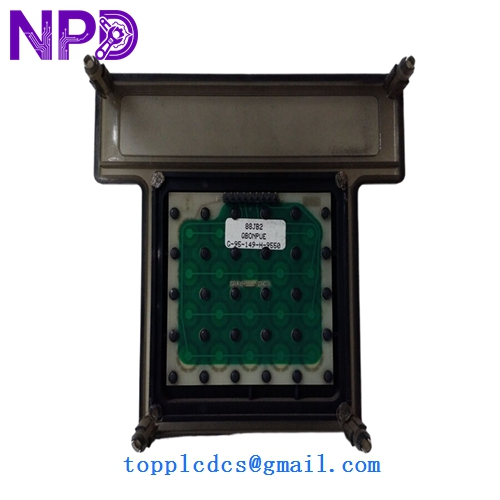
GE 104X905BA603 G-95-149-H-9550
Compatible Replacement Models
| Original Model | Replacement Model | Compatibility | Key Differences | Change Impact |
|---|---|---|---|---|
| 104X905BA603 | 104X905BA602 | ⚠️ Software | Older revision/Lower rating | Must check contact load specs |
| 104X905BA603 | DS200DTBC | ❌ Hardware | Terminal Board vs Card | Different physical mounting |
| 104X905BA603 | 104X905BA603 (Refurb) | ✅ Direct | Professional recertified | Drop-in replacement |
Troubleshooting Quick Reference
| Symptom | Possible Cause | Relation to 104X905BA603 | Quick Check | Action |
|---|---|---|---|---|
| “Voted Output” Alarm | Relay contact stuck | ✅ High | Measure continuity across NO/NC pins. | Replace board if contacts are welded. |
| Card Not Communicating | Ribbon cable loose | ⚠️ Medium | Re-seat the J-connectors. | Use contact cleaner if oxidized. |
| Logic 5V Failure | Internal fuse blown | ✅ High | Check board-level micro-fuses. | Replace fuse or entire card. |
| Intermittent “Trip” | Heat-related drift | ✅ High | Use infrared cam to find “hot” relays. | Improve cabinet airflow or replace card. |
Engineer’s Pro-Tip: “When you’re working with Mark V boards like the 104X905BA603, remember that these are ‘legacy’ in every sense of the word. The solder joints can become brittle over 20 years. If you’re getting intermittent faults, don’t just swap the card—check the ribbon cables for ‘silver whiskers’ or oxidation. Also, when installing this card, ensure the standoffs are secure; vibration on a turbine skid is the #1 killer of these relay boards. If you need the specific pin-to-relay mapping for the BA603 revision, let me know—I have the original GE schematic on my laptop.”
I can also provide photos of the specific board serial number and test report before we ship—transparency is key with these older parts.