Description
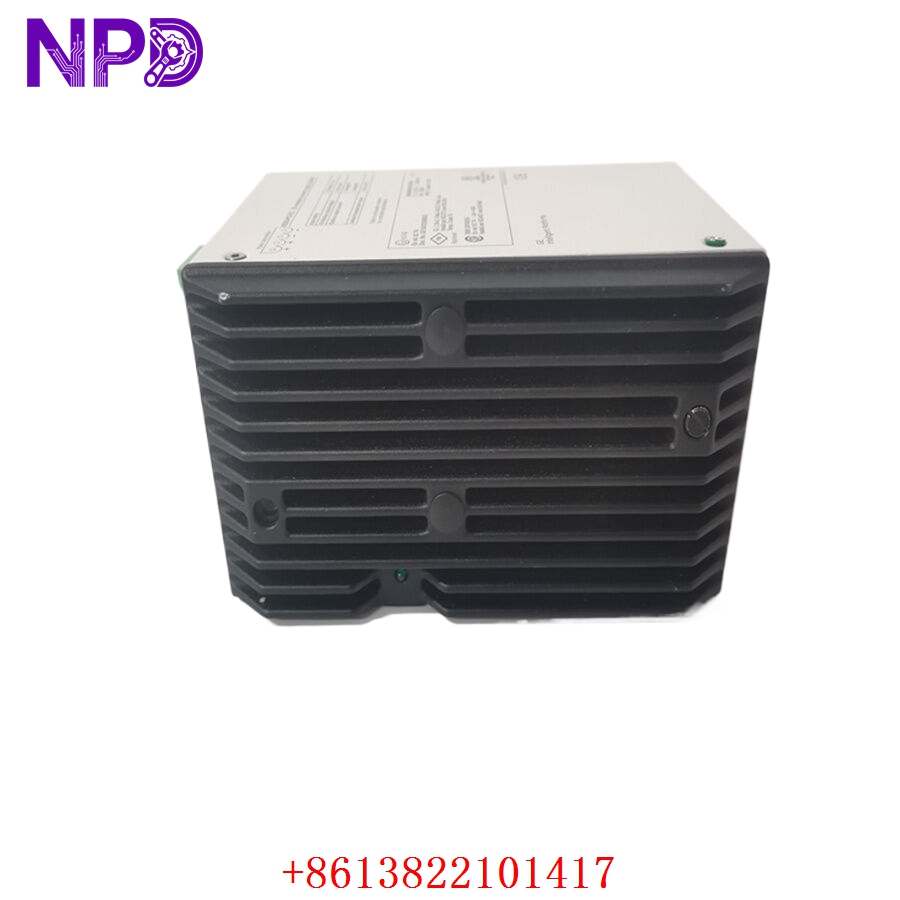
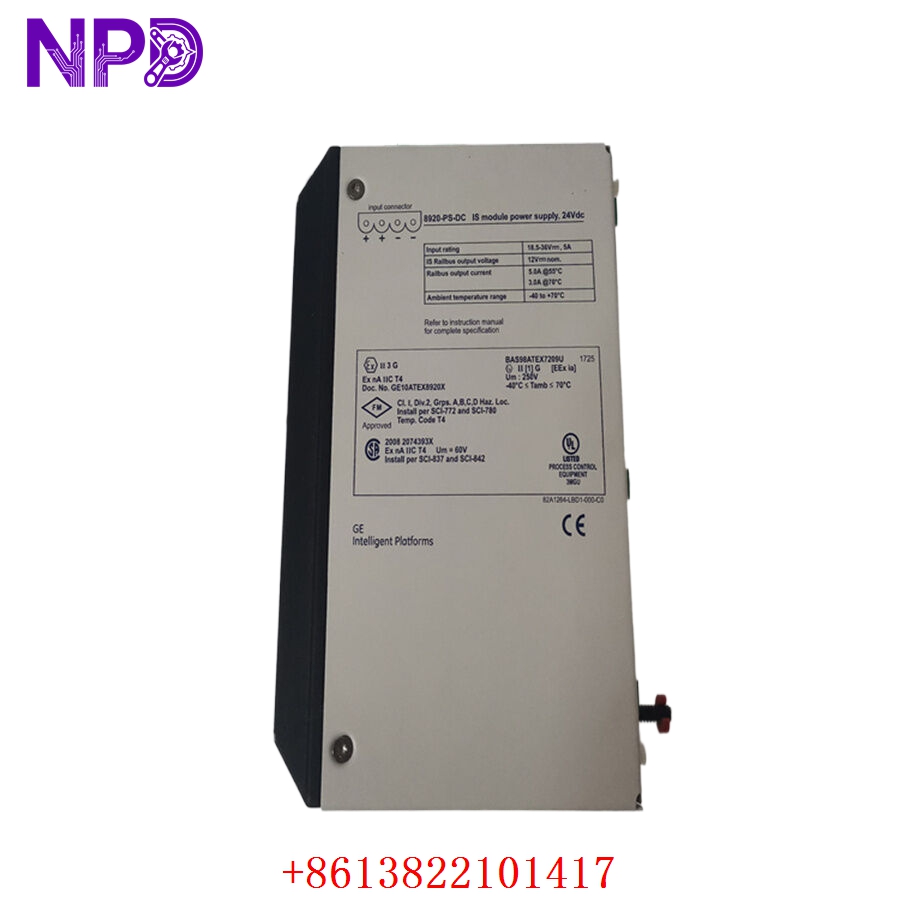
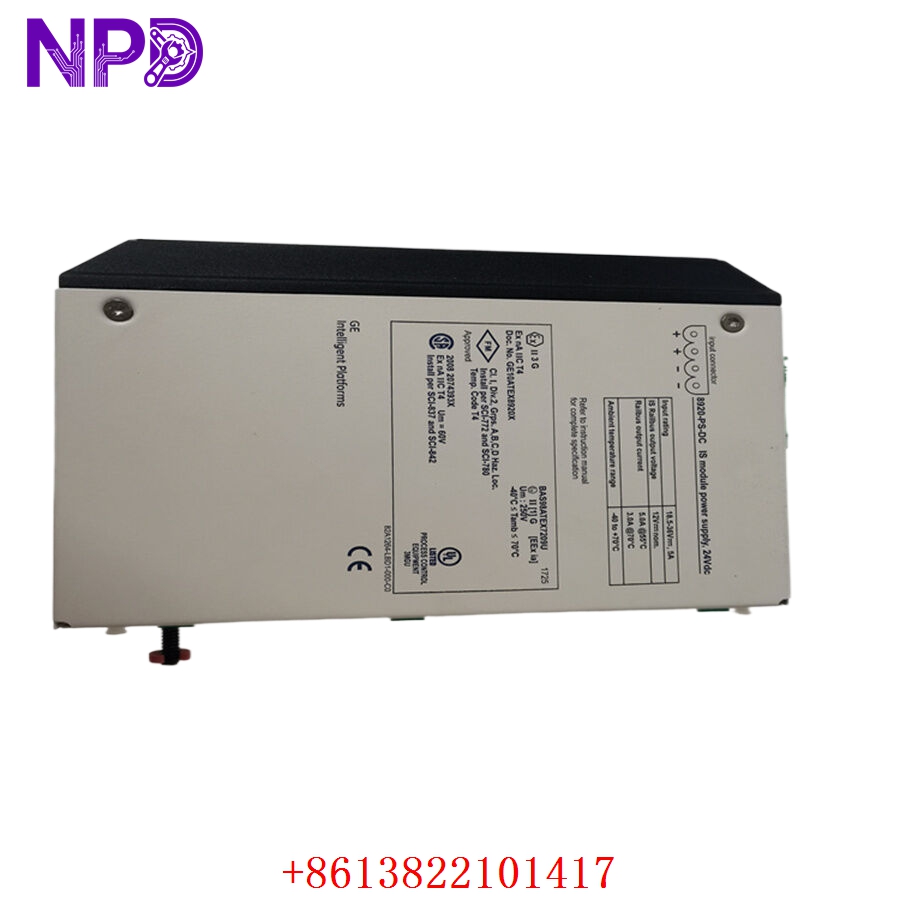
- Model: GE 8920-PS-DC-02
- Brand: General Electric (GE) / MTL Instruments
- Series: IS Module Power Supply Series
- Core Function: Supplies redundant 12 V DC power for IS interface modules
- Product Type: Industrial Power Supply Module
- Key Specs: 24 V DC nominal input 12 V DC output 5 A capacity
- Input Voltage: 18.5–36 V DC nominal input
- Output Voltage: 12 V DC regulated output
- Output Capacity: 5 A continuous load
- Redundancy Support: Load-sharing redundant operation supported
- Carrier Compatibility: 8724-CA-PS carrier mounting
- Connection Type: Dual duplicated screw terminals
- Maximum Cable Size: 2.5 mm²
- Efficiency @ 24 V Input: Approximately 78%
- Dimensions: 84 mm × 110 mm × 160 mm
- Weight: Approximately 1.29 kg
- Cooling Method: Passive convection cooling
- Application Environment: Hazardous-area IS interface systems
Application Scenarios & Engineering Pain Points
In process plants, the power supply module is usually ignored… until it fails. Then suddenly the whole intrinsically safe (IS) barrier rack goes offline, field transmitters disappear from the DCS, and operators start calling maintenance every five minutes.
I’ve seen this happen in refinery SIS cabinets and offshore skid systems. The tricky part is that the 8920-PS-DC-02 often sits quietly for years without issues. But when capacitors age or ventilation gets blocked, the symptoms are ugly: intermittent communication loss, random module resets, or unstable field signals.
This module mainly exists to keep hazardous-area interface modules alive and stable. In systems using MTL IS barriers or GE-related process control infrastructure, stable DC power matters more than people think.
Typical application scenarios:
- Petrochemical Plants – IS Barrier Cabinets
Powers intrinsically safe interface modules connected to pressure, flow, and temperature transmitters in hazardous zones. - Offshore Platforms – ESD/SIS Systems
Used inside compact marshalling cabinets where redundant 24 V DC architecture is mandatory. - Power Plants – Turbine Auxiliary Systems
Supports isolated analog signal interfaces for turbine monitoring and boiler instrumentation. - Water Treatment Facilities – Remote I/O Panels
Maintains stable supply voltage for isolated signal conditioners and remote telemetry racks. - Chemical Dosing Systems – Hazardous Area Instrumentation
Works with galvanic isolators and signal repeaters installed inside ATEX-compliant cabinets.
Example From a Real Integration Project
A few years ago, we handled a shutdown recovery project at a coastal chemical terminal. Operators reported intermittent AI signal drops from Zone 1 pressure transmitters. At first, the maintenance team blamed the PLC communication network.
Turned out the issue came from an aging 8920-PS-DC-02 power supply.
What made troubleshooting difficult was the fact that the module still powered up normally. LEDs were green. Voltage looked acceptable with no load. But once the IS barriers started drawing current, output voltage dipped below threshold for a few milliseconds.
That tiny voltage sag caused:
- Random HART communication loss
- Analog signal fluctuation
- Sporadic DCS alarms
We replaced the module, duplicated the power feed, and added thermal spacing between adjacent power supplies. Problem solved within the same shift.
Sometimes the simplest module causes the biggest downtime.
Compatible Replacement Models
Because this module belongs to a fairly specialized IS power supply family, replacement options are more limited than standard DIN rail power supplies.
✅ Direct Replacement (Minimal Modification)
- GE / MTL 8920-PS-DC
- Same electrical architecture
- Compatible with existing 8724-CA-PS carrier
- Usually no wiring changes required
- Verify terminal orientation before energizing
- MTL 8920-PS-DC-02
- OEM-equivalent branding variation
- Same redundant load-sharing behavior
- Recommended for maintenance stock standardization
⚠️ Software Compatible / Engineering Review Required
- MTL 8910-PS-DC
- Different output/load characteristics
- May require cabinet thermal review
- Verify current demand and IS module count
- Not always a direct mechanical replacement
- Third-party 24 V DIN Rail PSU
- Electrically possible in some retrofit projects
- Requires rewiring and isolation verification
- Hazardous-area compliance must be revalidated
- Not recommended for quick shutdown replacement
❌ Hardware Modification Required
- Generic PLC power supplies
- Wrong output characteristics
- No redundant load-sharing logic
- Mechanical mounting mismatch
- Unsafe for IS barrier systems without engineering approval
A little advice from experience…
If the existing plant architecture already uses the 8920 series, stay with the same family whenever possible. Mixing random DIN rail power supplies into hazardous-area interface cabinets creates long-term maintenance headaches.
Troubleshooting Quick Reference
| Fault Symptom | Possible Cause | Spare Part Relevance | Quick Check Method | Recommended Action |
|---|---|---|---|---|
| No LED indication | Input power missing | ❌ Low | Measure input terminal voltage, should be 24 V DC nominal | Check upstream fuse and DC distribution |
| Output unstable under load | Internal capacitor aging | ✅ High | Measure output voltage during live load test | Replace module |
| IS barriers randomly reset | Power sag during peak load | ✅ High | Use oscilloscope or load tester | Replace PSU and verify load margin |
| Cabinet temperature too high | Ventilation blocked | ⚠️ Medium | Check cabinet temp (>50°C is risky) | Improve airflow and spacing |
| Redundancy alarm active | Load-sharing imbalance | ⚠️ Medium | Compare current between redundant PSUs | Check parallel wiring |
| Communication drops on HART devices | Noise or unstable DC output | ✅ High | Check ripple voltage with meter | Replace aging PSU |
| Module warm but operational | Continuous overload | ⚠️ Medium | Measure output current | Reduce load or add redundant PSU |
| Fuse trips repeatedly | Downstream short circuit | ❌ Low | Disconnect field load sections one by one | Isolate faulty IS module |
Engineering Notes & Common Pitfalls
❗ Firmware problems are less common on this model because it’s primarily a power supply. But wiring mistakes? Those happen constantly.
The most common mistakes I see:
- Incorrect polarity during field replacement
- Parallel redundancy wiring done backwards
- Terminal screws not torqued properly
- Cabinet ventilation ignored after retrofit
And please… take photos before disconnecting anything.
I know it sounds basic, but during a 2 AM shutdown call, nobody remembers which redundant feed landed on which terminal.
Another important point:
Only install the terminal 120 Ω resistor where required in communication loops. I’ve seen technicians accidentally create grounding loops after replacing adjacent IS modules.