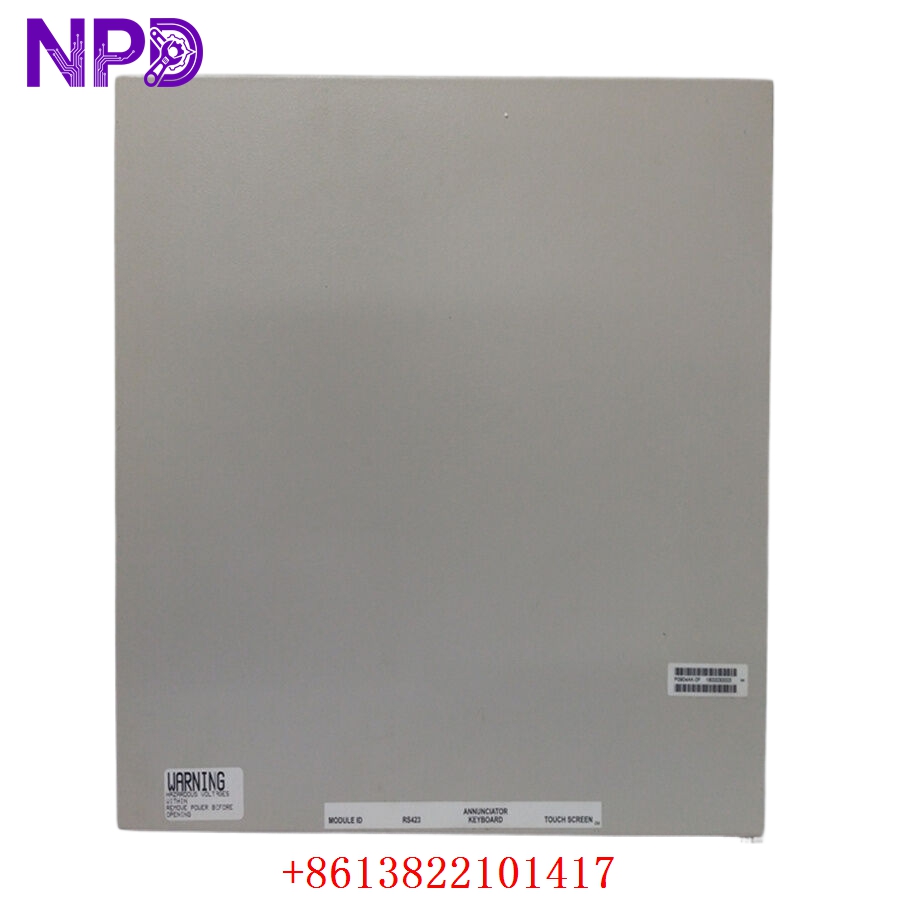

Description
The GE DS200FCGDH1BCA is a high-performance control module PC board belonging to the General Electric Speedtronic Mark V series. This board is primarily utilized as a drive control card, designed to manage complex regulation and diagnostic functions within industrial turbine and drive control systems. Known for its reliability in heavy-duty environments, this board facilitates high-speed data processing and signal conditioning, ensuring the stable and precise operation of critical power generation and propulsion machinery.
Technical Specifications
| Parameter | Description |
| Model | DS200FCGDH1BCA |
| Manufacturer | General Electric (GE) |
| System Series | Mark V Speedtronic |
| Primary Function | Drive Control / Signal Processing |
| PCB Features | Multi-layer, surface-mount components |
| Weight | Approximately 0.60 kg |
| Origin | USA |

Operational Guidelines & Usage
🔹 Startup Sequence
- Ensure the board is firmly seated in the correct VME rack slot, verifying all backplane pins are aligned.
- Confirm that all ribbon cables and field connections are securely fastened to the board’s designated ports.
- Power on the Mark V control rack.
- Monitor the board’s LED status indicators; a stable “Run” light indicates successful initialization and diagnostic completion.
- Once the board is initialized, verify communication with the main processor in the HMI software.
🔹 Shutdown Sequence
- De-energize the drive system or turbine control cabinet.
- Wait for the discharge of internal power capacitors (typically 60 seconds).
- Use an ESD-safe wrist strap before touching the PCB to prevent static discharge damage.
- Extract the board using the front-panel ejection levers and place it immediately into an anti-static bag for storage or transport.
🔹 Normal Operational Flow
- The board receives raw input signals (speed, current, voltage) from the field.
- The onboard microprocessor executes control algorithms to regulate the drive output.
- It continuously performs real-time self-diagnostics to detect internal faults or communication losses.
- Status feedback is transmitted back to the central controller to ensure integrated system management.
🔹 Parameter Configuration
- Access the GE Mark V configuration interface through the system’s dedicated HMI/Workstation.
- Navigate to the card definition settings for the specific rack slot.
- Modify logic parameters or calibration constants as required by the maintenance schedule or drive requirements.
- Download the updated configuration to the board and verify the changes through the diagnostic view in the system software.
🔹 Mode Switching
- Active/Run Mode: The standard operational state where the board manages the drive according to loaded logic.
- Maintenance/Test Mode: Configured via software settings to allow for troubleshooting or signal simulation without affecting the main turbine control loop.
Common Questions & Answers (Q&A)
💡 Q: What do the diagnostic LEDs on the DS200FCGDH1BCA signify?
A: The LEDs provide a visual representation of board health. A steady light usually signifies normal operation, while a flashing or red LED indicates a hardware fault, loss of communication with the backplane, or an internal memory checksum error.
💡 Q: Is this board compatible with other Mark V modules?
A: The DS200FCGDH1BCA is part of a specific revision family. Always check the board’s part number suffix (e.g., ‘1BCA’) against your system’s manual to ensure full compatibility with existing firmware and hardware versions.
💡 Q: How should I handle the board if it is exposed to industrial dust or moisture?
A: Never use water or household solvents. Use an electronics-grade, non-residue contact cleaner. If the board is heavily contaminated, it should be cleaned in a controlled environment by a professional service facility to avoid damaging the delicate traces and surface-mount components.
💡 Q: What is the most common cause of failure for this board?
A: Like most high-density industrial PCBs, the most common failure causes are electrolytic capacitor degradation due to age and heat, or damage to the edge connector pins from vibration. Maintaining a clean, temperature-controlled environment is key to longevity.