Description
- Model: DS200TCEAG1BNE / DS215TCEAG1BZZ01A
- Brand: General Electric (GE)
- Series: Mark V Speedtronic Control System
- Core Function: Emergency Termination and Protective Logic (Overspeed/Flame)
- Product Type: Termination & Signal Conditioning Board
- Key Specs: 3 Magnetic Pickup (MPU) inputs Flame sensor interface TMR voting logic
- Input Signals: 3 Magnetic Speed Pickups (Passive or Active)
- Logic Handling: 2-out-of-3 (TMR) voting for overspeed trips
- Voltage: Powered by the <P> core 24V DC bus
- Flame Detection: Interface for Geiger-Mueller (UV) flame sensors
- Bus Interface: Connects to the IONet via the STCA/TCAT boards
- Revision: BNE (Analog Legacy) / BZZ01A (Digital Enhanced)
- Isolation: High-voltage isolation for flame sensor excitation
- Diagnostics: Status LEDs for trip relay state and pulse detection
- Form Factor: Large-format PCB designed for the <P> core rack
- Relay Outputs: Hard-wired trip contact outputs for fuel shut-off valves
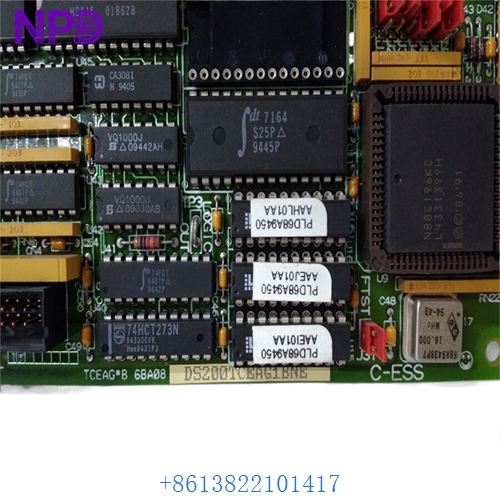
GE DS200TCEAG1BNE DS215TCEAG1BZZ01A
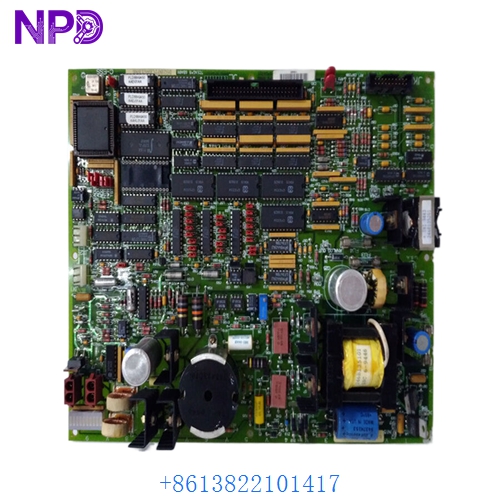
GE DS200TCEAG1BNE DS215TCEAG1BZZ01A
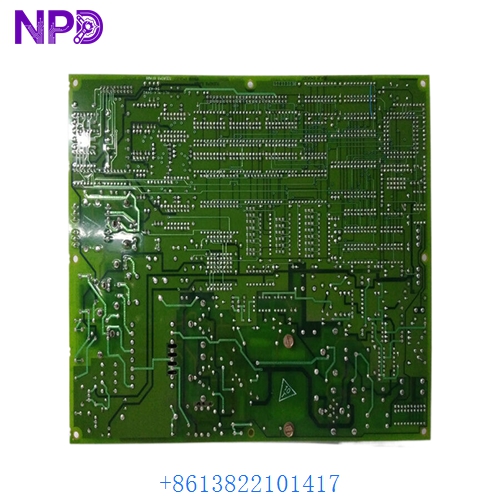
GE DS200TCEAG1BNE DS215TCEAG1BZZ01A
Application Scenarios & Pain Points
In a Mark V TMR (Triple Modular Redundancy) system, the DS200TCEAG1BNE is what actually “decides” to trip the unit if the turbine exceeds its mechanical speed limit. The most common pain point I see is “Nuisance Overspeed Trips” caused by electrical noise on the speed pickup lines or aging capacitors on the TCEA board that filter those pulses. When these boards start to fail, you often see “Voted Trip” alarms in the <I> processor or HMI, even though the machine is at steady-state speed.
Typical Application Scenarios:
- Gas Turbine Protection (GE Frame 6/7/9) Providing independent hardware-based overspeed protection that bypasses the main <R>, <S>, and <T> controllers.
- Steam Turbine Emergency Trip System (ETS) Interfacing with hydraulic trip solenoids to dump oil pressure and close steam valves instantly.
- Flame Monitoring Processing ultraviolet signals from the combustion chambers to ensure “Loss of Flame” doesn’t result in an explosive re-ignition.
Case Study: The “Intermittent Overspeed” in South America
Background: A plant in Brazil was experiencing sudden trips on a Frame 7EA gas turbine. The alarm logs showed “Emergency Overspeed,” but the trend data showed the speed was stable at 3600 RPM.
The Problem: We analyzed the <P> core diagnostics and found that the DS200TCEAG1BNE was miscounting pulses due to a drying electrolyte in a filtering capacitor. As the cabinet temperature rose in the afternoon, the board became sensitive to high-frequency noise from a nearby VFD, causing it to “see” a phantom 115% speed spike.
The Solution: The client didn’t want to risk a full core rebuild. We supplied a tested DS215TCEAG1BZZ01A (the later digital revision). Before installation, we verified the pulse-counting thresholds on our Speedtronic simulator to ensure it would ignore the site’s specific noise floor.
The Result: – Resolution: Replaced the board during an 8-hour outage.
- Outcome: The turbine ran through the entire peak summer season without a single false trip.
- Client Feedback: “The digital revision (DS215) was much more stable against the site interference.”
Compatible Replacement Models
| Original Model | Replacement Model | Compatibility | Main Difference | Integration Effort |
|---|---|---|---|---|
| DS200TCEAG1BNE | DS215TCEAG1BZZ01A | ✅ Direct Replace | Digital pulse filtering | Drop-in; verify firmware |
| DS200TCEAG1BNE | DS200TCEAG2… | ⚠️ Limited | Different hardware revs | Check ‘G’ revision suffix! |
| DS200TCEAG1BNE | Mark VIe (UCHO) | ❌ Incompatible | Totally different bus | Requires full system migration |
Troubleshooting Quick Reference
| Symptom | Likely Cause | Board Related? | Quick Check | Action |
|---|---|---|---|---|
| “Speed Input 1 Fault” | Bad MPU or Wiring | ❌ Low | Swap MPU cables between Ch 1 and Ch 2. | If fault stays on Ch 1, board input is dead. |
| Voted Trip Alarm | TMR Voting Mismatch | ✅ High | Check LEDs on the TCEA front panel. | If one relay LED is off, the TCEA board failed. |
| Flame Signal Loss | UV Sensor Failure | ❌ Low | Check sensor voltage (usually 300V+). | Replace UV tube before the board. |
| IONet Comm Failure | Bad STCA/TCAT link | ⚠️ Medium | Check the ribbon cables to the <P> core. | Reseat the 50-pin ribbon cables. |
Integrator’s “Field Tips”:
- The “BNE” vs “BZZ” Revision: If you are moving from the DS200 (analog) to the DS215 (digital), you are generally getting a better product. The DS215 series has better noise rejection. However, never mix revisions within the same <P> core if you have multiple TCEA boards—keep the redundancy identical.
- Pulse Counting Verification: When installing the DS200TCEAG1BNE, use a handheld signal generator (like a Fluke 725) to simulate a 3600 RPM pulse train before you fire the turbine. It’s better to find a config error at zero speed than at full load.
- Ribbon Cable Hygiene: These Mark V boards rely on those gray 50-pin ribbon cables. They are notorious for “creeping” out of their sockets due to vibration. Use a tiny bit of contact cleaner and ensure the clips are fully engaged.