
Description
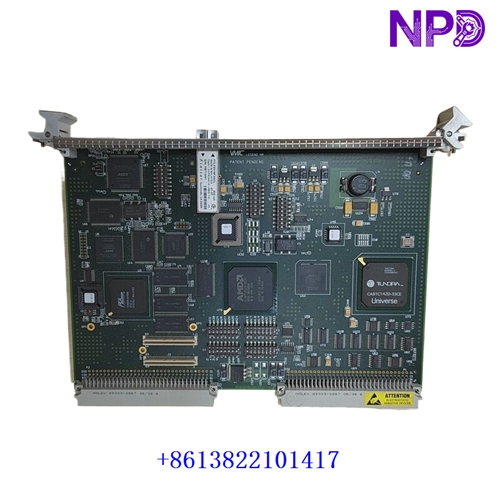
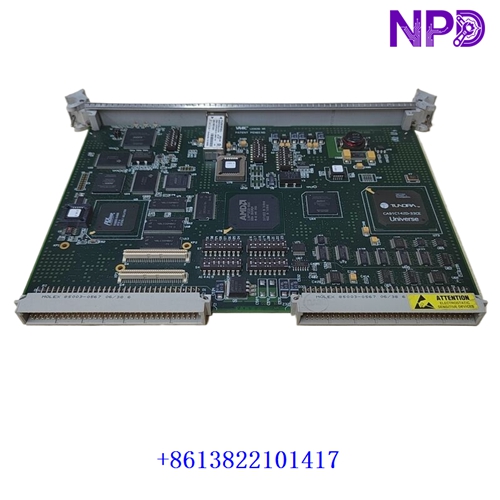
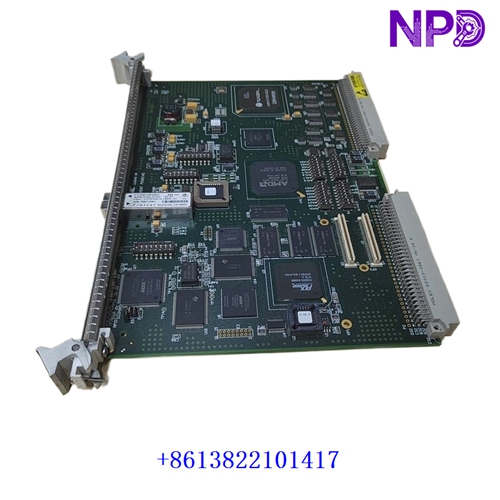
The GE VMIVME-5565-11000 (also identified by board assembly numbers 332-015565-110000 and VME5565) is a high-speed VMEbus Reflective Memory Interface Board manufactured by GE Fanuc / VMIC (now Abaco Systems). Designed for deterministic, ultra-low-latency real-time data sharing across distributed computing platforms, the VME5565 allows multiple independent VME systems, simulation rigs, and control nodes to share a continuous memory space over a high-speed fiber-optic ring network without software protocol overhead.
Key Specifications & Identification
| Attribute | Details |
| Manufacturer | GE Fanuc / VMIC (Abaco Systems) |
| Model Number | VMIVME-5565-11000 / VME5565 |
| Assembly Part Number | 332-015565-110000 (P) |
| Bus Interface | VME64 / VMEbus 6U Single-Slot Form Factor |
| Memory Type & Capacity | 128 MB SDRAM Onboard Reflective Memory |
| Optical Interface | LC Fiber Optic Connectors (Multi-Mode / Single-Mode options) |
| Network Transfer Rate | 2.125 Baud (up to 174 MB/s burst memory transfer rate) |
| Node Capacity | Supports up to 256 nodes on a single optical ring |
Primary System Functions
- Hardware-Based Deterministic Data Sharing: When a local CPU writes data to the onboard SDRAM of the VMIVME-5565, the hardware automatically transmits the update over the fiber-optic network to update the corresponding memory location on all other connected nodes in real time.
- Zero Software Overhead Transmission: Operates entirely at the hardware layer, eliminating TCP/IP stack latency, operating system driver delays, and network collision management.
- Direct Memory Access (DMA) Engine: Features an onboard DMA controller for high-throughput block data transfers between the local VMEbus memory and the shared reflective memory pool.
- Interrupt Sharing & Redundancy: Supports network-wide interrupt passing across nodes, enabling synchronized event triggering and real-time handshaking between high-speed computers.
Servicing & Installation Guidelines
- Fiber Optic Handling & Cleanliness: Use protective dust caps when fiber cables are disconnected. Inspect and clean LC optical connectors prior to insertion to prevent attenuation and signal reflection loss.
- VMEbus Base Address & Jumpering: Before installing the card into a VME chassis, verify that onboard jumpers (or software register offsets) for VMEbus base address, AM (Address Modifier) codes, and interrupt vectors do not conflict with other boards on the backplane.
- ESD & Static Controls: CMOS processing units and high-speed optical transceivers are highly static-sensitive. Always wear a grounded ESD wrist strap when handling or installing the board assembly.
- Thermal Management in 6U Racks: The high-speed serialization circuits and transmitter chips generate moderate heat. Ensure adequate forced-air cooling (at least 200–300 LFM) passes across the 6U rack slot.