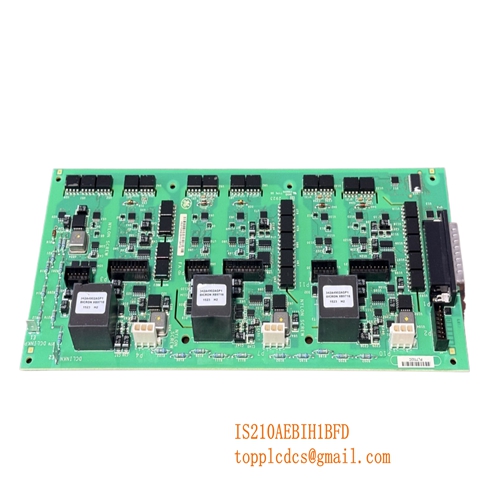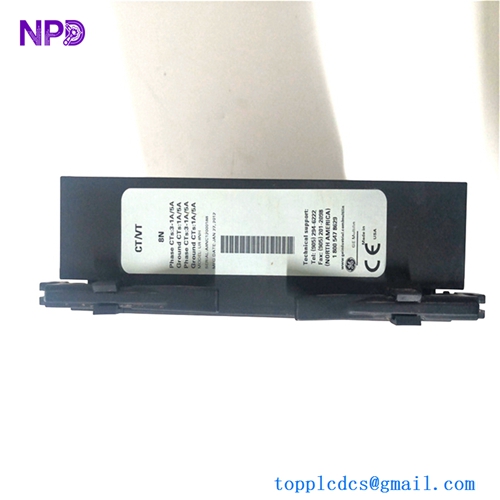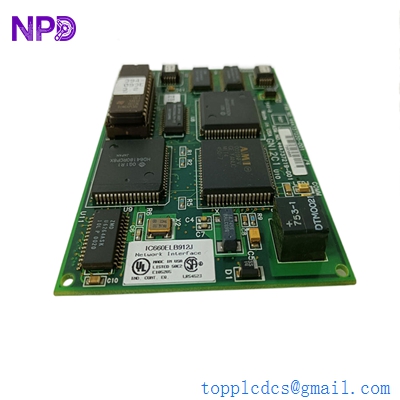

Description
- Model: GE IC660ELB912J (Genius I/O)
- Brand: GE Fanuc / Emerson (formerly GE Intelligent Platforms)
- Series: Genius I/O Series
- Core Function: Distributed I/O Electronic Control Block (ECB)
- Product Type: 16-Circuit Discrete I/O Module
- Key Specs: 24/48 VDC Operation 16 Source/Sink Circuits Diagnostics per Point
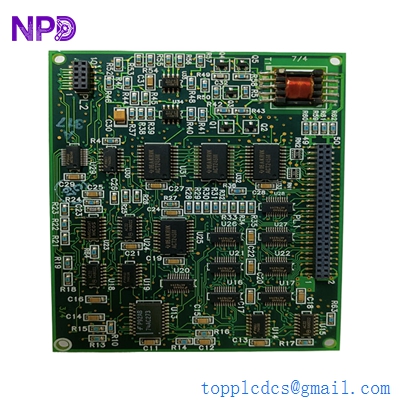
GE IC660ELB912J
Key Technical Specifications
- Operating Voltage: 24 VDC or 48 VDC (Nominal)
- I/O Configuration: 16 Circuits (Can be configured as Input, Output, or Tristate)
- Genius Bus Rate: 38.4 Kbaud, 76.8 Kbaud, or 153.6 Kbaud
- Current Rating: 2 A per circuit (8 A total per block)
- Diagnostics: Short circuit, overload, open wire, and failed switch detection
- Isolation: 1,500 V between Genius bus and I/O circuits
- Configuration Tool: Hand-Held Monitor (IC660HHM501) or Series 90 PLC software
- Terminal Base Compatibility: IC660TBA912
- Operating Temp: 0 °C to 60 °C
Application Scenarios & Pain Points
The Genius I/O series, specifically the IC660ELB912J, is a legend in “old school” industrial robustness. While modern Ethernet-based I/O is faster, Genius bus architecture was designed to survive electrical noise that would kill a standard network. These blocks are often the link between a Series 90-70 PLC and the actual field devices in a high-EMI (Electromagnetic Interference) environment.
Typical Application Scenarios:
- Steel Mills & Foundries Managing solenoids and limit switches near heavy induction furnaces where electrical “noise” is extreme.
- Power Plant Control (Mark VI/VIe Legacy) Used as distributed I/O for auxiliary systems in GE gas turbine controls where reliability is more important than raw speed.
- Waste Water Treatment Handling remote pump stations. The Genius bus allows for very long cable runs (up to 7,500 feet) without needing expensive repeaters.
- Automotive Assembly Lines Legacy robotic cells that rely on the deterministic “token-passing” nature of the Genius network.
Case Study: The “Open Wire” Mystery
Background: A papermill in the Pacific Northwest was getting intermittent “I/O Fault” alarms on a heavy press line. The PLC would stop the line, but by the time a tech got there, everything looked fine.
The Problem: Unlike standard I/O blocks, the IC660ELB912J has “Point Diagnostics.” We connected a Hand-Held Monitor (HHM) to the block and checked the fault history. It specifically pointed to Circuit 4—”Open Wire.”
The Solution: We found a cable inside a drag chain that was beginning to fray. It would lose contact only when the press was at full extension. We replaced the IC660ELB912J just to be safe (the old one had some carbon scoring on the internal relay) and repaired the cable.
Result: The intermittent downtime, which was costing the mill $2,000 per hour, was completely resolved.
Compatible Replacement Models
The “J” suffix indicates the latest hardware revision, which is generally more resistant to component aging than earlier versions (A-H).
| Model Number | Compatibility | Main Difference | Integration Note |
| IC660ELB912 (A-G) | ✅ Direct | Older internal components | Drop-in replacement for any earlier version. |
| IC660ELB913 | ❌ Incompatible | 115 VAC / 125 VDC version | Voltage mismatch will destroy the block or field devices. |
| IC670 Series (Field Control) | ⚠️ Requires Gateway | Next generation I/O | Not a drop-in; requires a Genius Bus Interface (GBI). |
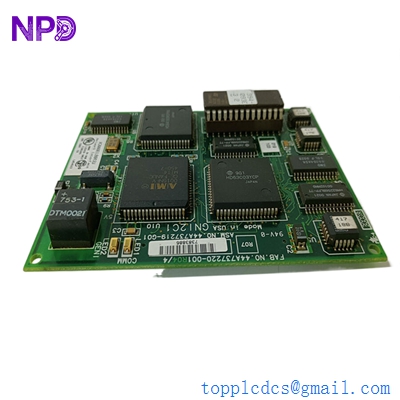
GE IC660ELB912J
Troubleshooting Quick Reference
| Symptom | Possible Cause | Relevance | Action |
| I/O Enabled LED Off | No Bus Communication | ✅ High | Check Serial 1/Serial 2 bus wiring. Verify Station ID isn’t duplicated. |
| Unit OK LED Blinking | Internal Fault | ✅ High | Use HHM to read the specific fault code. Often a sign of internal watchdog failure. |
| Short Circuit LED On | Field Wiring Fault | ⚠️ Medium | Disconnect field wires from the terminal base; if LED stays on, module is bad. |
| No Input Data in PLC | Wrong Bus Rate | ⚠️ Medium | Ensure the block baud rate matches the Bus Controller (e.g., IC697BEM731). |
Technical SOP & Quality Guarantee
Because Genius blocks are frequently used as replacements for 20+ year old systems, we perform extensive validation:
- Bus Handshake Test: We connect the block to an actual Series 90-30 rack with a BEM331 controller to ensure it registers on the network.
- Point-by-Point Load Test: Every one of the 16 circuits is tested under a 1A load to ensure the internal MOSFETs or relays aren’t “leaky.”
- EEPROM Clear: We clear the previous user’s configuration (Station ID, Baud Rate) and set it to factory defaults so it doesn’t conflict with your network upon arrival.
- Terminal Base Inspection: While this is just the “Electronics Block,” we check the connector pins for any bending or corrosion that could impede the connection to your existing IC660TBA912 base.
Pro-Tip: When installing, make sure the “serial” cable is a high-quality shielded twisted pair (like Belden 9841). In my experience, 90% of Genius bus errors come from poor shielding or “daisy-chaining” the ground incorrectly.