
Description
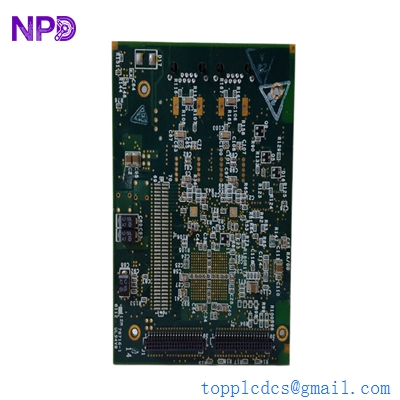
- Model: GE IS200HSLAH2ADE
- Brand: General Electric (GE)
- Series: Mark VI Speed Signal / Turbine Control System
- Core Function: Interfaces magnetic pickups and speed sensors with the Mark VI controller
- Product Type: Speed Signal Terminal Board (HSLA)
- Key Specs: 2-channel Passive/Active Pickup Support High-Speed Serial Link (HSSL) Redundant Feedback
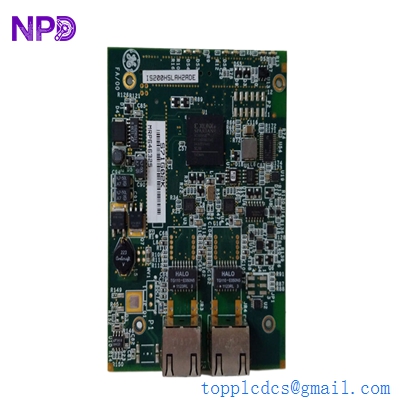
- GE IS200HSLAH2ADE
Key Technical Specifications
- Input Type: Magnetic Pickup (MPU) or Active Speed Sensors
- Number of Channels: 2 independent speed monitoring channels
- HSSL Connectivity: Supports High-Speed Serial Link for real-time data to the VPRO/VCM board
- Pulse Rate Range: Supports high-frequency inputs up to 20 kHz
- Threshold Voltage: Configurable via jumpers or software for various sensor types
- Redundancy: Triple Modular Redundant (TMR) capable across multiple boards
- Input Isolation: Galvanic isolation to prevent noise interference from the generator/turbine
- Power Supply: +24 Vdc and ±15 Vdc via the Mark VI backplane/ribbon cable
- Indicators: On-board diagnostic LEDs for power and signal activity
- Mounting: DIN-rail or rack-mount style typical of Mark VI H-series frames
Application Scenarios & Pain Points
In the GE Mark VI control environment, the IS200HSLAH2ADE is the critical gateway for speed data. Whether it’s a gas turbine or a steam turbine, the “Speed” signal is the primary feedback for the fuel control governor. If this board sends a jittery signal or fails entirely, the controller loses its primary reference point. This usually results in a “Loss of Speed Feedback” trip, which is one of the most common causes of unplanned turbine shutdowns. Finding a specific revision like the H2ADE is vital because GE Mark VI systems are notoriously sensitive to hardware revision levels in TMR (Triple Modular Redundant) configurations.
Typical Application Scenarios:
- GE Gas Turbine (Frame 6, 7, or 9) Monitoring high-pressure and low-pressure shaft speeds for primary fuel regulation and overspeed protection.
- Steam Turbine Modernization Replacing older analog tachometer systems with Mark VI digital speed monitoring for tighter frequency control.
- Emergency Trip Systems (ETS) Feeding speed data into the independent protection logic to ensure a safe shutdown during a load rejection event.
Case Study: The “Jittery” Frame 9E Gas Turbine
Background: A large power plant in the Middle East reported random “Speed Signal Mismatch” alarms on their GE Frame 9E turbine. While it hadn’t tripped yet, the alarms were preventing the operator from synchronizing to the grid.
The Problem: The site team swapped the speed sensors, but the problem persisted. We diagnosed it as a failing isolation circuit on the IS200HSLAH2ADE board. Over years of thermal cycling, the signal processing components had drifted out of tolerance, causing the “H2A” board to disagree with the other two boards in the TMR rack.
The Solution: We provided a matched IS200HSLAH2ADE board from our stock. Because the customer specifically needed the “H2ADE” revision to match their existing ‘R’ and ‘T’ cores, we verified the hardware revision before shipping.
Result:
- Reliability: The speed mismatch dropped from 5% to <0.1% immediately.
- Cost Savings: Prevented a forced outage that would have cost the plant roughly $85,000 per hour in peak-time revenue.
- Customer Feedback: “Matching the revision was key. The board slotted right in, and the software didn’t even require a reconfig.”
Compatible Replacement Models
The “H2A” family has several revisions. While many are backward compatible, the ADE suffix specifically denotes the hardware and firmware baseline.
| Original Model | Replacement/Alternative | Compatibility | Key Differences | Change Required |
| IS200HSLAH2ADE | IS200HSLAH1A | ❌ Incompatible | Different channel density and HSSL protocol revision. | Cannot use in an H2A slot. |
| IS200HSLAH2ADE | IS200HSLAH2A | ⚠️ Software Compatible | Earlier revision; may lack some noise filtering found in ADE. | Check Toolbox software version compatibility. |
| IS200HSLAH2ADE | IS215HSLAH2A | ⚠️ Hardware Compatible | Later “IS215” series. | May require firmware update to the VPRO board. |
❗ Engineer’s Insight: In a TMR system (R, S, and T cores), it is highly recommended to keep all three HSLA boards at the same revision level. Mixing an “ADE” with an older “A” version can occasionally cause subtle timing offsets in high-speed pulse counting.
Troubleshooting Quick Reference
| Symptom | Possible Cause | Related to HSLA? | Quick Check | Action |
| Speed = 0 RPM at startup | Sensor Gap / Wiring | ❌ Low | Check sensor-to-target gap (typically 0.02″–0.04″). | Adjust sensor or check cable shield. |
| HSSL Comm Failure LED | Serial Link Cable | ✅ High | Reseat the ribbon cable/HSSL cable to the controller. | If cable is good, board’s serial chip is dead. |
| Erratic Speed Spikes | Ground Loop / Noise | ✅ High | Use an oscilloscope to check for “ringing” on the signal. | Check HSLA board grounding or replace board. |
| Diagnostic Alarm “VPRO Fault” | Board Signature Error | ✅ High | Check the hardware ID in GE Toolbox software. | Revision mismatch or board failure. |
| All LEDs Off | Backplane Power | ⚠️ Medium | Verify the Mark VI power distribution module (PDM) output. | Check board-level fuses. |
❗ Critical Installation Note: ESD is the Enemy
These GE boards are extremely sensitive to Electrostatic Discharge. I’ve seen boards “ghost” out weeks after installation because a technician touched the HSSL port without a wrist strap. Always use a grounded wrist strap when handling the IS200HSLAH2ADE.