Description
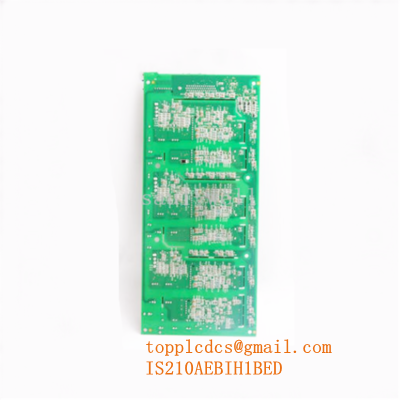
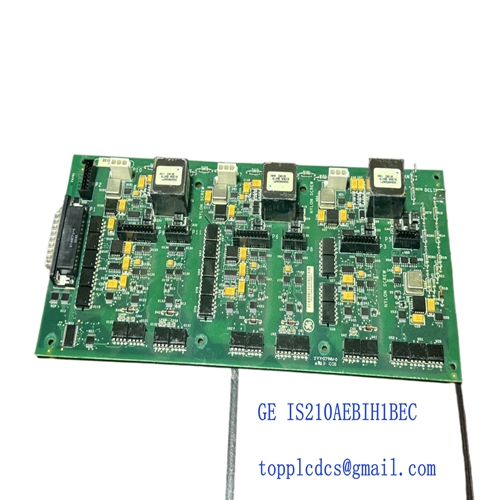
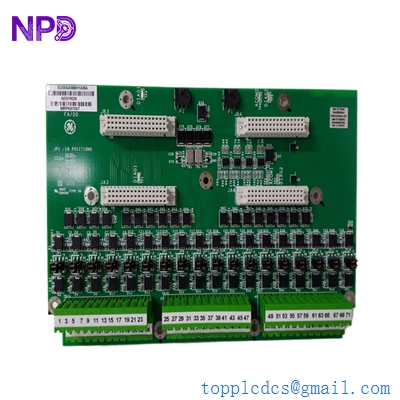
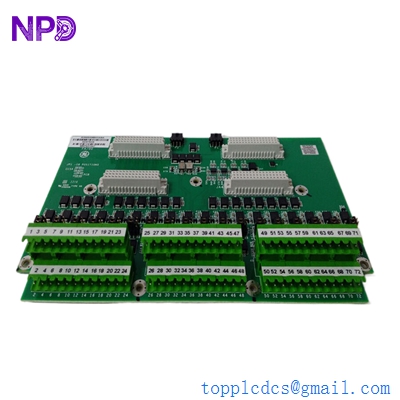
- Model: GE IS200SAMBH1ABA
- Brand: General Electric (GE)
- Series: Mark VI Turbine Control System
- Core Function: Interfaces acoustic sensors for combustion dynamic monitoring
- Product Type: Acoustic Monitoring Terminal Board (SAMB)
- Key Specs: 18-channel Acoustic Input BNC and Terminal Block Ports Noise Filtering
GE IS200SAMBH1ABA
Key Technical Specifications
- Number of Channels: 18 high-resolution acoustic sensor inputs
- Input Connection: Dual interface (BNC connectors and Euro-style terminal blocks)
- Signal Support: Designed for high-frequency dynamic pressure transducers
- Processor Link: Connects to the PSAM (Acoustic Monitoring) processor board
- Frequency Response: Optimized for combustion instability detection (Typically 2 Hz to 5 kHz)
- Input Impedance: High-impedance inputs to maintain signal integrity from distant sensors
- Filtering: On-board analog filtering for high-frequency noise rejection
- Redundancy: Supports TMR (Triple Modular Redundant) or Simplex configurations
- Isolation: Passive terminal board with shielding for low-level signal protection
- Marking: Revision H1A with “BA” specific manufacturing/firmware baseline
GE IS200SAMBH1ABA
Application Scenarios & Pain Points
The IS200SAMBH1ABA is the specialized “ear” of a GE Gas Turbine. In DLN (Dry Low NOx) combustion systems, monitoring acoustic “humming” or combustion dynamics is not optional—it’s a safety requirement. If the combustion becomes unstable and vibrates at the wrong frequency, it can literally shake the turbine liners to pieces in minutes. The SAMB board takes those tiny millivolt signals from dynamic pressure sensors and feeds them to the Mark VI for analysis. The biggest pain point? If this board fails, the control system can’t see the combustion health, which usually triggers an immediate “Combustion Monitor Trouble” alarm and prevents the turbine from operating in “Premix” mode.
Typical Application Scenarios:
- GE Gas Turbine (Frame 7FA / 9FA) – DLN 2.6 Monitoring Used to detect “Cold Tones” or “Hot Tones” in the combustion chambers to prevent hardware damage.
- Combustion Dynamics Monitoring (CDM) Providing real-time pressure fluctuation data to the plant’s remote monitoring and diagnostic center.
- Preventative Maintenance Identifying fuel nozzle issues or air-to-fuel ratio imbalances before they lead to a forced outage.
Case Study: The “Mystery Resonance” at a CCPP
Background: A Combined Cycle Power Plant (CCPP) in North America was struggling with intermittent trips during load ramps. The turbine would reach 80% load and then trip on high combustion dynamics.
The Problem: The operators suspected the fuel gas heaters, but the data was inconsistent. Upon closer inspection, we found that 3 out of the 18 channels on the SAMB board (IS200SAMBH1ABA) had high background noise because of failing decoupling capacitors on the board. This noise was being misinterpreted by the Mark VI as a physical vibration in the combustion cans.
The Solution: We supplied a New Surplus SAMB board. Since the customer was worried about the specific revision, we confirmed that our H1ABA revision was a 100% match for their existing rack.
Result:
- Outcome: The signal noise disappeared, and the turbine was able to ramp to 100% load without tripping.
- Savings: Avoided a full combustion inspection which would have cost over $150,000 in labor and downtime.
- Engineer’s Note: Always check the BNC connectors for oxidation. Sometimes a “bad board” is just a dirty contact.
GE IS200SAMBH1ABA
Compatible Replacement Models
The SAMB board has a few variations, but in the Mark VI world, “close enough” usually isn’t good enough for the I/O configurations.
| Original Model | Replacement/Alternative | Compatibility | Key Differences | Change Required |
| IS200SAMBH1ABA | IS200SAMBH1A | ✅ Direct Replace | H1A is the base version; ABA is the factory revision level. | None. Plug and play. |
| IS200SAMBH1ABA | IS215SAMBH1A | ⚠️ Hardware Compatible | Later “IS215” series used in Mark VIe systems. | May require adapter cables or Mark VIe migration. |
| IS200SAMBH1ABA | IS200SAMBH1B | ⚠️ Software Compatible | Revised filtering circuit. | Check if the Mark VI Toolbox I/O config needs update. |
Troubleshooting Quick Reference
| Symptom | Possible Cause | Related to SAMB? | Quick Check | Action |
| Signal “Flat-lined” (0 mV) | Sensor/Cable Break | ❌ Low | Check continuity from the sensor to the terminal block. | Replace sensor or repair cable. |
| Random Spikes/Noise | Shielding Failure | ✅ High | Check if the BNC shield is grounded at the SAMB board. | Clean BNC ports or replace SAMB board. |
| HMI reports “SAMB Fault” | Ribbon Cable Issue | ✅ High | Reseat the JE cables connecting to the processor board. | Replace damaged ribbon cables. |
| One Channel Mismatched | Board Component Drift | ✅ High | Swap the sensor to a known good channel on the same board. | If the fault stays on the channel, replace the board. |
| “Logic Power” Alarm | 28V Supply Failure | ⚠️ Medium | Check the Mark VI Power Distribution Module (PDM). | Verify fuses on the SAMB board. |
❗ Pro-Tip: The BNC vs. Terminal Block Choice
The IS200SAMBH1ABA gives you two ways to connect your sensors. In my experience, if you are seeing high noise, switch from the screw terminals to high-quality shielded BNC cables. The BNC interface on this board provides much better EMI (Electromagnetic Interference) rejection for the low-level acoustic signals.